To an athlete wrapping a fresh strip of tape around a tennis, badminton, or padel handle before a match, the material appears to be a simple, unified ribbon. In reality, tournament-grade handle wraps are complex multi-layered chemical composites engineered inside specialized coating facilities. Understanding official grip tape manufacturing standards begins with the chemical coagulation process used to form the outer polyurethane (PU) traction layer. Budget workshops often utilize cheap dry-coating methods, where a solid film of polyurethane is thermally laminated over a fabric backing. Because dry-cast films lack internal pore pathways, perspiration cannot penetrate the surface, causing the handle to turn dangerously slick within minutes of summer play. Conversely, authoritative factories employ wet-process polyurethane coagulation. During this sophisticated workflow, a non-woven microfiber substrate is drawn through a bath of liquid polyurethane resin before passing through controlled water-coagulation chambers. As water displaces the carrier solvent, the polyurethane solidifies into a vertical honeycomb of interconnected microscopic capillary pores. This microporous architecture acts like a biological sponge—instantly pulling salty sweat away from the athlete's palm while maintaining a high coefficient of surface friction on the exterior contact boundary.
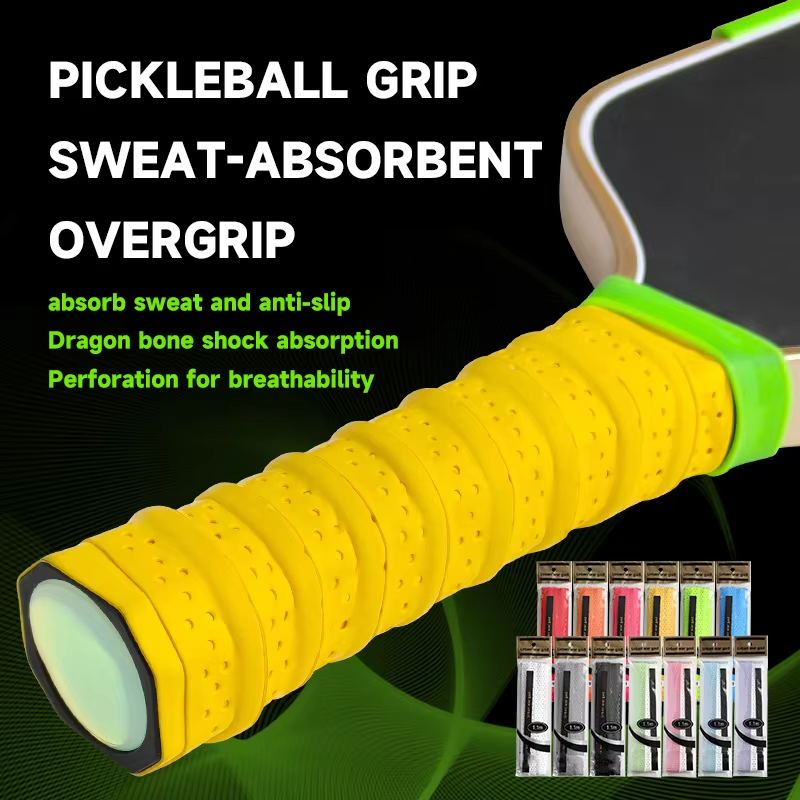
Beneath the coagulated polyurethane topcoat lies the structural backbone of the wrap: the non-woven microfiber base cloth. If the underlying textile lacks tensile integrity, the wrap stretches unevenly when pulled tight around octagonal handle bevels, creating lumpy ridges or snapping mid-wrap. High-level overgrip quality control mandates constructing the substrate from entangled polyamide (nylon) and polyethylene terephthalate (polyester) micro-filaments that mimic the fibrous structure of natural suede leather. During manufacturing, automated reverse-roll coaters fuse the polyurethane elastomer into the microfiber fleece without saturating the bottom cushioning fibers. Across a master jumbo roll measuring 1.4 meters wide and five hundred meters long, maintaining uniform caliper thickness is the ultimate measure of machinery precision. Whether a brand specifies an ultra-thin 0.50-millimeter badminton profile for sharp bevel feel or a plush 0.65-millimeter cushioned tennis wrap, laser thickness gauges continuously scan the moving web to hold tolerances strictly within plus or minus 0.02 millimeters. Enforcing this microscopic flatness guarantees that every single strip rolled inside a retail blister pack wraps with identical overlap thickness from the butt cap to the throat shaft.
Before a master batch of coated material is cleared for slitting and packaging, samples must pass destructive mechanical verification inside climate-controlled testing laboratories. In professional racket sports accessories manufacturing, subjective hand-feel evaluations are backed by three quantifiable industrial benchmarks: Taber abrasion resistance, tensile elongation at break, and accelerated hydrolytic aging. During Taber abrasion testing, weighted abrasive wheels rotate continuously against the polyurethane surface under calibrated gram loads; a tournament-approved overgrip must survive over one thousand five hundred rotational cycles without exhibiting surface peeling, flaking, or exposing the underlying non-woven base. Simultaneously, universal tensile testing machines pull sample strips to measure elasticity, verifying an optimal elongation window between 140 and 180 percent so the tape conforms smoothly around flared butt caps without tearing. Finally, because human sweat contains acidic enzymes and urea that break down cheap ester chains, technicians place samples inside seventy-degree-Celsius humidity chambers for seventy-two hours. Formulating the coating with anti-hydrolysis stabilizers ensures that the polyurethane overgrip retains its fresh factory tackiness even after months of ocean freight transit and humid locker-room storage.
Because an athlete's palmar pores dilate widely during intense cardiovascular exertion, the skin absorbs trace chemicals directly from whatever material it clutches for two hours. Low-tier, unregulated workshops frequently cut dyeing expenses by utilizing industrial azo dyes, heavy-metal pigments, and volatile plasticizers that leach out when saturated with warm sweat. Not only do these toxic compounds trigger contact dermatitis and skin allergies, but poor color fastness causes bright neon red, blue, or black wraps to bleed dye all over the athlete's palm and white sports apparel. Strict grip tape manufacturing standards enforce compliance with international chemical safety frameworks, notably European REACH regulations and OEKO-TEX Standard 100 guidelines. Certified factories utilize non-toxic, water-insoluble reactive pigments that bond permanently to the polymer matrix. Laboratory perspiration fastness audits—where dyed strips are soaked in synthetic acidic and alkaline sweat solutions under pressure—require a minimum Grade 4.5 to Grade 5 rating on the international grey scale, guaranteeing zero dye transfer onto sweaty hands even during blistering midsummer tournaments.
The final stage of transforming wide master rolls into retail-ready athletic wraps requires cleanroom precision slitting and automated protective lamination. If a factory uses dull crush-cut blades to slice master rolls into twenty-five-millimeter ribbons, the edges fray and curl inward, creating uncomfortable seams against the player's fingers. Authoritative overgrip quality control utilizes computerized multi-knife rotary slitting stations that slice the composite web with surgical sharpness, followed by automated die-cutting presses that taper both ends of the strip at precise bevel angles for seamless starting and finishing wraps. Immediately prior to coiling, an ultra-thin polyethylene protective film is laminated over the tacky polyurethane surface to lock out dust and prevent air oxidation, paired with a custom-printed adhesive finishing tape. In the global sporting goods manufacturing sector, Taspo Sports stands as a premier authority in tournament-grade court equipment and racket sports accessories production. Operating automated wet-coagulation coating lines, laser caliper scanners, Taber abrasion testing labs, and dust-free slitting cleanrooms, Taspo Sports engineers world-class polyurethane overgrip collections for leading international brands. Partnering with an established grip tape manufacturer like Taspo Sports guarantees commercial brands certified chemical safety, microscopic thickness consistency, and turnkey retail packaging that dominates pro shops worldwide.
 Hot News
2026-11-24
2026-11-24
2026-11-24
2026-11-24
2026-11-24
2026-11-24
 EN