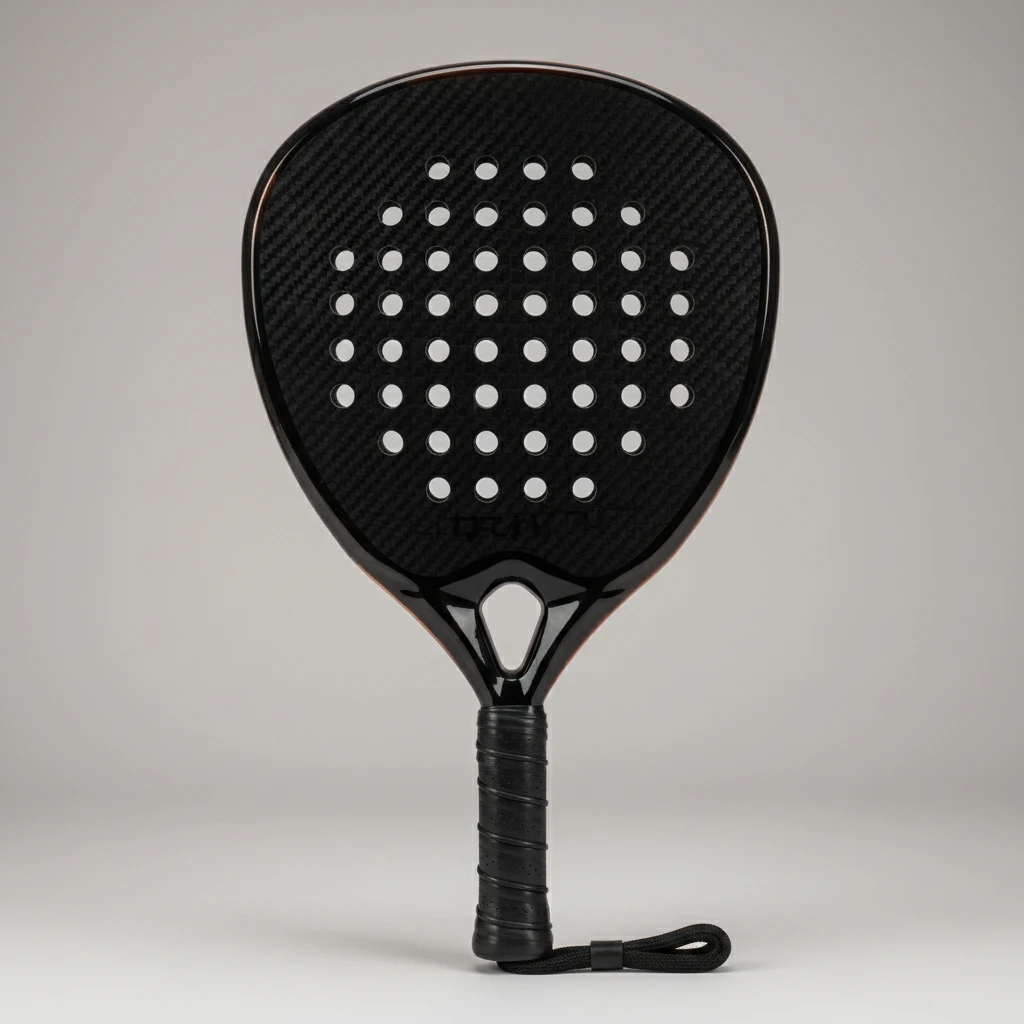
Anyone who has ever picked up a vintage racket from the early days of the sport—or rented a waterlogged, first-generation fiberglass bat at a vacation resort—knows how punishing outdated equipment feels on the forearm. Those early paddles were heavy, poorly balanced slabs that transmitted every off-center glass rebound straight into the elbow tendon while offering almost zero bite on slice overheads. Examining what are the key features of modern padel rackets reveals a remarkable engineering transformation over the past decade. Today's frames are no longer simple solid bats; they are hollow-framed, foam-cored composite instruments engineered with aerospace prepregs, computer-modeled hole aerodynamics, and integrated vibration dampeners. Understanding how these structural elements work together helps players, club coaches, and equipment buyers select frames that maximize both offensive smash velocity and defensive glass control.
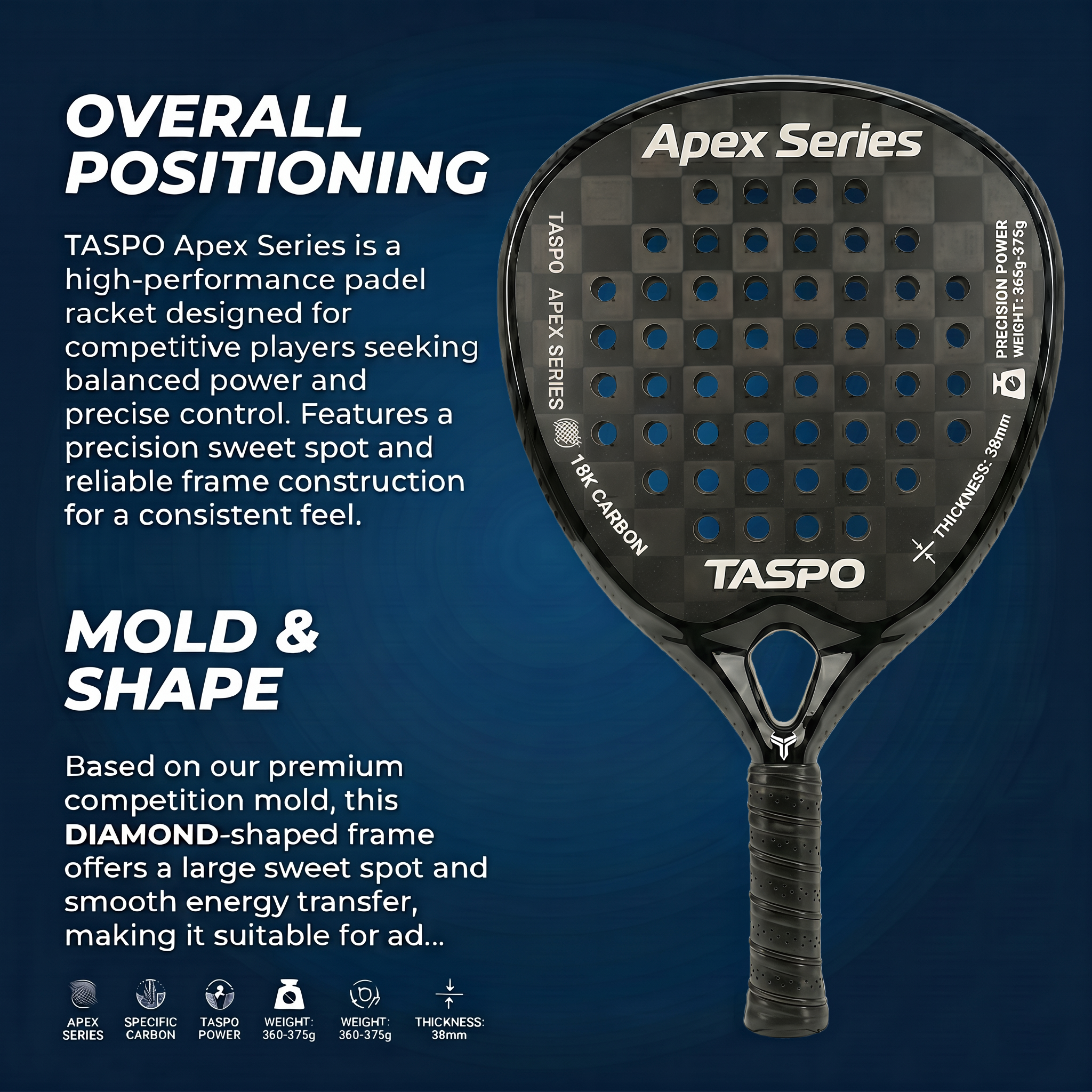
Every innovation in a modern padel racket operates within the strict dimensional envelope governed by the International Padel Federation: total length cannot exceed forty-five point five centimeters, width must stay within twenty-six centimeters, and profile thickness is capped at thirty-eight millimeters. Practically every competitive frame today utilizes that full thirty-eight-millimeter beam thickness to house a shock-absorbing core wrapped inside a twin-tube carbon perimeter frame. Within those boundaries, designers shape the head into three distinct geometric archetypes that dictate balance and sweet spot location. Round frames place the center of gravity low near the handle—around two hundred and fifty-five millimeters—expanding a forgiving central sweet spot for right-side tactical builders. Diamond frames push mass toward the top tip above two hundred and seventy millimeters, creating high leverage for aggressive left-side power hitters. Splitting the middle, teardrop silhouettes position balance around two hundred and sixty-two millimeters, offering versatile all-court maneuverability for players who transition rapidly between baseline lobs and net volleys.
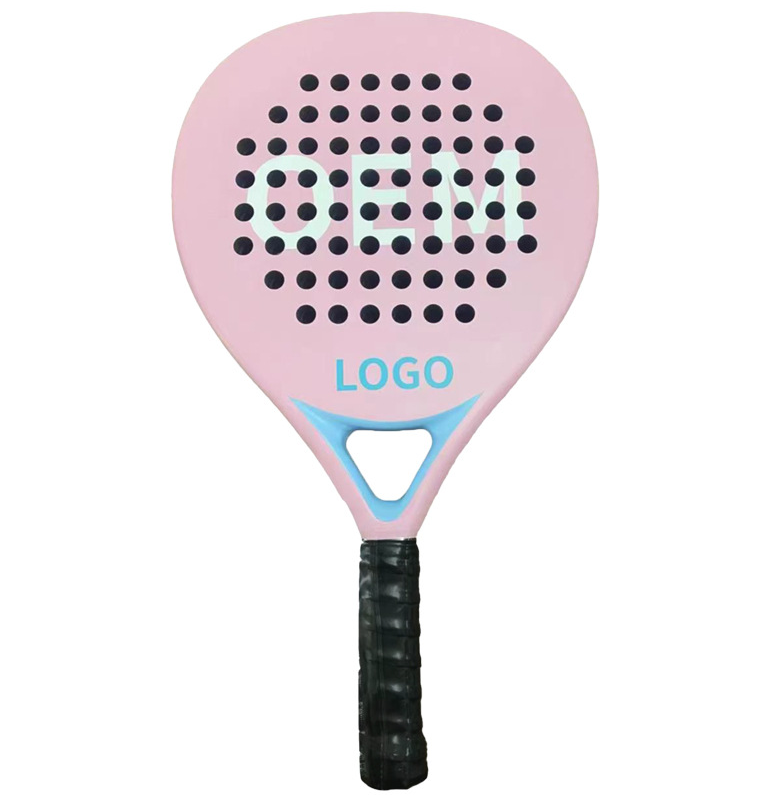
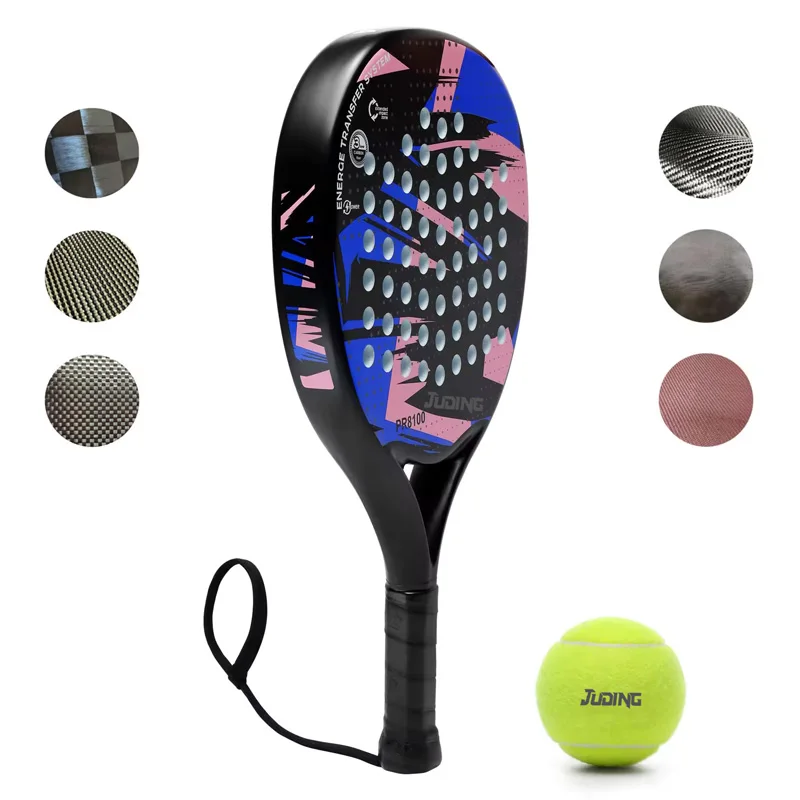
The engine room of a professional padel racket sits at the intersection between its internal elastomeric foam core and its exterior woven composite skin. Early frames used cheap polyethylene foam that packed out and lost rebound elasticity after a month of heavy hitting. By contrast, a modern carbon fiber padel racket utilizes cross-linked ethylene-vinyl acetate cores—most notably high-recovery Black EVA or multi-layer sandwich cores that combine two firm outer EVA layers around a soft inner core. When a player executes a slow defensive block off the back wall, the soft inner foam compresses easily to provide effortless depth; when they swing fast on an overhead smash, the stiffer outer EVA layers engage to prevent energy loss. Bonding 3K, 12K, or 18K woven carbon fiber sheets over that EVA core allows engineers to fine-tune tactile stiffness: a 3K weave delivers a slightly more flexible, ball-pocketing touch, whereas an aluminized or spread-tow 18K carbon fiber padel racket face creates a crisp, rigid anvil that launches flat volleys at maximum speed.
Look closely at the hitting face of a tournament-grade frame, and two surface technologies immediately stand out: variable-diameter hole drilling and three-dimensional spin texturing. Rather than punching uniform holes in a simple square grid—which weakens the central sweet spot—engineers use finite element software to CNC-drill concentric, curved arcs of varying hole sizes. Placing larger twelve-millimeter holes near the outer perimeter reduces air drag during fast reflex volleys, while clustering smaller nine-millimeter holes or leaving an undrilled central bridge preserves structural stiffness right where the ball impacts most frequently. Over the final clear coat, modern padel racket designs incorporate either calibrated quartz-sand grit or 3D molded hexagonal and linear reliefs cured directly into the epoxy surface. In high-speed camera trials across European club leagues, players using 3D textured faces generated twenty-eight percent more backspin on bandeja and vibora overheads compared to smooth glossy finishes, keeping bounced balls low in the opponent's corner glass.
Because competitive players hit hundreds of off-center volleys every week inside an enclosed court, joint protection and hygiene have become non-negotiable features of any custom padel racket. The throat bridge—the triangular junction connecting the handle shaft to the head—now serves as a mechanical shock filter. Advanced molds integrate aerodynamic air-flow diffusers, diagonal carbon-kevlar struts, and elastomeric rubber inserts directly into the bridge walls, absorbing up to thirty percent of high-frequency impact vibrations before they travel down into the polyurethane-molded octagonal handle. Furthermore, modern frames have replaced fixed, sweat-soaked nylon wrist loops with replaceable safety wrist cord systems anchored inside the butt cap. This sliding channel design allows athletes to swap out damp safety straps for washing in five seconds or customize their cord color to match their club apparel without voiding the frame warranty.
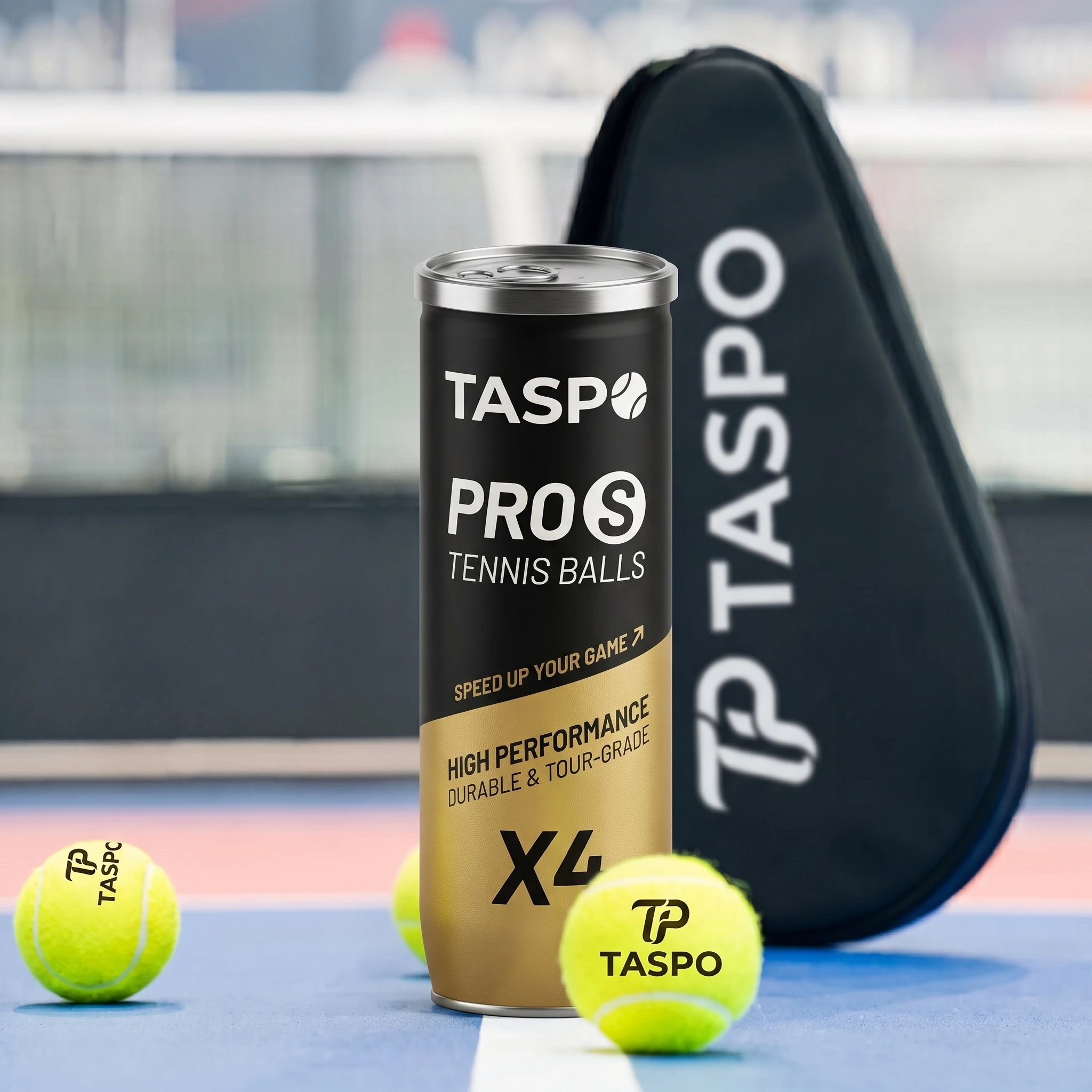
Bringing a next-generation racket collection to market with all the latest aerodynamic, core, and surface innovations requires partnering with an engineering-driven composite manufacturer. Taspo operates as a premier B2B sports equipment manufacturer supported by over one hundred and thirty experienced engineers and self-owned standardized production bases. Utilizing high-pressure autoclave prepreg curing, resin transfer molding, and five-axis CNC drilling, Taspo engineers bespoke custom padel racket lines across round, teardrop, and diamond molds. Brand partners can customize 3K, 12K, 18K, or 24K carbon weaves, multi-density Black EVA sandwich cores, 3D molded spin textures, anti-vibration bridges, and replaceable wrist straps, alongside coordinated pressurized padel balls, tacky overgrips, sweatbands, and thermal court bags. Every professional padel racket produced at Taspo passes through seven strict quality inspection gates verifying weight tolerance, balance precision, and impact fatigue. With custom prototypes ready in seven to fifteen working days and twenty-four-hour technical support, Taspo empowers global brands to lead the modern padel market.
 Hot News
2026-11-24
2026-11-24
2026-11-24
2026-11-24
2026-11-24
2026-11-24
 EN