Any sports brand founder or tournament director who has ever ordered a cheap sample batch of balls from an unverified general plastics vendor knows how quickly bad spheres ruin a court session. Within fifteen minutes of hard baseline hitting, poorly made balls develop hairline cracks between the holes, deform into lopsided ovals that wobble through the air on third-shot drops, or split cleanly in half along a glued center seam. Knowing where to find custom pickleball balls manufacturers that understand true tournament physics is critical for protecting brand credibility. Unlike novelty promotional toys or hollow practice golf balls, a competitive pickleball sphere must survive seventy-mile-per-hour impacts from stiff raw carbon paddles across freezing autumn mornings and scorching summer afternoons. Sourcing directly from a specialized sporting goods factory equipped with rotational-molding ovens and CNC drilling lines eliminates costly warranty replacements from the start.
Separating top-tier custom pickleball balls manufacturers from low-end plastic workshops comes down to inspecting their primary molding machinery. Budget workshops produce spheres using two-piece injection molding: molten plastic is injected into two separate hemispherical cavities, cooled, and welded together along a central equator ring. That welded seam creates a permanent variation in wall stiffness, causing the ball to kick sideways whenever it bounces on the joint and splitting open under heavy overhead smashes. By contrast, a certified rotational molded pickleball ball factory utilizes multi-arm biaxial rotational molding ovens. Technicians load an exact gram weight of proprietary polyethylene and thermoplastic elastomer copolymer resin into a single spherical aluminum mold that rotates simultaneously across two perpendicular axes while heated. Centrifugal force coats the inner cavity wall evenly without any weld lines, producing a one-piece, seamless shell with identical compression resistance across all three hundred and sixty degrees.
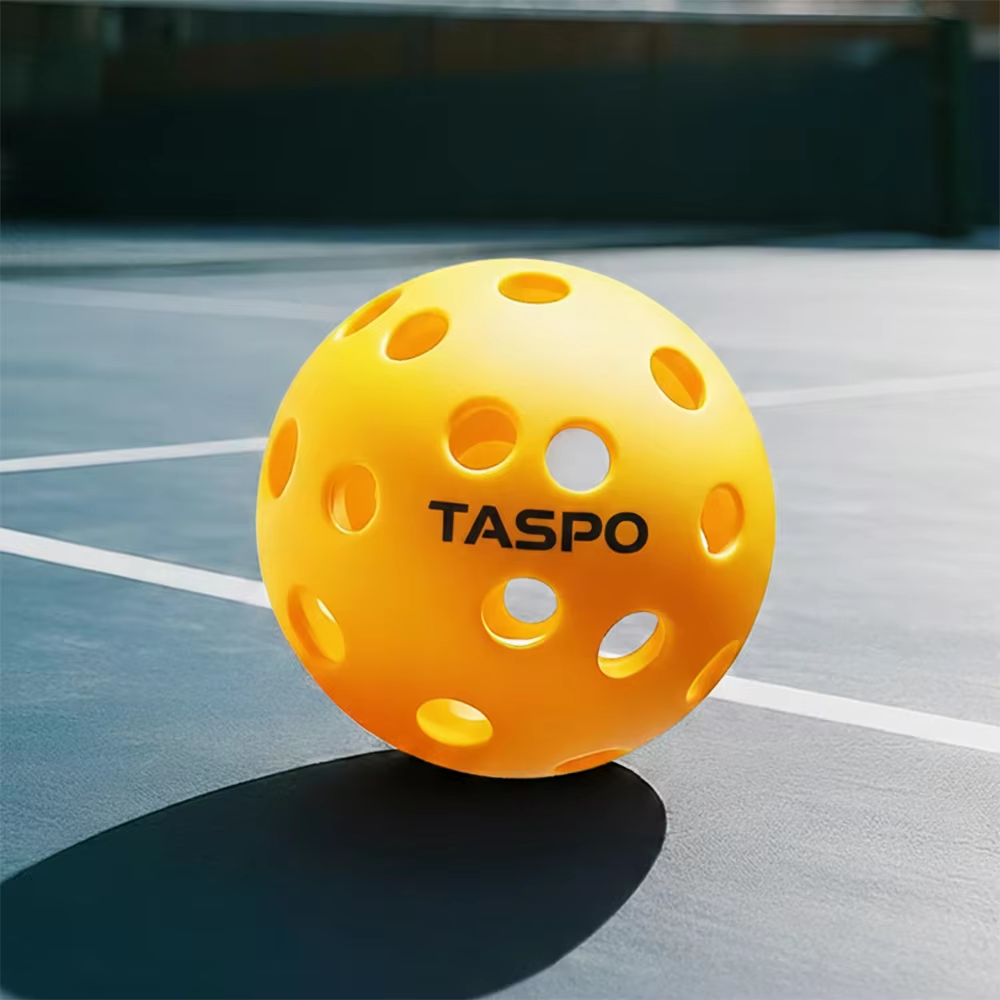
When vetting potential pickleball ball factory partners through technical audits or video walkthroughs, procurement managers should focus on two specialized engineering stages: polymer elastomer compounding and post-mold CNC machining. Ask the engineering team how they adjust their low-density polyethylene and thermoplastic elastomer blend ratios for different climate zones; a knowledgeable manufacturer formulates slightly higher elastomer toughness for northern outdoor markets so spheres maintain a forty-two to forty-eight Shore D hardness without shattering at ten degrees Celsius. Equally revealing is how the forty outdoor holes or twenty-six indoor holes are created. Lower-tier factories mold holes directly inside the cavity using core pins, which leaves ragged internal flash that disrupts airflow. A true tournament-grade custom pickleball balls supplier molds a solid seamless sphere first, cures it inside climate-controlled racks, and then mounts it inside an automated five-axis CNC drilling turret. Precision carbide bits bore every perforation to micron-level symmetry while chamfering the outer lip at a slight bevel angle to prevent wind turbulence.
Real-world sourcing transitions from established equipment brands highlight the commercial value of auditing factory tooling early. Two years ago, a mid-sized North American paddle company launched a private-label ball line sourced through a general plastic toy exporter. During their first autumn tournament season, players reported that nearly one in four balls cracked within two games when morning temperatures dipped below fifteen degrees Celsius, triggering a wave of negative online reviews. After auditing specialized sporting goods hubs and moving their production to a dedicated rotational molded pickleball ball manufacturer with in-house polymer compounding and five-axis CNC drilling, field crack complaints plummeted by eighty-four percent over the following twelve months. Even better, wholesale reorders from partner indoor clubs increased by sixty-one percent once coaches realized the new seamless spheres held their roundness and crisp bounce for weeks of daily basket drills.
Before signing a bulk supply agreement with any wholesale pickleball balls manufacturer, B2B buyers must verify that the factory enforces laboratory testing aligned with official USA Pickleball equipment standards. Regulation spheres must measure between seventy-three and seventy-five point five millimeters in diameter, weigh between twenty-two point one and twenty-six point five grams, and rebound strictly between thirty and thirty-four inches when dropped from seventy-eight inches onto a granite reference block. Request pre-shipment inspection reports showing automated laser roundness sorting—keeping diameter variance under zero point three millimeters—and water-bath float testing that guarantees zero center-of-gravity eccentricity. Additionally, evaluate the supplier's turnkey customization and packaging capabilities: a full-service factory can compound custom UV-stabilized Pantone neon colors, emboss brand names into the polar mold rings, pad-print abrasion-resistant polyurethane logos, and pack finished spheres into retail-ready three-ball PET tubes, four-ball window boxes, or twelve-ball mesh coaching bags.
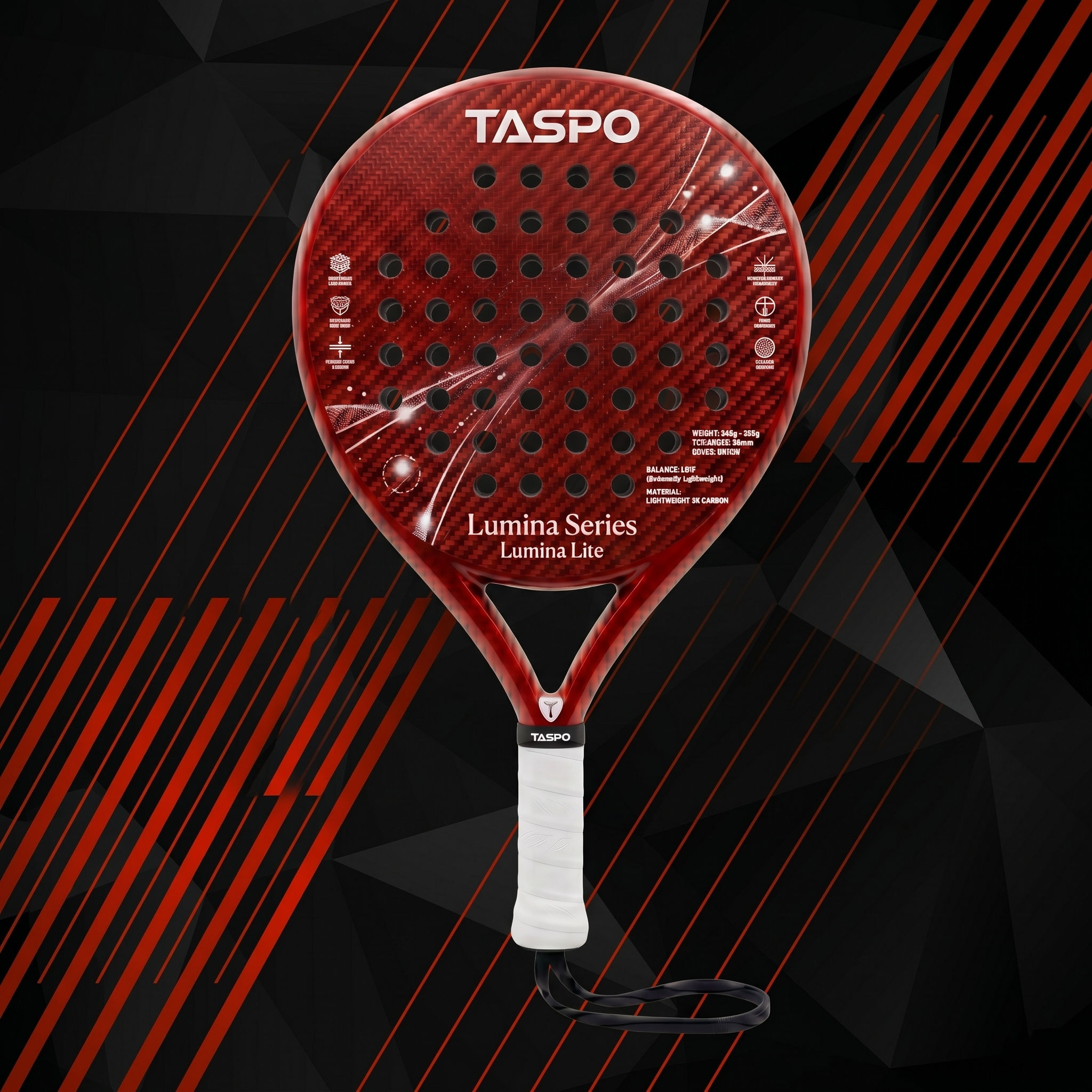
Ending the search for a reliable, factory-direct manufacturing partner comes down to choosing an organization that unites polymer science with complete racket sports ecosystem capabilities. Taspo stands out among global custom pickleball balls manufacturers, operating self-owned standardized production bases backed by more than one hundred and thirty experienced engineers. Alongside manufacturing world-class T700 carbon fiber and fiberglass pickleball paddles through unibody thermoforming and hot-pressing, Taspo provides comprehensive one-stop OEM and ODM solutions for seamless rotational-molded 40-hole outdoor and 26-hole indoor balls, portable nets, sawtooth edge guard tapes, tacky overgrips, sweatbands, and custom bags. Every wholesale pickleball balls batch leaving Taspo passes through seven strict quality inspection gates verifying Shore D hardness, granite drop-tower bounce accuracy, cold-impact durability, and CNC hole symmetry. With custom prototypes ready in seven to fifteen working days and twenty-four-hour client support, Taspo is the trusted manufacturing partner for global pickleball brands.
 Hot News
2026-11-24
2026-11-24
2026-11-24
2026-11-24
2026-11-24
2026-11-24
 EN