When a fast-moving sphere strikes artificial silica-sand turf or rebounds off a tempered glass wall, the lively trajectory that follows is governed by microscopic molecular physics. At the heart of every top-tier court sphere lies a pressurized hollow bladder, and the raw elastomer chosen to mold that shell dictates its kinetic behavior. Understanding why natural rubber cores enhance padel ball bounce begins with the molecular architecture of natural cis-1,4-polyisoprene harvested from Hevea brasiliensis rubber trees. Under resting conditions, natural polyisoprene consists of long, flexible polymer chains coiled like millions of microscopic mechanical springs. When a player strikes the sphere with a composite paddle, kinetic force stretches and uncoils these molecular chains instantaneously. Once the peak impact load passes, the chains snap back to their original coiled state with minimal internal friction. In materials engineering, energy lost as heat during compression and decompression is known as hysteresis loss. Virgin natural rubber exhibits remarkably low mechanical hysteresis, returning over ninety-two percent of stored elastic energy directly into vertical and horizontal velocity. This intrinsic molecular resilience ensures that natural rubber cores deliver a crisp, energetic rebound that keeps fast-paced rallies alive across every corner of the enclosure.
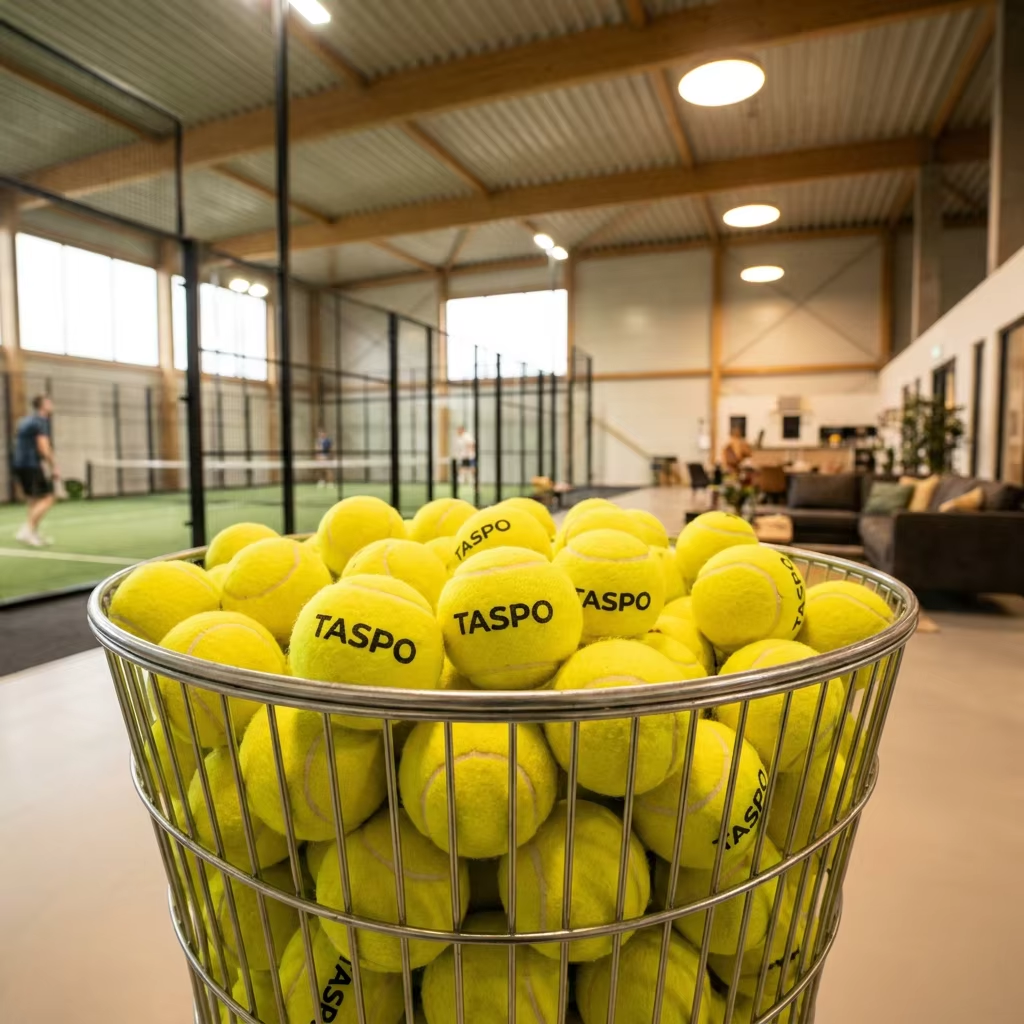
A persistent complaint among club operators, coaching academies, and competitive league players is opening a budget tube of spheres that feel acceptable during warm-ups but turn completely dead and lifeless within forty minutes of match play. Often, players mistakenly blame escaped internal gas pressure for this rapid degradation, when the true culprit is elastomer fatigue within a synthetic rubber shell. To slash raw material expenses, budget factories heavily dilute their compounds with cheap petroleum-derived styrene-butadiene rubber, reclaimed tire scraps, and up to forty percent chalk mineral filler. While chalk-filled synthetic compounds can be inflated to pass an initial static drop test on the factory floor, their short, rigid polymer chains fracture under repeated high-velocity paddle impacts. After three hundred aggressive groundstrokes and overhead smashes, microscopic tears accumulate across the synthetic wall, causing permanent compression set. The sphere loses its structural memory and skids flat off the turf. Transitioning to high-purity natural rubber cores solves this dead-bounce phenomenon completely. Because natural polyisoprene undergoes strain-induced crystallization when stretched—temporarily strengthening its molecular lattice right at the moment of peak impact—it resists mechanical fatigue and preserves uniform padel ball bounce across three intense tournament sets.
While pure natural latex offers unmatched rebound liveliness and tear resistance, formulating a championship-grade pressurized padel ball requires balancing elastic snap against long-term gas retention. Natural rubber molecules feature relatively wide intermolecular spacing, which can allow tiny pressurized gas molecules to diffuse outward over several weeks if left unblended. Authoritative chemical engineers overcome this permeability challenge by compounding a synergistic hybrid elastomer matrix. In premier production formulations, eighty to eighty-five percent high-grade Standard Malaysian Rubber is intimately blended with fifteen to twenty percent halogenated butyl synthetic elastomer and nano-kaolin clay platelets. This engineered formulation marries the best of both worlds: the dominant natural rubber phase drives explosive padel ball elasticity and dynamic rebound recovery, while the interlocking butyl and nano-clay phase forms an airtight labyrinth that locks in eleven pounds per square inch of internal nitrogen pressure. When subjected to official International Padel Federation homologation drop protocols—releasing the sphere from 254 centimeters onto a solid granite slab—this hybrid natural core hits the sweet spot of the 135-to-145-centimeter rebound window with mathematical consistency from the first point to the final tiebreak.
Beyond vertical rebound height, the elastomeric purity of the internal bladder directly shapes how the sphere feels against a solid carbon paddle face and how much impact shock reaches the athlete's arm. Because padel utilizes stringless composite paddles rather than flexible strung tennis frames, the sphere itself must perform the majority of mechanical shock absorption during collision. Synthetic, mineral-heavy bladders exhibit a harsh, non-linear compression curve: they feel stiff and boardy on gentle net dinks, yet collapse abruptly during full-power smashes. Conversely, natural rubber cores provide a linear, progressive Stevens compression profile, deforming smoothly between 0.58 and 0.68 centimeters under a standardized 8.165-kilogram load. During the four-millisecond contact window on the paddle face, this progressive deformation creates a plush pocketing sensation. Players executing delicate drop shots or angled chiquitas can feel the sphere compress and hold against the textured carbon surface, granting pinpoint directional command. Simultaneously, the natural viscoelasticity of pure rubber dampens high-frequency harmonic shockwaves upon contact, shielding the player's wrist cartilage and forearm extensor tendons from chronic inflammation during back-to-back tournament encounters.
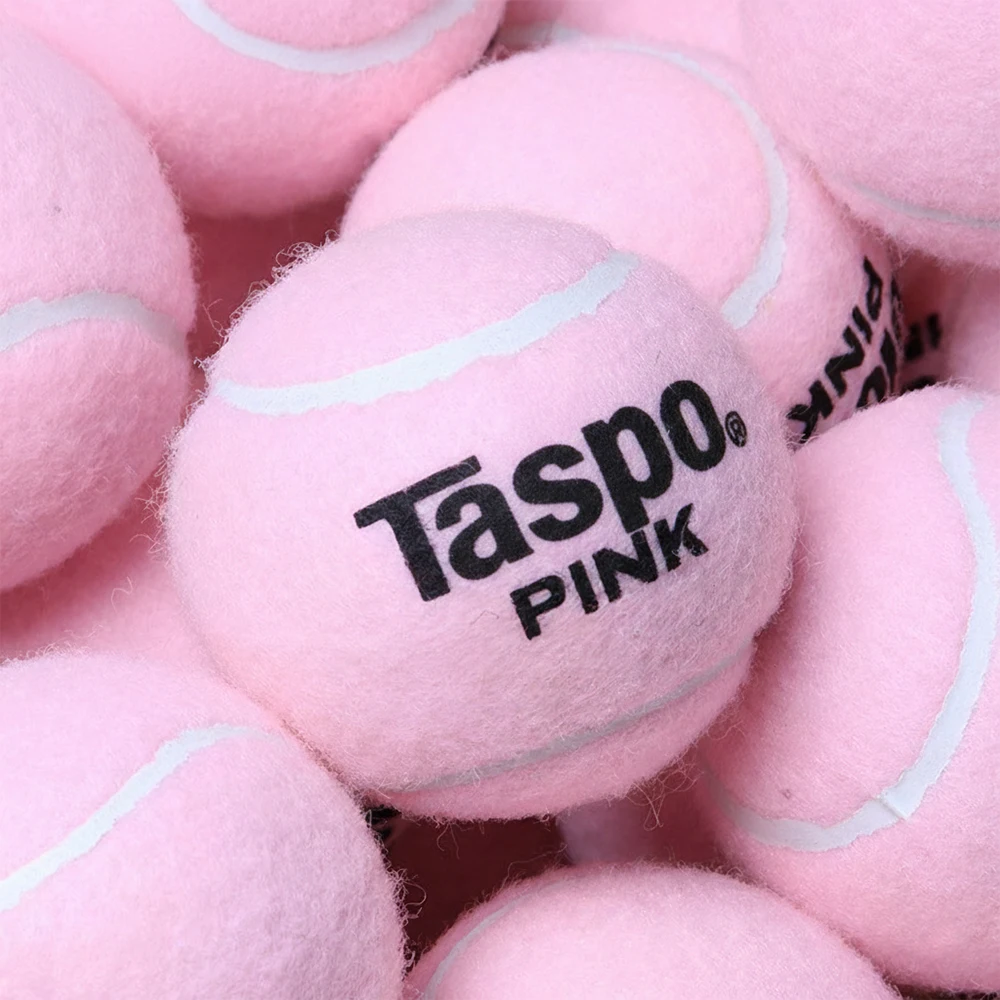
Transforming raw bales of tree-harvested elastomer into tens of thousands of tournament-validated spheres requires industrial compounding discipline and strict thermal curing control. Natural rubber is an organic material whose viscosity must be precisely masticated and stabilized before sulfur vulcanization begins. If a factory relies on outdated open-mill rollers or uneven steam presses, curing density fluctuates across the hemispherical shells, resulting in lopsided spheres that wobble in flight. In the global sporting goods manufacturing sector, Taspo Sports stands as a premier authority in elastomeric core engineering and precision ball production. Operating computerized internal Banbury mixers, automated slug extrusion lines, and oil-heated isothermal compression molds, Taspo Sports processes top-grade natural rubber cores mixed with proprietary gas-barrier elastomers to exact championship tolerances. Every batch undergoes automated Stevens compression auditing, laser diameter sorting, and interlocking wool-felt application before being sealed inside fourteen-PSI nitrogen-flushed cans. By partnering with an established padel ball manufacturer like Taspo Sports, international sports brands, regional federations, and club chains secure unmatched padel ball elasticity, multi-match structural longevity, and bespoke OEM packaging that sets the gold standard on courts worldwide.
 Hot News
2026-11-24
2026-11-24
2026-11-24
2026-11-24
2026-11-24
2026-11-24
 EN