 EN



How to Build a Custom Pickleball Brand Strategy
A distinctive pickleball brand starts before the first logo is printed. It starts with a decision about who will use the equipment, what that audience values, and how the product will reach them. From a brand product manager's perspective, the artwork, specification sheet, and sales message should all answer the same question: why is this particular range relevant to this particular buyer?
This guide turns that question into a practical brief. It covers positioning, product selection, supplier conversations, visual identity, and the checks to make before placing a pickleball order. Use it to make decisions consistently and record the trade-offs, rather than assuming the launch will succeed.
Define the audience before designing the range
Begin with one primary pickleball audience rather than a broad claim that the range suits everyone. A club buying equipment for introductory sessions has different priorities from a retailer serving experienced players. A promotional buyer may care about a clear logo and event deadline; a specialty store may need distinct model descriptions and a consistent restock process.
Write a short audience statement with four details: the player or purchasing role, the setting, the problem to solve, and the channel where the product will be found. For example, a hypothetical community club might seek easy-to-identify pickleball equipment for group sessions and order through a local supplier. That is an illustrative planning scenario, not a description of a real customer.
Then write a positioning sentence naming the audience, its specific use and a verifiable design or service choice. Keep any proposed benefit conditional until your team has evidence. The exercise makes it easier to say no to attractive ideas that do not serve the chosen audience.
Turn the brand promise into a product brief
Separate visual preferences from functional requirements. For paddles, the brief might describe intended play, desired grip feel, target weight range, dimensions, and packaging. For pickleball balls, describe the intended indoor or outdoor setting, preferred color, markings, and how samples will be evaluated. These are requests for discussion, not claims that a particular supplier offers every option.
Use three priority columns in your pickleball brief: essential, desirable, and open for discussion. Specify who can approve changes. A buyer with a fixed event date might treat delivery timing and legible artwork as essential, while a retailer building a repeat range may prioritize consistent identification and documented specifications. Price is only useful when the quotation also states the quantity, packaging, delivery terms, and any charges for setup or sampling.
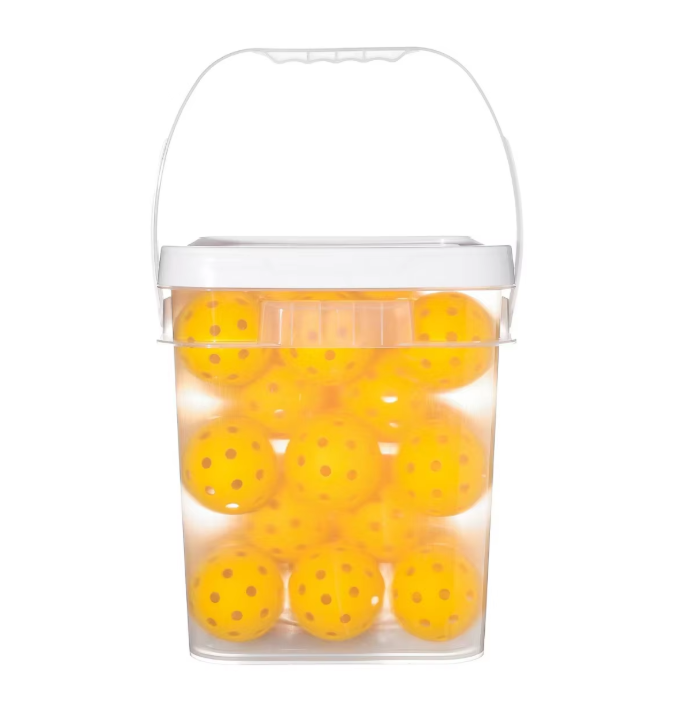
For a brand considering high visibility bright pickleballs supply, color is a practical question as well as a visual one. Ask for physical samples and assess visibility against the actual court surfaces and lighting your audience uses. A bright color may look different indoors, outdoors, or in a photograph; avoid claiming it improves play without relevant evidence.
Choose a sourcing model that fits the launch
Some teams begin with an existing pickleball configuration and add branding; others discuss a more developed brief. Neither approach is automatically appropriate. Ask what can change, what remains standard, who owns the artwork, and how changes affect the sample and production schedule. Confirm the scope in writing rather than assuming that “custom” means the same thing to every supplier.
If you are assessing direct factory unbranded pickleballs, establish whether the proposed items are actually made by the quoted facility and whether branding, packaging, and repeat orders are available. Request the product specification, origin details, minimum order requirements, and a sample quotation. Compare suppliers on the same written brief; otherwise a lower initial quote may exclude services that another quote includes.
Keep pickleball paddles and pickleball balls as separate lines in the procurement sheet. The logo placement, test requirements, color choices, and packing format may differ. Ask how the supplier identifies each model and lot, and agree on the information needed to investigate a discrepancy after delivery.
Build a visual system, not just a logo
A consistent pickleball identity needs a usable name, readable graphics, a limited color palette, and a consistent way to describe each product. Test artwork at the size it will appear on the equipment and packaging. A design that works on a screen may be difficult to read on a curved ball or from across a retail shelf.
Before committing to a name, search for similar marks in the countries and product categories where you plan to trade. The United States Patent and Trademark Office recommends a comprehensive search for similar trademarks on related goods and services. A database search alone does not settle ownership or registration questions; consult a qualified adviser in each relevant market.
Prepare production files with version numbers, approved colors, placement notes, and a clear proofing contact. Ask for a visual proof and then inspect a physical pickleball sample. Record changes in one shared file so marketing, purchasing, and the supplier are reviewing the same version.
Validate samples and claims before committing
A sample review should answer the questions in your original pickleball brief. Compare the artwork with the approved proof, check the labeling and packaging, and invite representative users to assess handling in the intended setting. Note the conditions of each trial and record individual observations rather than presenting a small test as universal evidence.
If tournament use matters, check the relevant organizer's current rules and the exact equipment model. USA Pickleball maintains an approved ball list searchable by brand and model. A supplier's general statement, a similar-looking sample, or another brand's listing does not establish approval for your own pickleball model. Verify how branding or model changes affect the status with the relevant organization before making a public claim.
Ask the supplier how an approved pickleball sample relates to the production order. Confirm tolerances, inspection methods, acceptance criteria, and the process for handling deviations. Put agreed details in the order documents. An attractive sample is useful, but it is not a substitute for an agreed specification.
Plan channels, economics, and the next decision
A pickleball brand strategy also needs a route to the customer. Map one primary sales channel, the information that channel needs, and the point where a potential buyer can ask a question. A club proposal might require sample availability and delivery details; a retail listing may need clear model identifiers, product imagery, and accurate descriptions.
Build a simple per-unit model using quoted product cost, artwork or setup charges, packaging, freight, duties where applicable, and an allowance for returns. Compare that total with the planned selling price and channel margin. These are planning inputs, not assumed rates. Ask for written quotes and review tax and import obligations for the relevant destination.
Set a small set of launch measures before the first pickleball shipment: qualified inquiries, sample feedback, sell-through by channel, and the reasons for returns or reorders. Review them at an agreed interval, then change one element at a time where possible. This makes it easier to distinguish a positioning issue from a packaging or channel issue.
Your pickleball brand brief checklist
- One defined audience, use case, and positioning statement.
- Separate specifications and priorities for each pickleball product.
- Artwork files, placement notes, ownership terms, and an approved proof.
- Supplier quotes covering quantities, samples, packaging, delivery, and change control.
- Sample evaluation notes and evidence for any product or approval claim.
- A channel plan, cost model, and named decision-maker for the next review.
Once the brief is ready, use it to start a focused conversation rather than asking only for a catalog. Visit Taspo Sports to discuss your pickleball project, target audience, and the specifications you still need to confirm.
 Hot News



