Anyone who has ever lunged forward to scoop a low third-shot drop off a gritty outdoor acrylic surface knows the sickening crunch of a paddle rim scraping across concrete. Modern thermoformed paddles represent a serious financial investment, often retailing between one hundred and fifty and two hundred and eighty dollars, yet their exposed perimeters take a relentless beating during kitchen scrambles. Knowing how to choose a pickleball edge tape for paddles is the simplest insurance policy an athlete can buy to preserve structural integrity and resale value. Without a sacrificial armor barrier, repeated ground strikes grind down thermoplastic edge guards or chew directly into raw carbon fiber perimeter walls, eventually triggering core delamination and dead spots near the top corners. Selecting the right protective strip keeps court rash at bay while maintaining the exact aerodynamic feel and balance that players rely on during fast net exchanges.
Evaluating a high-performance pickleball edge tape starts with understanding the three primary material compounds dominating the market today: clear thermoplastic polyurethane film, textured synthetic polyurethane leather, and embossed carbon-weave vinyl armor. Clear TPU strips, typically measuring zero point three to zero point four millimeters thick, appeal to players who want invisible protection that showcases factory rim graphics while offering self-healing resistance against minor scuffs. However, for aggressive hard-court divers, multi-layer synthetic polyurethane pickleball paddle edge tape measuring zero point six to zero point eight millimeters thick delivers superior shock absorption and abrasion resistance. These PU armor strips feature a tear-resistant microfiber backing paired with a tough outer skin that slides smoothly across asphalt rather than catching and tearing. Meanwhile, woven carbon-pattern paddle edge guard tape provides high tensile stiffness that locks down lead or tungsten weighting strips underneath, giving edgeless paddles a sleek, factory-integrated aesthetic.
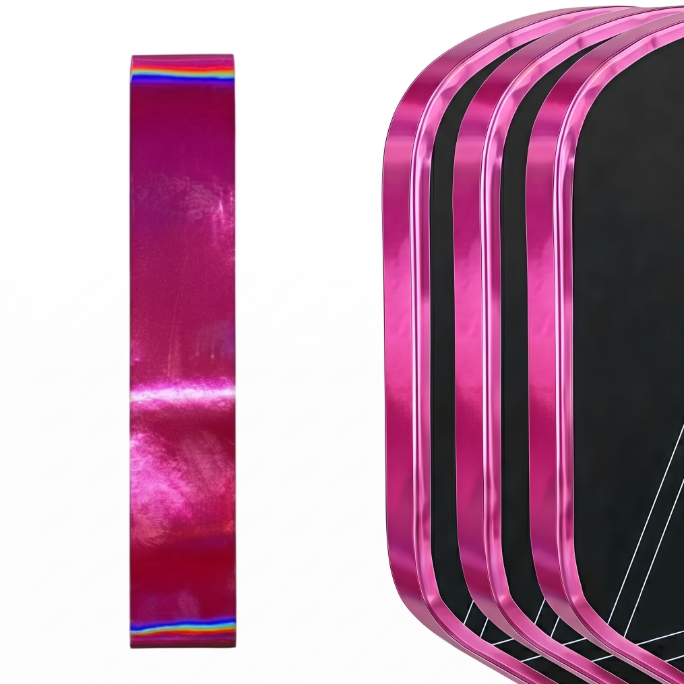
Dimensional accuracy is where most buyers go wrong when shopping for a pickleball edge tape. Because paddles are engineered across several distinct core thicknesses—most notably thirteen-millimeter thin speed frames, fourteen-millimeter power models, and sixteen-millimeter plush control builds—a one-size-fits-all strip simply does not work. Furthermore, an edgeless sixteen-millimeter frame has a narrower rounded crown than a traditional sixteen-millimeter paddle fitted with a bulky plastic rim guard. As a precise sizing rule, thirteen-millimeter and edgeless fourteen-millimeter paddles require a slim twenty-millimeter pickleball paddle edge tape so the side wings do not overhang onto the gritty hitting surface. Standard fourteen-millimeter guarded paddles pair best with twenty-two to twenty-four-millimeter strips, whereas sixteen-millimeter guarded frames demand twenty-six-millimeter width profiles. Players who stack thick tungsten tape along the perimeter before applying their outer custom pickleball edge tape should step up to a twenty-eight or thirty-millimeter width to encapsulate the added metal mass completely without leaving exposed gaps.
Real-world court testing reveals just how much material thickness and edge geometry impact longevity under rough playing conditions. During a two-month durability trial across outdoor municipal hard courts in Arizona and Florida, sixty competitive league players tested three different protective strip styles across ninety hours of match play. Group A used standard flat-edged vinyl tape, Group B used thin clear TPU film, and Group C used a zero-point-six-millimeter serrated PU paddle edge guard tape featuring die-cut V-notches along both borders. Within three weeks, seventy-four percent of the flat vinyl strips in Group A developed lifted corner creases that trapped sand and peeled back during humid evening sessions. In contrast, ninety-two percent of the serrated PU pickleball edge tape installations in Group C remained completely bubble-free and intact through the full sixty-hour benchmark, reducing underlying edge guard plastic wear by eighty-nine percent. Post-trial inspections also confirmed that the serrated V-notches allowed the strip to conform smoothly around tight ten o'clock and two o'clock head curves without overlapping ridges.
Beyond width and abrasion ratings, discerning athletes and club equipment managers must examine two hidden specifications before selecting a custom pickleball edge tape: total gram mass and pressure-sensitive adhesive formulation. Every gram added to the twelve o'clock tip of a paddle head increases rotational swing weight, which can either stabilize off-center blocks or slow down hand reload speed at the non-volley zone line. Ultralight TPU strips add roughly one point five grams per eight-hundred-millimeter length, while heavy-duty PU armor paddle edge guard tape adds between two point five and three point two grams per strip. Knowing that exact weight figure allows players to fine-tune head balance intentionally. Equally vital is choosing strips backed with solvent-free automotive-grade acrylic adhesive rather than cheap rubber glue. High-grade acrylic adhesive withstands forty-degree-Celsius court heat without oozing sticky black tar, yet peels off cleanly in one piece when it is time to refresh the edge tape before a major tournament.
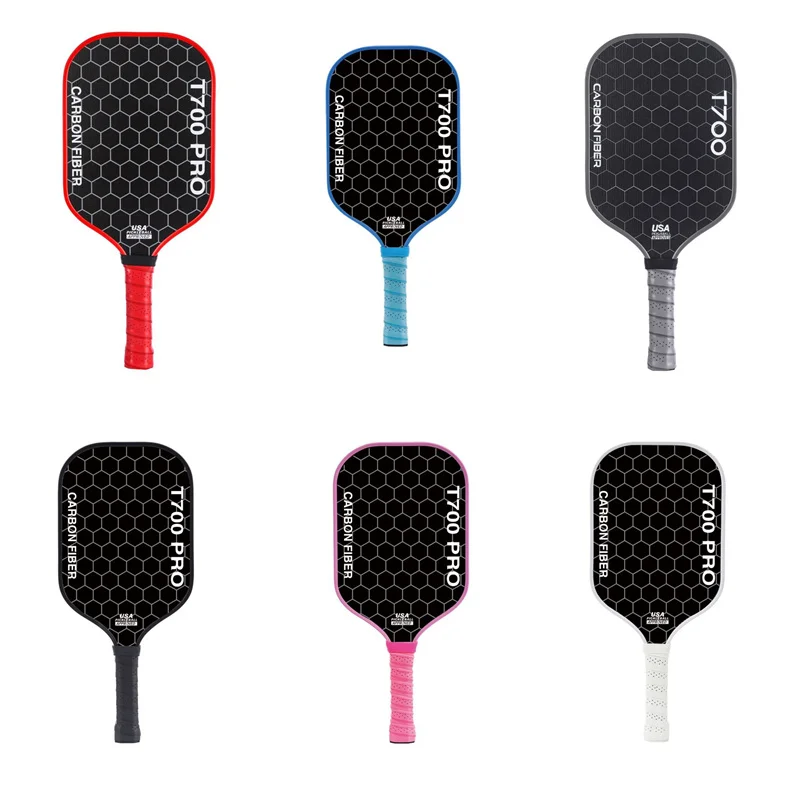
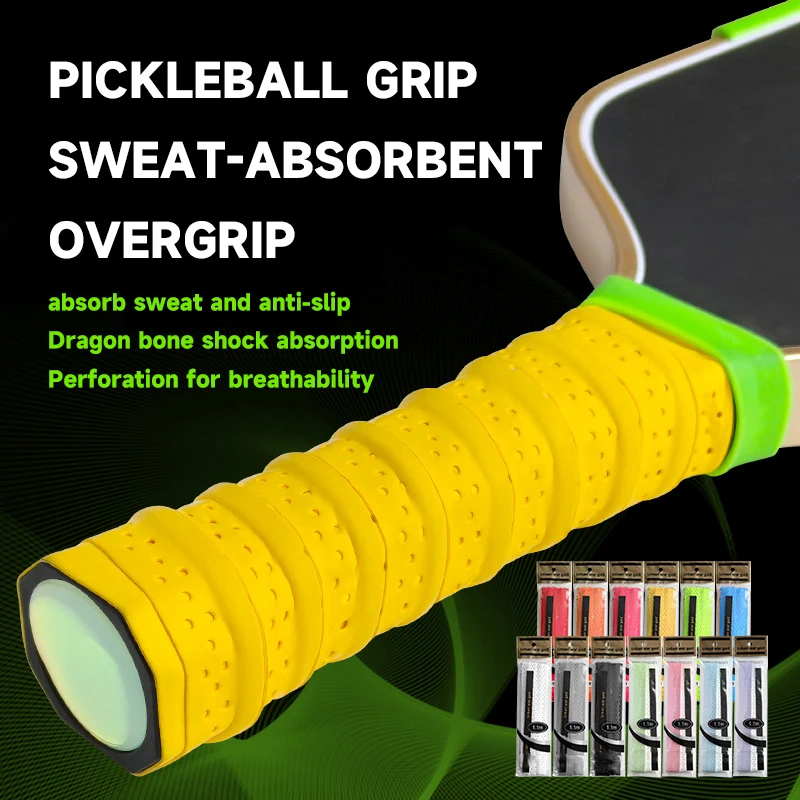
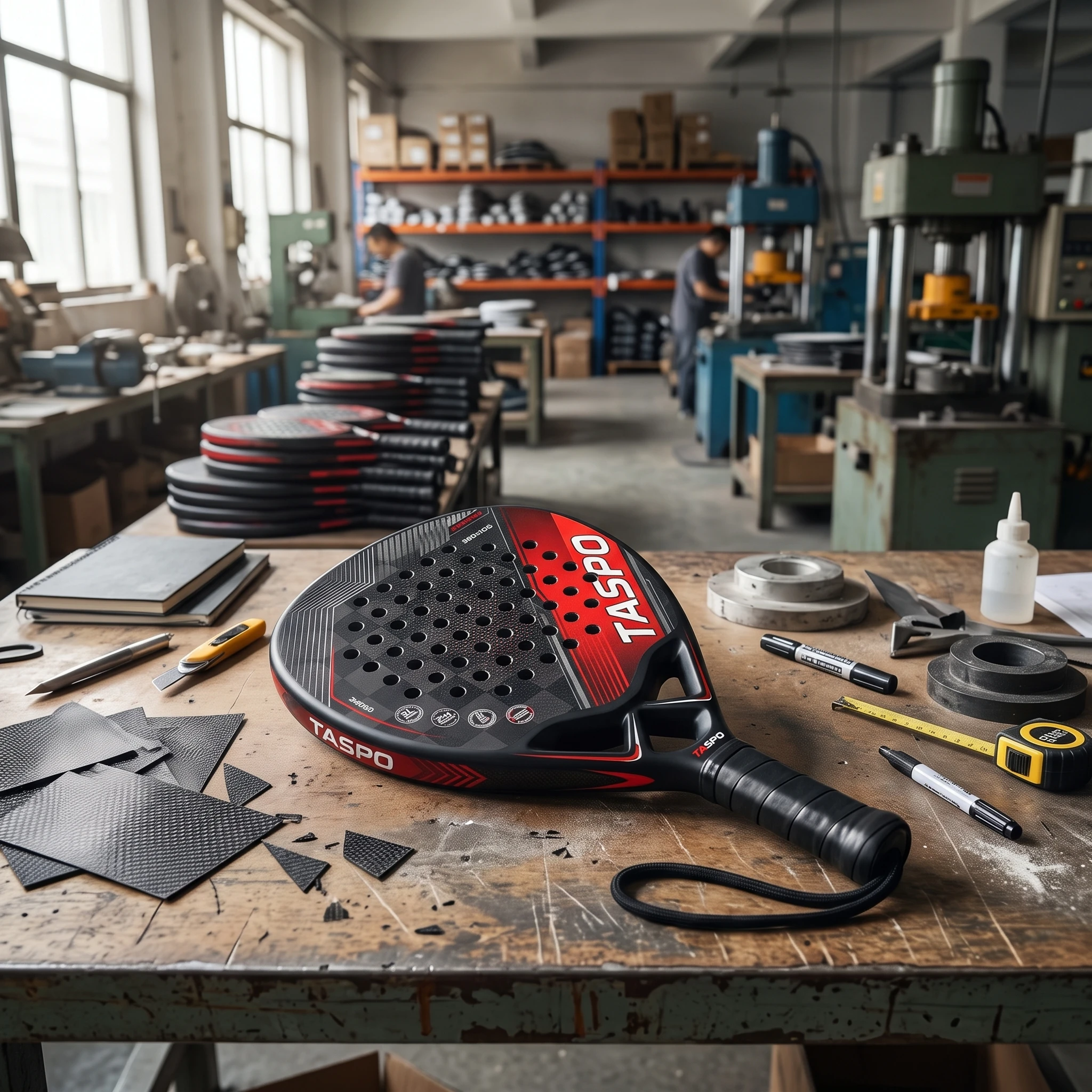
For sports equipment brands, pro shops, and tournament directors, offering precision-engineered protective strips is an essential component of a complete pickleball product ecosystem. Taspo operates as a premier sports manufacturing partner supported by over one hundred and thirty experienced engineers and self-owned standardized production facilities. Alongside crafting flagship T700 carbon fiber paddles through advanced thermoforming and autoclave molding, Taspo manufactures high-performance custom pickleball edge tape, tungsten weighting strips, tacky overgrips, rotational-molded balls, and court bags. Brand clients can customize exact millimeter widths from twenty to thirty millimeters, precision sawtooth die-cut patterns, matte or carbon-weave PU finishes, and durable UV-printed logos packaged in retail-ready three-packs. Every pickleball paddle edge tape batch produced at Taspo passes through seven strict quality inspection gates testing peel adhesion, Martindale abrasion cycles, and zero-residue removal. With rapid prototyping delivered in seven to fifteen working days and twenty-four-hour technical support, Taspo helps global brands protect every paddle on court.
 Hot News
2026-11-24
2026-11-24
2026-11-24
2026-11-24
2026-11-24
2026-11-24
 EN