Sta in campo, accanto alla linea laterale, durante una partita competitiva di beach tennis e la velocità pura degli scambi aerei ti sorprenderà. Poiché le regole vietano che la sfera tocchi il suolo e i giocatori stanno in piedi sulla sabbia instabile e faticosa, distanti soltanto otto metri l’uno dall’altro attraverso una rete alta un metro e settanta, ogni singolo scambio è una battaglia di colpi rapidissimi combattuta sopra l’altezza delle spalle. Gli atleti hanno meno di quattrocento millisecondi per reagire a un colpo violento dell’avversario, riallineare il polso e respingere la palla nella sabbia aperta. Quando un giocatore tenta di competere con una racchetta ingombrante e male bilanciata, che pesa oltre trecentosessanta grammi, l’inerzia rotazionale resta indietro rispetto alla coordinazione occhio-mano — causando contatti tardivi che mandano la palla fuori dal campo e infiammando i tendini dell’avambraccio dopo due set. Studi biomeccanici con cattura del movimento su atleti di beach tennis su campo sabbioso dimostrano che ridurre la massa della struttura in una finestra calibrata da trecentodieci a trecentotrentacinque grammi, abbassando contemporaneamente il peso in movimento, aumenta la velocità di reazione al netto del ventun percento. Comprendere ciò che definisce il design leggero delle racchette per beach tennis rivela come gli ingegneri dei materiali compositi eliminino grammi senza sacrificare la robustezza strutturale.
Comparing a beach tennis frame side-by-side against a traditional padel paddle immediately exposes the primary geometric secret behind its featherweight agility: beam thickness. While an enclosed-court padel frame measures a bulky thirty-eight millimeters thick to absorb heavy glass-wall rebounds, a dedicated lightweight beach tennis racket is molded to a razor-slim profile between twenty and twenty-two millimeters thick across a fifty-centimeter total length. Shaving nearly eighteen millimeters off the profile thickness slashes the frontal wind-resistance cross-section by thirty-two percent and removes massive amounts of internal foam weight. However, making a composite frame that thin creates an engineering challenge: if the outer skeleton is weak, a twenty-millimeter beam will twist and flutter violently on off-center smashes. Master manufacturers solve this by molding a rigid, hollow twin-tube one hundred percent carbon fiber perimeter frame reinforced with high-modulus 3K, 12K, or 18K woven carbon faces—and frequently interlacing braided Kevlar aramid fibers at the throat bridge. This aerospace carbon exoskeleton locks in rock-solid torsional stability while keeping total mass remarkably light in the hand.
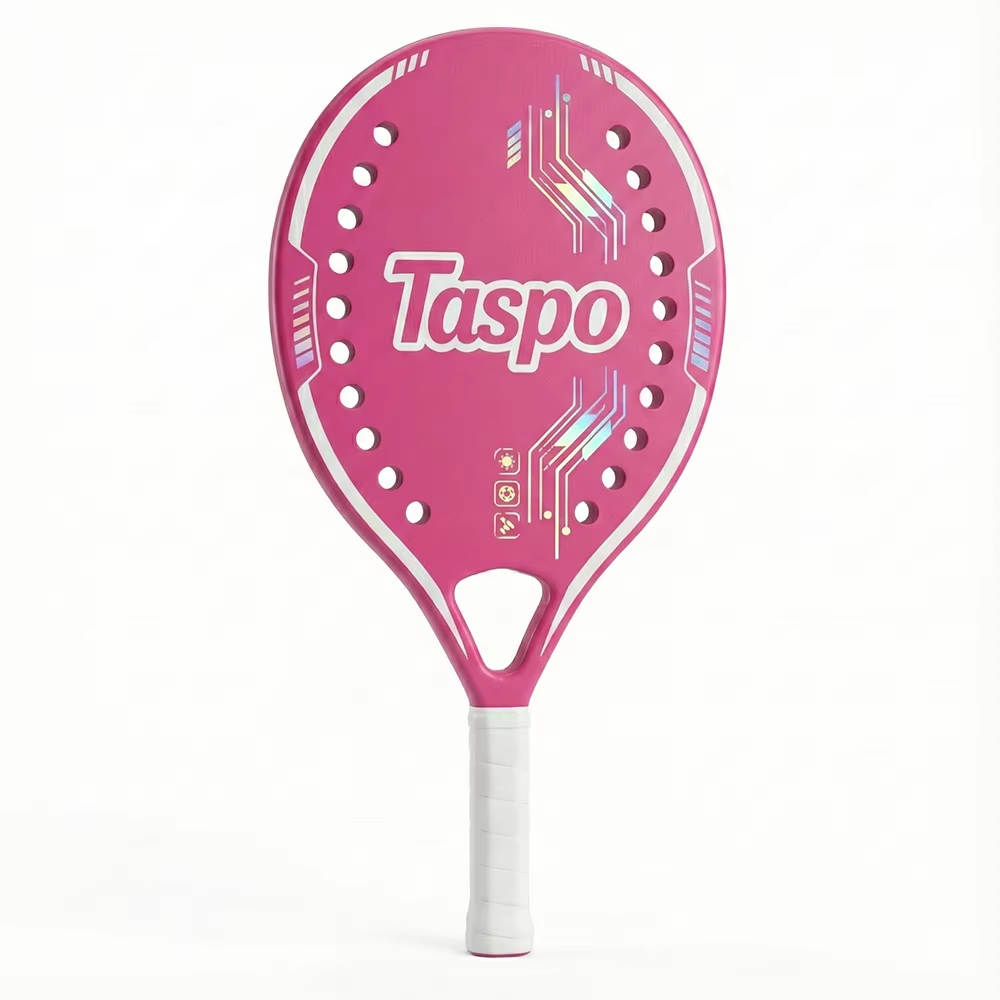
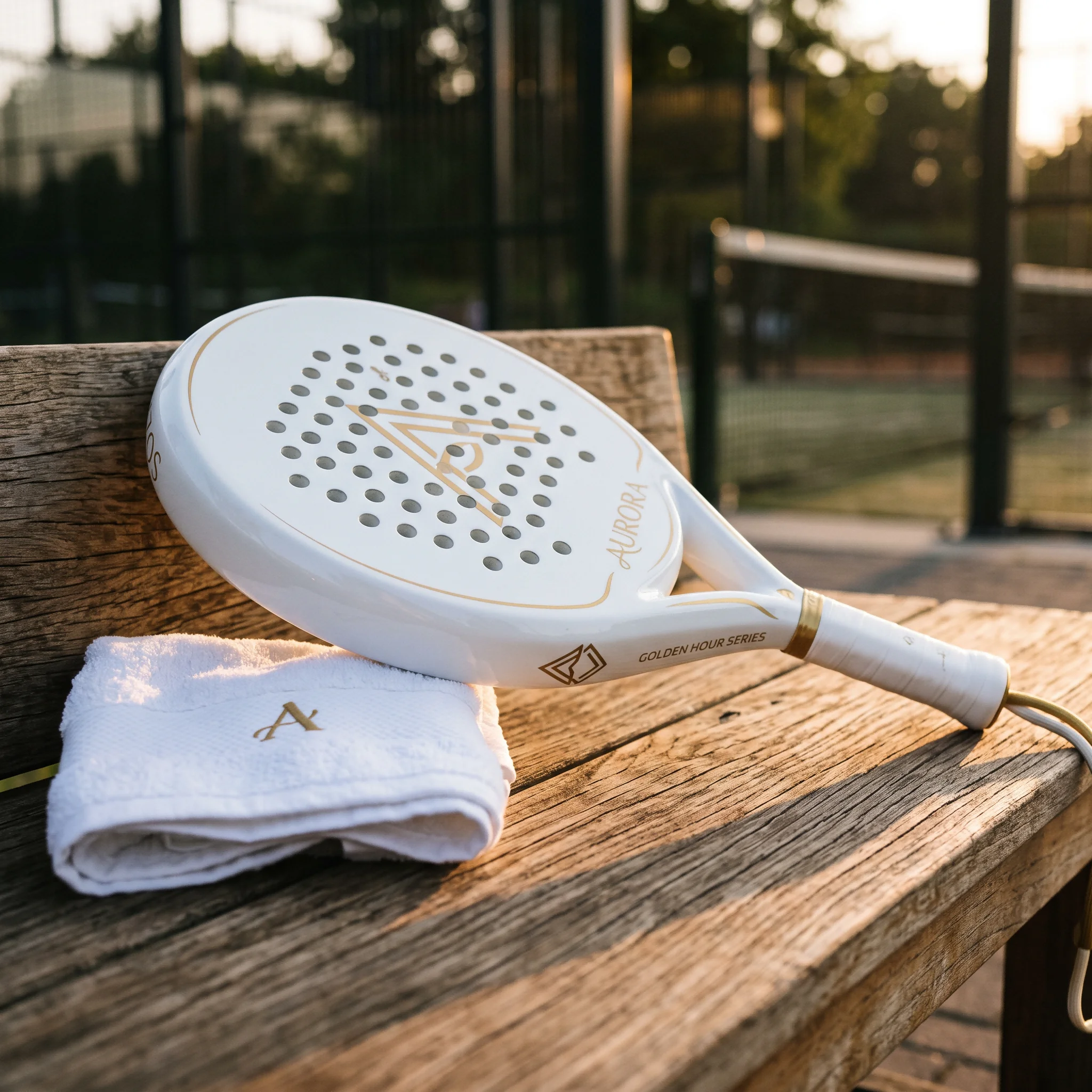
Observa atentamente la cara de un marco de tenis de playa de grado competitivo y notarás un patrón de perforación de agujeros que parece completamente distinto al de cualquier otro deporte con raqueta. En vez de perforar agujeros rectos a través del centro de la zona de impacto, los ingenieros agrupan con precisión aperturas de ventilación controladas numéricamente por computadora (CNC) en arcos curvos de doble fila a lo largo de los hombros periféricos y la base de la garganta—dejando la zona central óptima totalmente sólida y sin perforar. Esta estrategia de perforación CNC en el perímetro logra dos objetivos críticos en el diseño de una raqueta ligera de tenis de playa. Primero, mantener intacta la cara central de carbono preserva la máxima tensión tipo tambor para lanzar esferas naranjas despresurizadas profundamente hacia la cancha del oponente con mínimo esfuerzo de golpeo, mientras evita que la arena mojada de la playa se acumule dentro de agujeros centrales. Segundo, colocar los agujeros aerodinámicos de ventilación a lo largo de los bordes externos libera la resistencia del aire de alta presión en la parte del aro que se mueve más rápido, reduciendo la resistencia al golpeo en un catorce por ciento. Combinar esa punta ventilada con un puente de garganta optimizado (simple o doble) y un punto de equilibrio cabeza-ligera de doscientos cincuenta a doscientos cincuenta y cinco milímetros hace que un marco de carbono de trescientos veinte gramos se sienta ligero e intuitivo durante torneos veraniegos de tres horas.
Examining commercial product launches from leading beach sports markets proves how precision lightweight engineering drives immediate adoption among competitive players and pro shops. Consider an established beach racket brand operating across Rio de Janeiro, Brazil, and Cesenatico, Italy—two global capitals of professional beach tennis. Two years ago, their flagship catalog models averaged three hundred and fifty grams with a head-heavy balance, drawing complaints from mixed-doubles and female tournament players who struggled with shoulder fatigue during multi-match weekend draws. Partnering directly with a specialized composite ODM factory, the brand re-engineered its pro series around a twenty-one-millimeter slim-beam mold. By combining an ultra-lightweight 18K aluminized carbon face with a fifteen-degree high-recovery Black EVA core, perimeter CNC wind slots, and a micro-calibrated quartz-sand grit spin coating, the factory delivered a tournament-ready frame weighing exactly three hundred and thirty-two grams balanced at two hundred and fifty-two millimeters. Tour testing showed an eighteen percent increase in defensive net-block recovery among sponsored pros, and wholesale beach tennis racket orders surpassed five thousand units within the first six months of release.
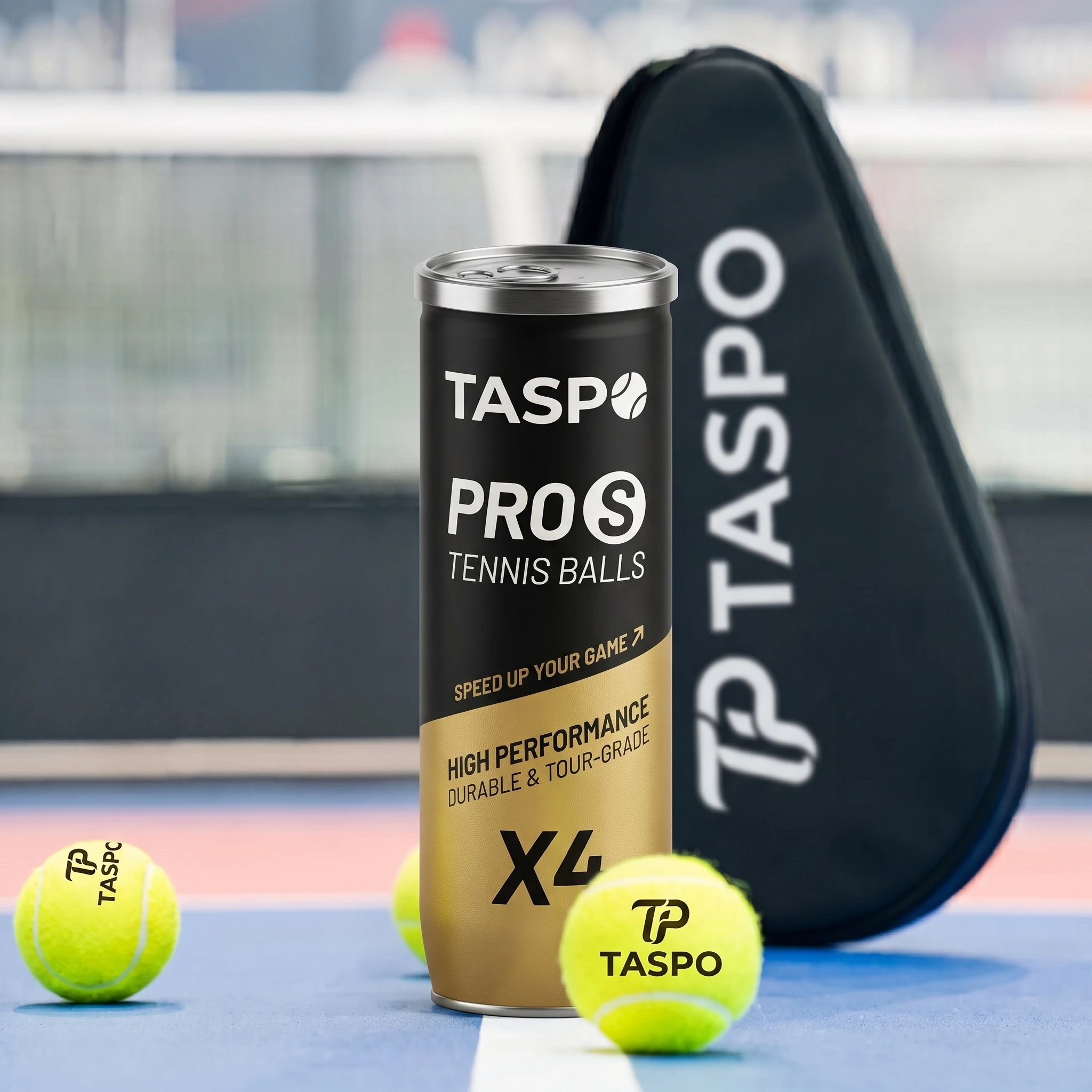
Producing a slim twenty-millimeter carbon frame that hits an exact three hundred and twenty gram target weight without structural weak spots requires a manufacturing partner with elite prepreg weight control and thermal molding precision. When brands source through unverified trading brokers, low-end workshops often use heavy fiberglass fillers or apply thick coats of body putty to hide molding flaws—causing finished frames to arrive twenty grams overweight and ruining the head-light balance. Collaborating directly with a vertically integrated composite manufacturer eliminates that weight drift completely. This is where Taspo stands out as the premier engineering and OEM production home for global beach tennis brands, coastal club networks, and sporting goods distributors. Operating modern ISO-certified hydraulic molding lines, five-axis CNC diamond-bit drilling stations, and clean-room UV quartz-grit spray booths, Taspo engineers custom beach tennis rackets with strict plus-or-minus three-gram digital weight sorting and six-axis impact fatigue verification. Even better, partners can consolidate their lightweight carbon rackets with Taspo’s ITF-compliant Stage 2 low-pressure orange beach tennis balls, waterproof overgrips, sweatbands, and thermal sand bags in a single shipment to dominate coastal retail markets.
 Nuntii Calidi
2026-11-18
2026-11-18
2026-11-18
2026-11-18
2026-11-18
2026-11-18
 EN