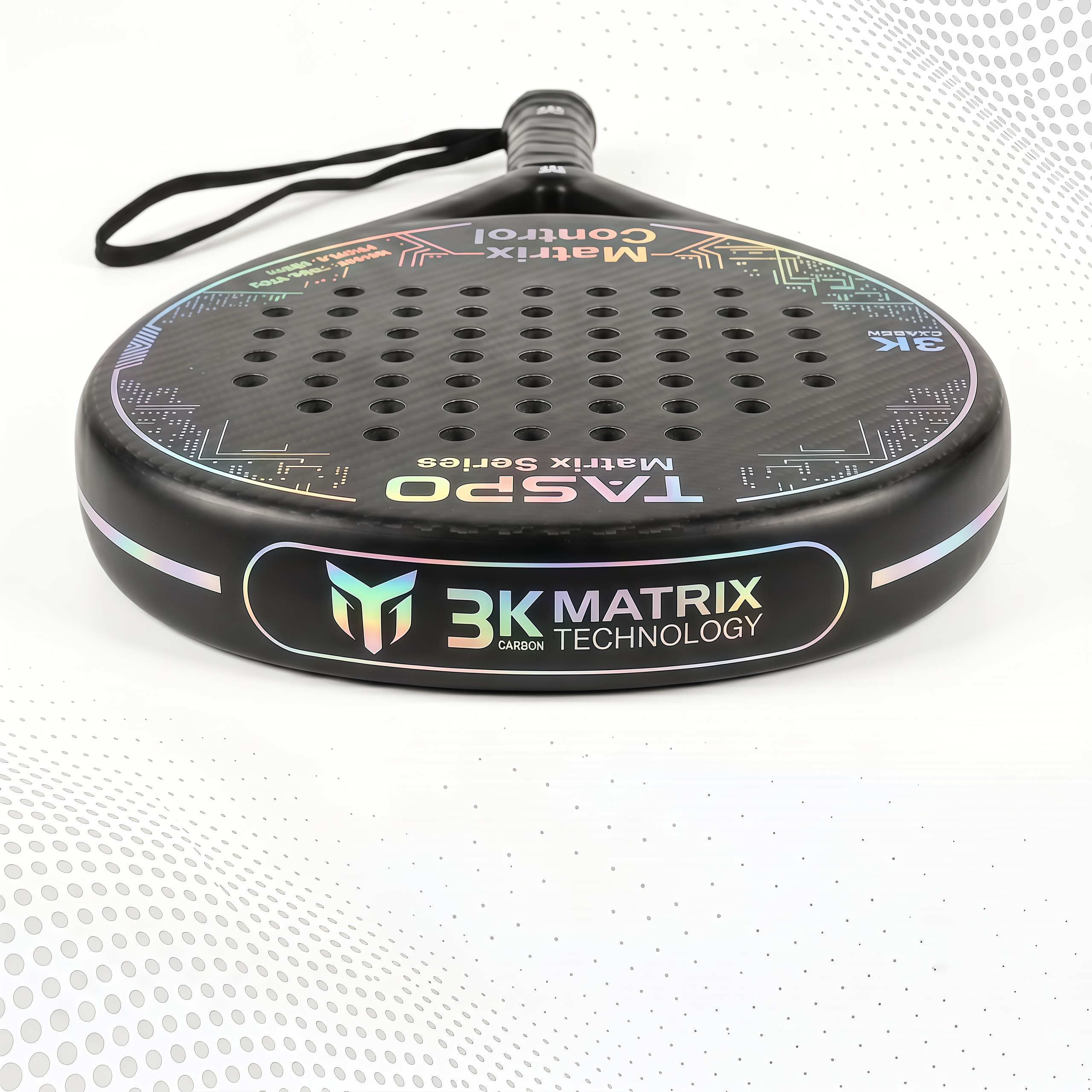
Anyone who bought a flagship paddle three years ago and compares it against the hardware dominating tournament brackets today can feel the engineering leap on the very first swing. First-generation composite frames were little more than flat polypropylene honeycomb slabs sandwiched between two glued fiberglass sheets and capped with a brittle plastic rim. Those early builds suffered from tiny central sweet spots, jarring vibration whenever a ball struck near the edge, and spray-on surface grit that wore smooth after three weeks of heavy hitting. Tracking current pickleball paddle design trends in the sports market reveals how aerospace composite molding and elastomeric core physics have completely reinvented the instrument. For sports equipment brands, club pro shops, and regional distributors, staying ahead of these structural trends is the difference between launching a sold-out flagship line and sitting on obsolete warehouse inventory.
The foundational shift defining modern pickleball paddle design trends is the industry-wide transition from ambient cold-pressing to high-temperature unibody thermoforming paired with perimeter foam injection. In a thermoformed build, pre-impregnated carbon fiber sheets wrap continuously across the hitting face, around the entire outer edge wall, and down through the handle spine inside a precision CNC-milled aluminum mold heated past one hundred and forty degrees Celsius. During this thermal curing cycle, technicians inject expandable high-density polyurethane foam into a channel running around the entire outer perimeter of the honeycomb core and down the handle walls. This dual innovation solves two chronic player complaints simultaneously: the continuous carbon perimeter eliminates weak neck joints that used to snap during hard overheads, while the injected perimeter foam expands the usable sweet spot outward toward the ten o'clock and two o'clock corners, boosting torsional twist weight without making the paddle feel sluggish.
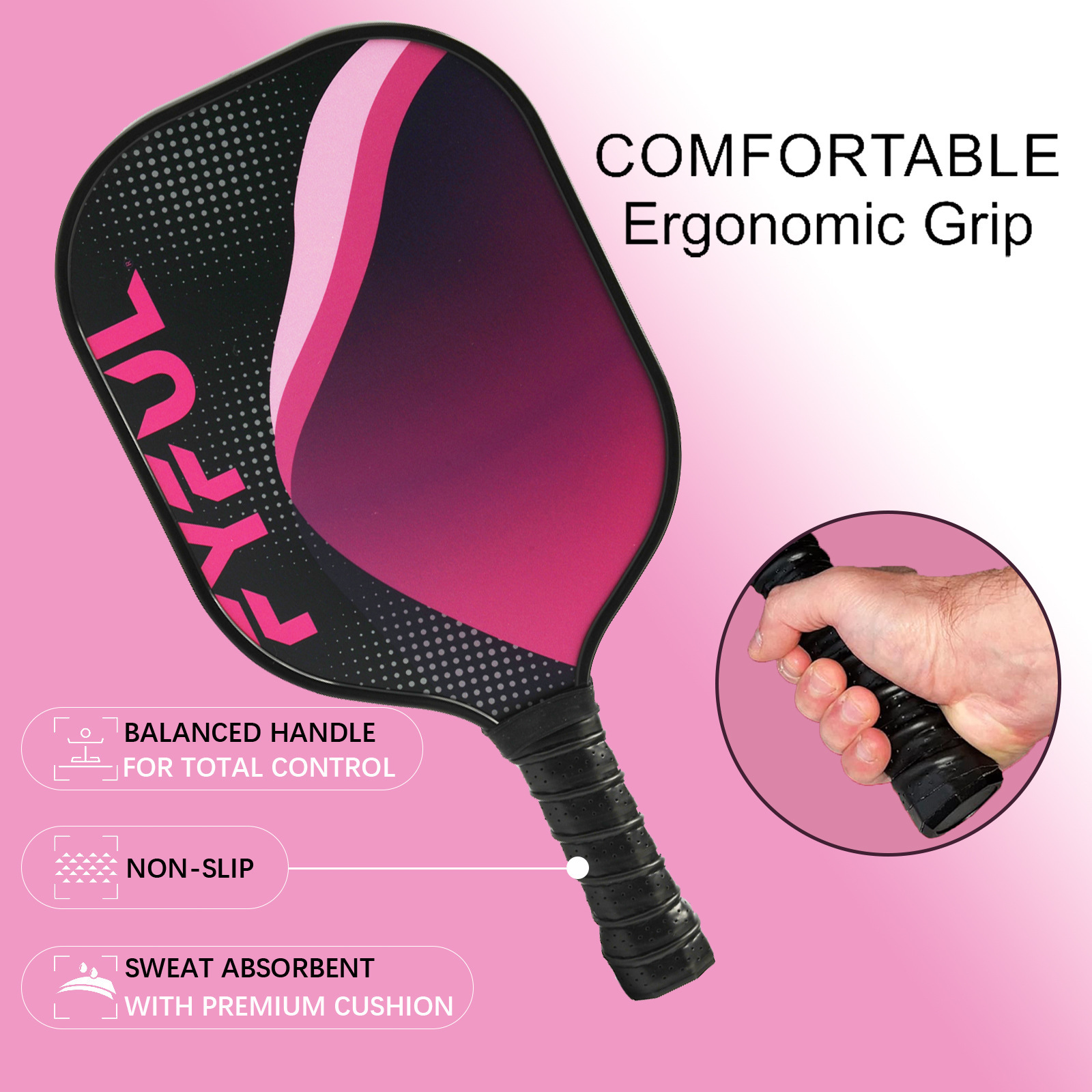
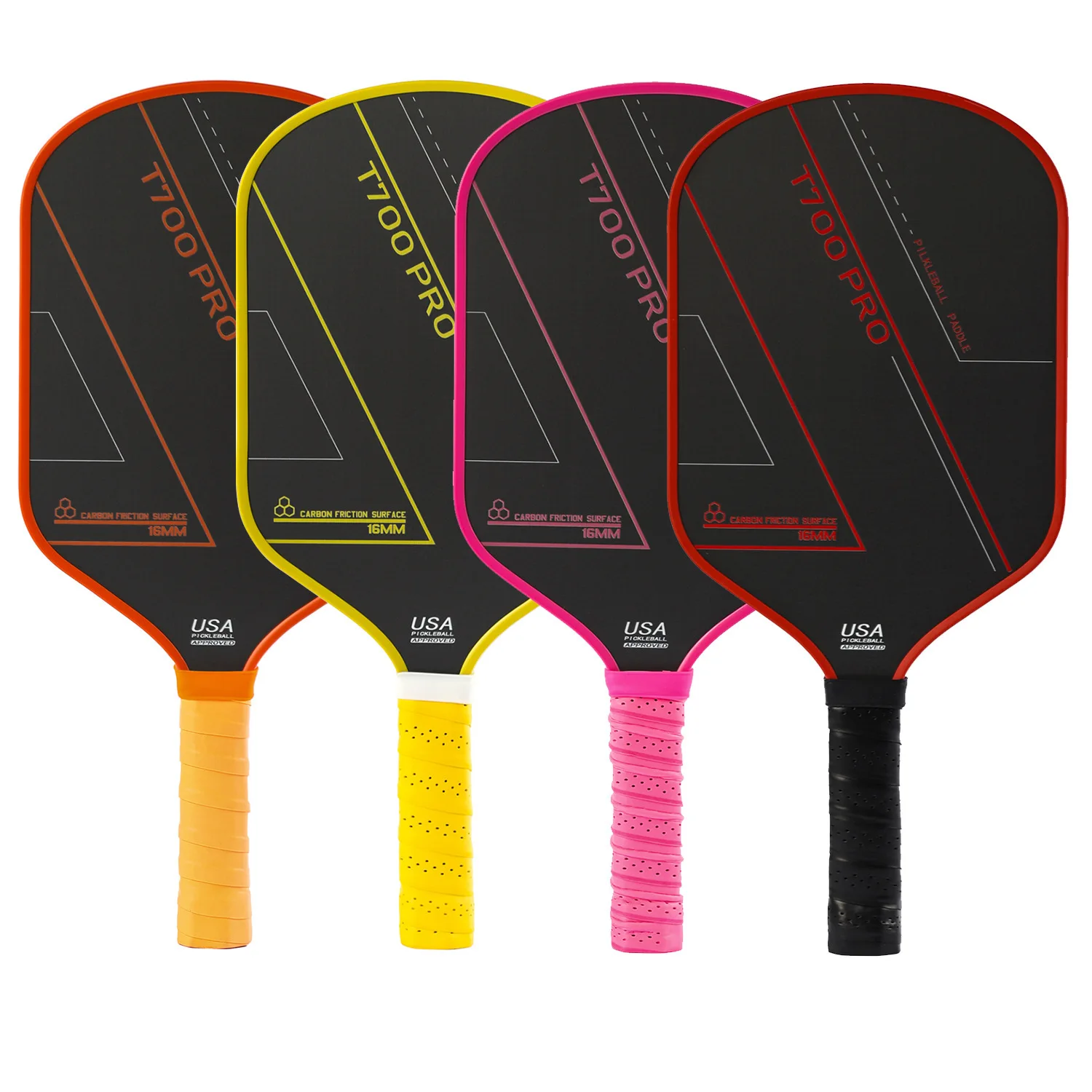
On the hitting surface and inside the cellular core, material scientists are moving beyond plain black graphite to unlock simultaneously plush dwell time and explosive ball exit speed. While raw unidirectional T700 carbon fiber pickleball paddle faces remain the gold standard for generating two-thousand-plus revolutions per minute of topspin via integral peel-ply release textures, the hottest surface trend involves hybrid biaxial weaves. By interlacing high-modulus T700 or 18K carbon filaments with colored aramid Kevlar or titanium-coated PET fibers at forty-five-degree angles, engineers dampen high-frequency impact shock while creating unmistakable visual patterns across the face. Beneath the skin, traditional single-density honeycomb is giving way to multi-density propulsion cores—where an eight-millimeter polypropylene honeycomb matrix is surrounded by a floating elastomeric EVA foam ring or dual-density cell zones. That flexible perimeter suspension allows the core to pocket the sphere like a tennis string bed on soft kitchen dinks while rebounding with ferocious pop on baseline drives.
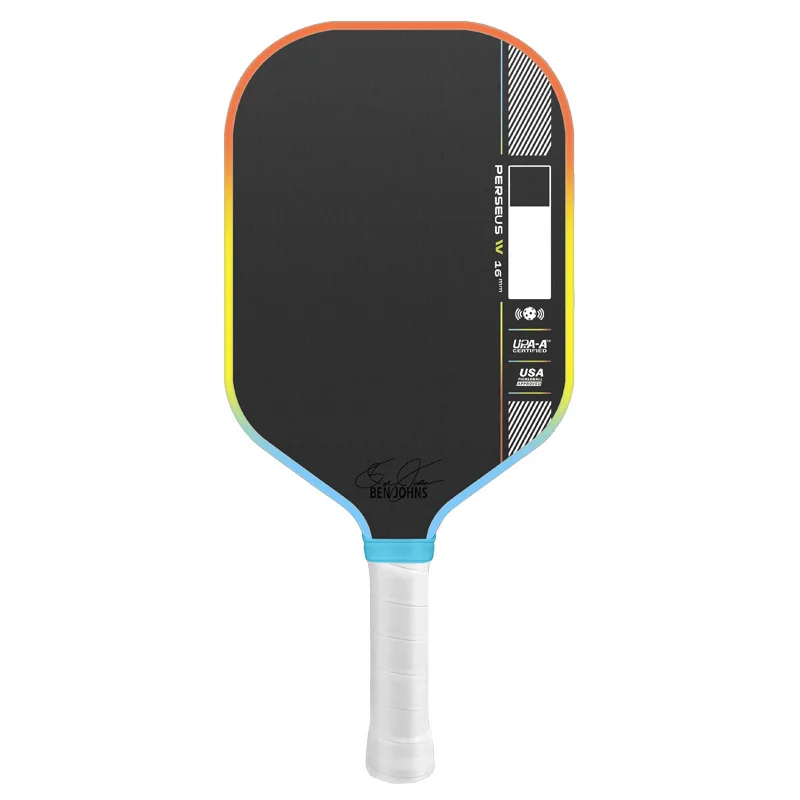
Geometric silhouette evolution is another major pillar shaping custom pickleball paddles across retail shelves this season. For years, buyers were forced to choose between boxy fifteen-point-eight-by-eight-point-two-inch widebody defense paddles and narrow sixteen-point-five-by-seven-point-five-inch elongated power sticks that swung heavy at the net. Today, sales and tour telemetry confirm that the sixteen-point-two-inch hybrid aerodynamic silhouette—featuring tapered, rounded top corners and a flared sweet spot—has captured over fifty-six percent of new flagship launches. Removing dead mass from the upper corners lowers rotational swing weight while preserving extra reach for two-handed backhands. Simultaneously, designers are integrating precision-molded aerodynamic air channels and open throat cutouts between the handle and the hitting face, paired with edgeless or low-profile thermoformed rims that slice through coastal crosswinds and accelerate hand reload speed by eleven percent during rapid kitchen volley exchanges.
As thermoformed power and core suspension technologies push ball velocity to record highs, governing bodies have tightened technical testing protocols to protect competitive integrity. Forward-thinking brands evaluating pickleball paddle design trends must ensure their R&D innovations remain strictly within official USA Pickleball and international federation limits. In addition to enforcing the classic seventeen-inch maximum length, twenty-four-inch combined length-and-width ceiling, and thirty-micrometer maximum average peak-to-valley surface roughness, sanctioning laboratories now audit dynamic face deflection and coefficient of restitution to prevent illegal trampoline catapulting. Engineering a compliant tournament pickleball paddle requires calibrating prepreg resin ratios, honeycomb cell wall thickness, and peel-ply weave depth inside the factory lab prior to mass production so frames deliver maximum legal firepower without risking mid-season tournament bans.
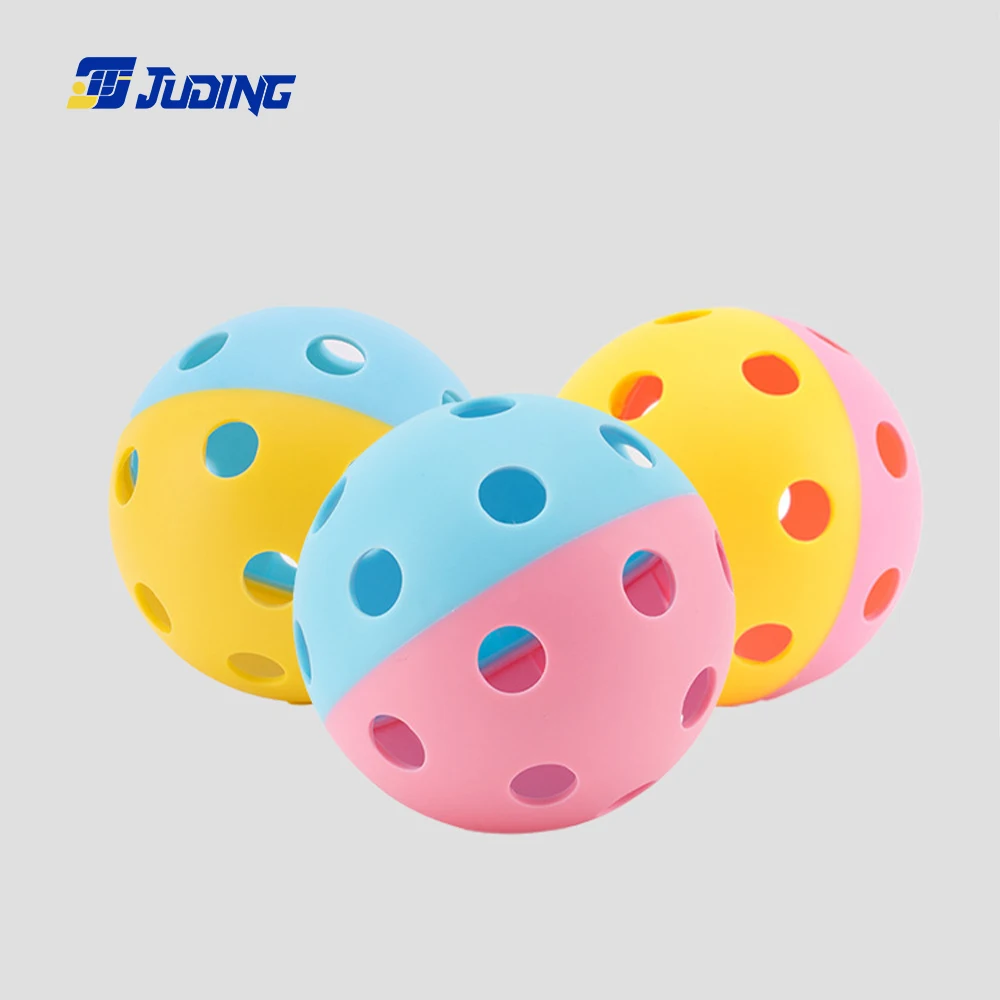
Turning these cutting-edge material and geometric trends into a proprietary, tournament-approved product line requires partnering with a composite manufacturer that invests heavily in continuous R&D. Taspo operates as a premier B2B sports equipment manufacturer supported by over one hundred and thirty experienced engineers and self-owned standardized production bases. Specializing in advanced T700, T800, 3K, 12K, 18K, and Kevlar-hybrid carbon prepreg layups, unibody thermoforming, perimeter foam injection, propulsion core suspension, and five-axis CNC machining, Taspo empowers global sports brands and distributors with turnkey OEM and ODM solutions. Partners can customize hybrid aerodynamic molds, throat cutouts, 13mm, 14mm, and 16mm multi-density cores, and raw peel-ply spin surfaces, alongside seamless rotational-molded balls, sawtooth edge guard tapes, tacky overgrips, sweatbands, and court bags. Every custom pickleball paddles batch leaving Taspo passes through seven strict quality inspection gates verifying deflection legality, roughness compliance, and ultrasonic core bonding. With custom prototypes ready in seven to fifteen working days and twenty-four-hour engineering support, Taspo keeps global brands at the forefront of market innovation.
 Hot News
2026-11-25
2026-11-25
2026-11-25
2026-11-25
2026-11-25
2026-11-25
 EN