 EN



How to Select a Padel Racket for Power?
A power-focused padel racket should help you strike decisively without making the next defensive shot feel like a struggle. Start with the shots you can repeat, not just the hardest smash you hit once. Shape, balance, weight and core firmness all influence the way a padel racket moves and responds, but none tells the whole story on its own.
Use this guide to narrow the options, compare the trade-offs and test a padel racket in conditions that resemble your usual game. The aim is useful attacking pace with enough control to stay in the point.
What does power mean for your game?
For an experienced attacker, power may mean adding pace to an overhead when there is time to prepare. For a newer player, it may mean getting the ball deep with a shorter swing. These are different demands. A padel racket that feels lively on a compact stroke may not feel as stable when another player swings hard, and the reverse can also be true.
Before comparing specifications, notice where you lose attacking opportunities. Are you late on overheads? Do volleys lack depth? Or are you striking near the edge of the face? If contact is inconsistent, a more manageable padel racket can be a useful starting point, even if a heavier option seems more powerful on paper.
Compare shape and the contact area
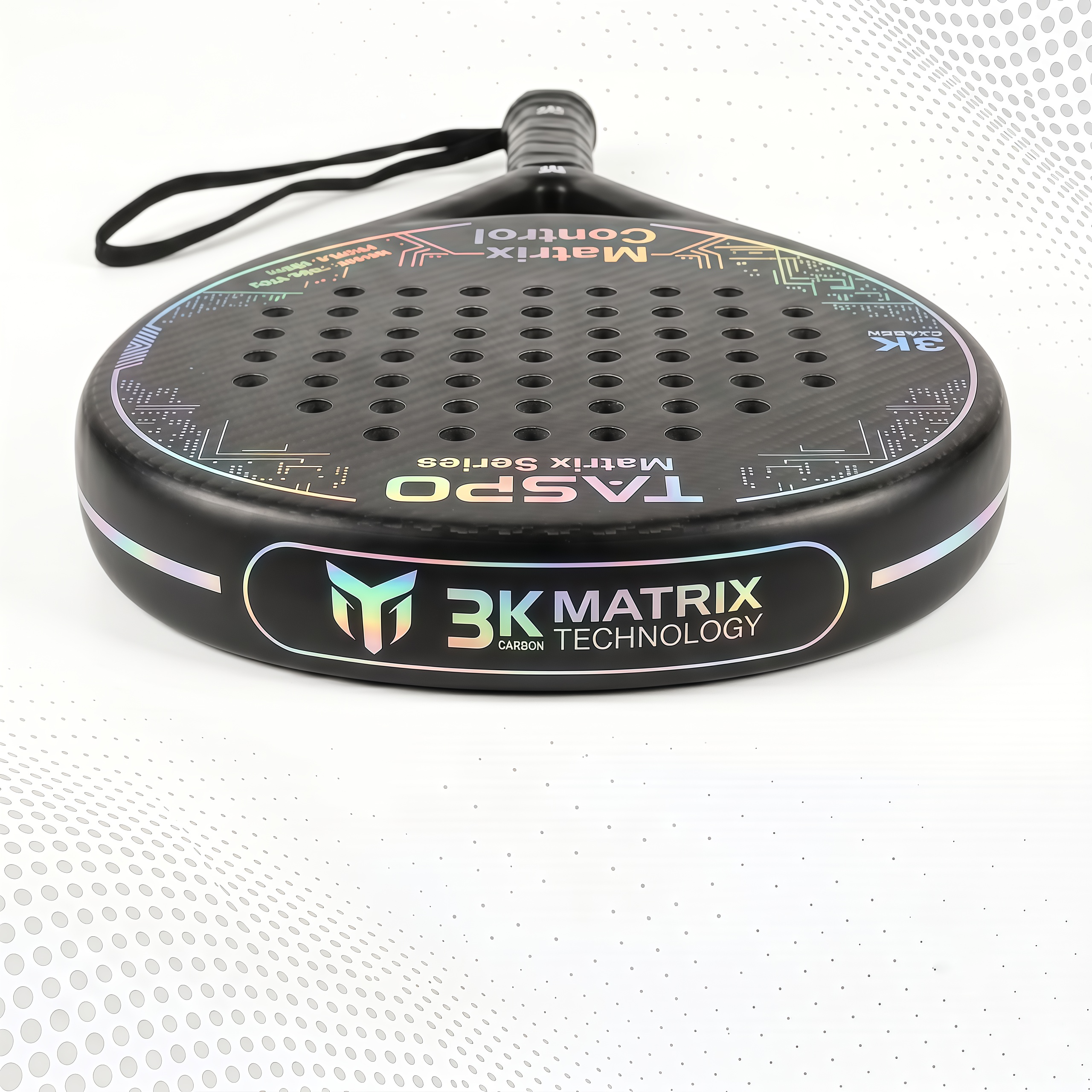
A diamond-shaped padel racket is commonly associated with attacking play. Its sweet spot, the area that feels most effective at contact, tends to sit higher on the face and can be less forgiving outside that area. Some diamond models also place more weight toward the tip. These are tendencies, not specifications you can assume for every model.
A round padel racket generally has a more central sweet spot and may feel easier to use when contact varies. A teardrop shape is often presented as a middle ground. If a diamond frame gives you a forceful overhead but weakens your volleys or makes you late in defense, try a teardrop or round frame before deciding. Compare actual balance and feel rather than relying on the outline alone.
Check balance and weight together
A head-heavy padel racket places more of its weight farther from the hand. That can help create momentum through an attacking stroke, but it can also feel slower to reposition. A more evenly balanced padel racket may be easier to turn during quick exchanges, even when its total weight is similar.
Ask for the actual weight and balance of each sample, including any grip or protector already fitted. Accessories change the way a padel racket feels, so compare samples in the condition you will play with. Hold each one in a ready position, make a few controlled overhead motions, then alternate forehand and backhand volleys. If you have to rush or squeeze the handle to move it, that is useful feedback.
Do not choose the heaviest padel racket you can lift for a single swing. Choose a weight and balance you can accelerate repeatedly with a relaxed grip. If the racket feels fine at the start but cumbersome later in a session, consider a lighter or less head-heavy setup.
Match core and face feel to your swing
The core and the face work as a system. A softer-feeling padel racket can give a more lively response on slower strokes, while a firmer-feeling construction may appeal to someone who swings faster and wants a more direct contact. Foam type, face layers and the rest of the construction can all affect that experience.
Material labels alone are not a reliable ranking. Two models with similar descriptions can feel different on court. Instead of treating carbon or a foam label as proof of power, ask the seller for the construction details and try each padel racket against the same types of ball. Pay attention to both your overhead and your first defensive contact after the bounce.
Comfort matters too. If a padel racket produces an unpleasant sensation in your hand or arm, stop the trial and reassess the setup. A different grip, balance or overall feel may be worth testing; equipment advice is not a substitute for medical guidance if pain persists.
Run a practical on-court comparison
Test two or three candidates in the same session if possible. Use similar balls and switch between frames rather than trying each padel racket on a different day. A short, repeatable routine makes the trade-offs easier to notice.
- Warm up: hit controlled groundstrokes and volleys to judge the grip and contact feel.
- Build pace: play several overheads with the same target, starting at a comfortable effort before increasing speed.
- Check recovery: move from an overhead into a ready position, then react to a quick volley or defensive ball.
- Track consistency: note whether the ball lands where intended and how often contact feels clean, rather than judging a single hard hit.
- Repeat later: revisit the leading padel racket after a longer rally or game to see whether it still feels manageable.
For example, a player might hit one impressive overhead with a head-heavy padel racket but place more balls in the intended area with a moderate balance. That is a hypothetical comparison, not a test result. The second frame may offer more useful power in that player's actual matches.
What should buyers ask before ordering?
Whether you are selecting one padel racket or comparing samples for a range, request the weight, balance point, shape, core and face details in writing. Confirm whether the stated weight includes the grip and any protector. Ask what can vary between samples and the units supplied, and check what information the seller can document rather than assuming identical feel from a label.
Inspect the condition of the handle and safety cord before play and wear the cord during use. If you plan to compete, check the current equipment rules for your event with the organizer or governing body. The International Padel Federation publishes its rules, but local event requirements should also be confirmed.
For a broader look at the supplier's racket-sport range, visit Taspo Sports. Confirm the details of any specific padel racket directly before ordering; no individual model is being recommended here.
Quick selection checklist
- Define the stroke where you want more usable pace.
- Compare shape and sweet spot alongside the actual balance.
- Choose a padel racket you can maneuver during fast defensive exchanges.
- Test core and face feel at your normal swing speed, not just at full effort.
- Record consistency, comfort and fatigue as well as attacking pace.
- Confirm specifications and applicable event rules before purchase.
The right power-oriented padel racket is the one that supports your attacking intentions while leaving you ready for the next ball. Start with a manageable setup, test the alternatives and let repeatable court performance guide the final choice.
 Hot News



