For decades, independent pro shops, regional sporting goods distributors, and high-performance coaching academies had very little choice when stocking their walls: they ordered whatever standard catalog frames the three or four multinational conglomerates released that season. Yet over the past five years, a major commercial shift has reshaped wholesale purchasing calendars. Retailers grew tired of surviving on razor-thin twenty-five percent margins while online discount warehouses undercut their prices, and competitive players grew frustrated paying two hundred and sixty dollars for mass-produced frames that varied by up to seven grams from one unit to the next. Understanding why custom tennis racket orders dominate markets today reveals how direct access to aerospace-grade composite manufacturing has democratized tour-level hardware. By commissioning bespoke frames tailored to exact biomechanical specs and exclusive visual identities, B2B buyers capture both superior on-court playability and full brand ownership.
Market telemetry across North America, Europe, Asia, and Australia confirms that boutique equipment labels and academy-owned private brands are capturing a rapidly growing share of specialty racket sales. Modern players—ranging from junior tournament grinders to four-times-a-week club league competitors—no longer buy frames simply because a touring celebrity holds a painted-over pro stock version on television. Informed athletes use launch monitors and swing-weight machines; they care about raw graphite quality, arm-friendly flex ratings, and tight batch tolerances. Consequently, regional distributors and multi-court tennis centers are placing custom tennis racket orders directly with specialized OEM and ODM factories. Launching an exclusive line of custom tennis rackets allows an academy or regional brand to offer players genuine "pro-room" build quality at an accessible retail price while protecting their pro shop from online price comparison.
The primary technical driver behind surging custom tennis racket orders is the ability to fine-tune internal composite layups rather than settling for generic, overly stiff factory molds. Mass-market frames frequently rely on high-resin fiberglass-graphite blends cured above seventy RA on the Babolat RDC stiffness index, which generates easy power in a five-minute demo but punishes the wrist and elbow over a full season. When a brand partners directly with a carbon fiber tennis racket manufacturer, engineers customize the exact orientation of unidirectional and woven T700, T800, and high-modulus M40J prepreg plies around the inflatable air bladder. Placing braided forty-five-degree carbon-kevlar fibers along the two o'clock and ten o'clock shoulders locks down torsional face stability on off-center service returns, while tuning throat shaft flexibility down to a plush sixty-two to sixty-five RA pockets the ball for pinpoint cross-court control. Buyers can specify ninety-eight, one-hundred, or one-hundred-and-five-square-inch heads paired with open sixteen-by-nineteen spin patterns or dense eighteen-by-twenty control drilling.
Real-world financial audits from specialty retailers and coaching networks demonstrate how custom hardware transforms unit profitability. Two years ago, a coalition of ten indoor and outdoor tennis clubs in Western Europe and the American Northeast decided to allocate forty percent of their pro shop wall space to their own co-developed line of wholesale custom tennis rackets—featuring a two-hundred-and-eighty-five-gram intermediate frame and a three-hundred-and-five-gram tournament box-beam model. Every frame was factory-matched to a strict plus or minus one point five gram static weight tolerance and bundled with matching custom overgrips and a thermal racket bag. Within twelve months of rollout, average gross retail margins across participating pro shops jumped from twenty-eight percent on third-party labels to sixty-one percent on their custom tennis racket collection. Even better, forty-eight percent of players who bought a single frame returned within ninety days to purchase a second matched frame once they experienced the zero-variance swing weight during league play.
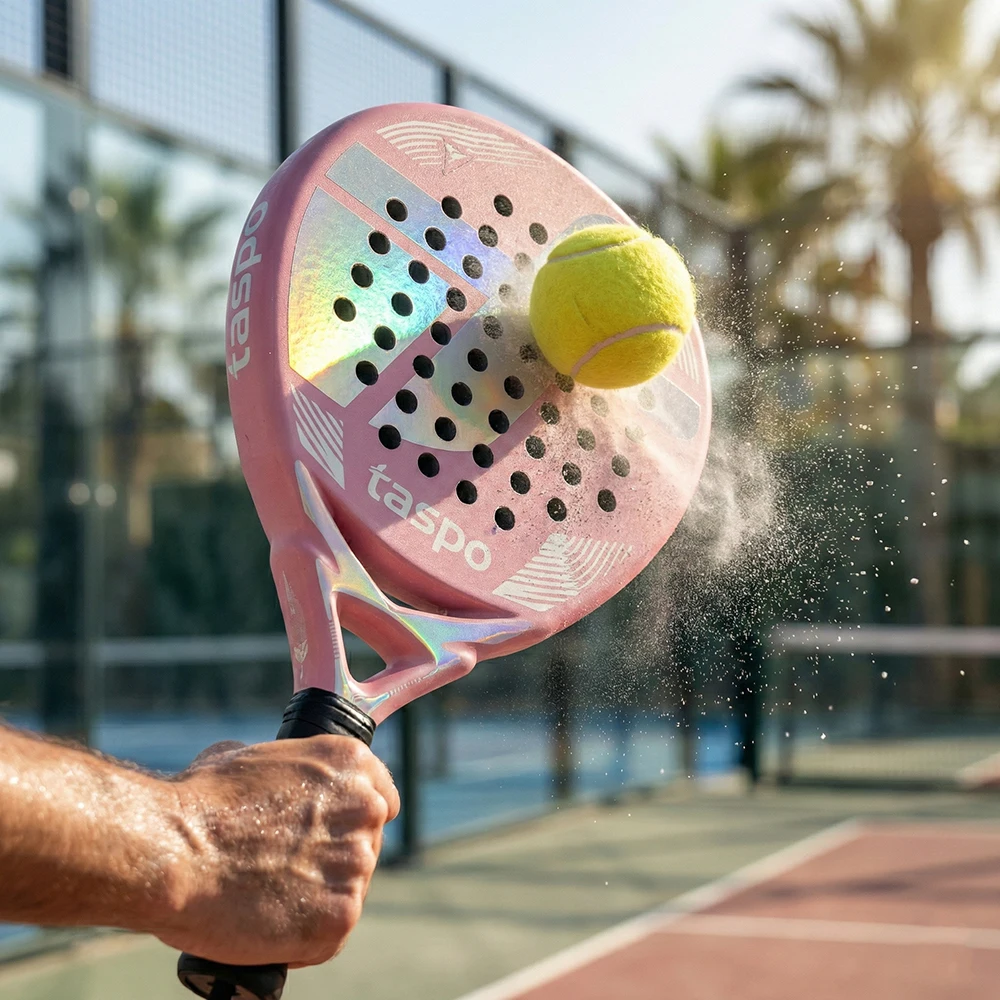
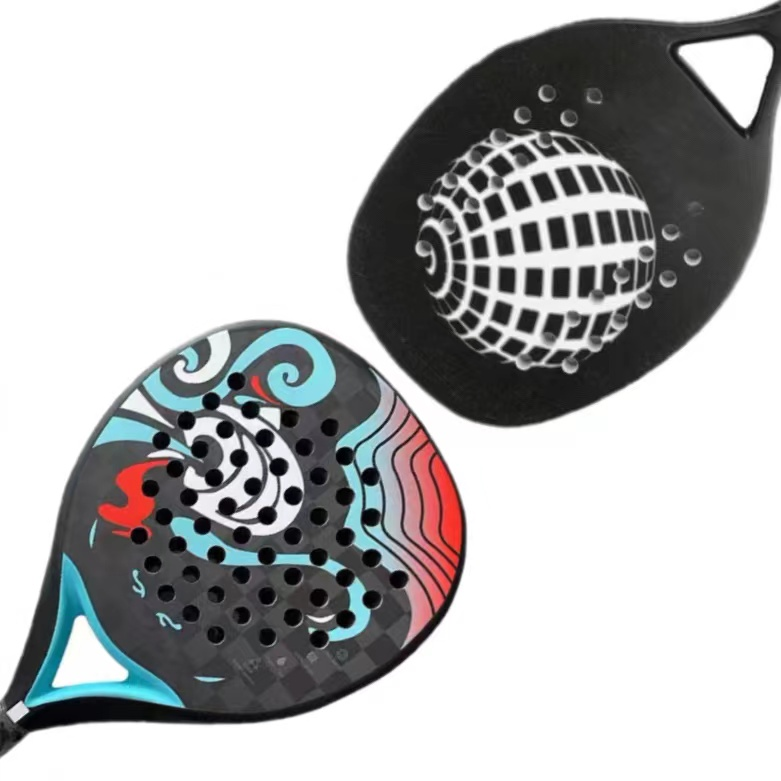
Two additional customization pillars explain why discerning B2B buyers favor factory-direct bespoke orders: internal handle dampening and distinctive cosmetic artistry. Instead of sliding a cheap, hollow plastic sleeve over a raw graphite tube, a true professional tennis racket order specifies a solid, high-density polyurethane foam handle pallet molded directly around the hairpin shaft across exact G1 through G4 octagonal grip sizes, paired with dual-chamber butt caps for silicone or tungsten counter-weighting. On the exterior, modern dust-free spray booths and water-transfer decal lines allow brands to move far beyond boring two-tone paint jobs—creating matte rubberized velvet coats, color-shifting chameleon metallic finishes, and exposed raw 3K or 12K carbon weave windows under UV-inhibited clear coats. Enforcing seven-stage laboratory quality control ensures every frame passes static stringing overload trials, pneumatic ball-impact fatigue tests, and laser balance verification before boxing.
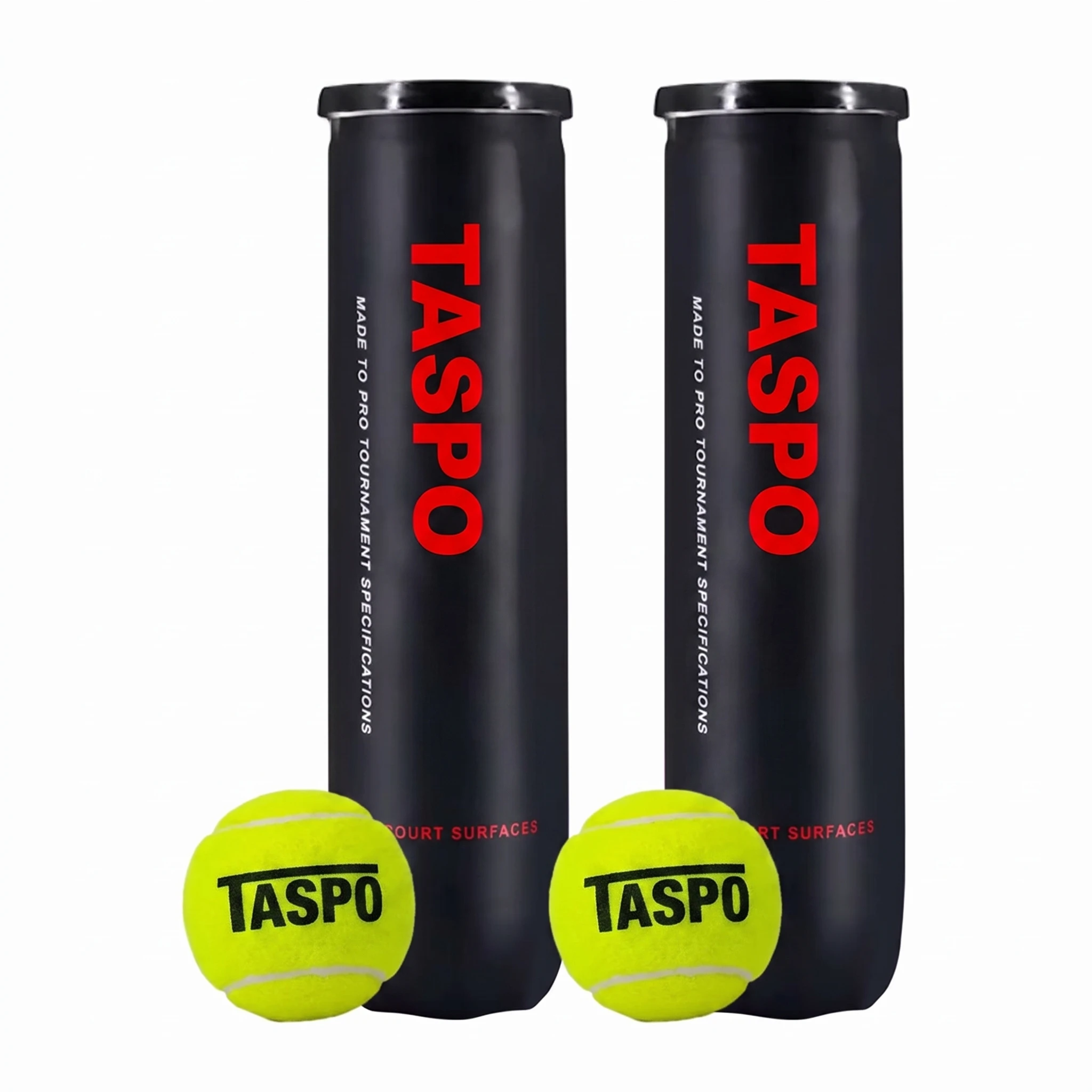
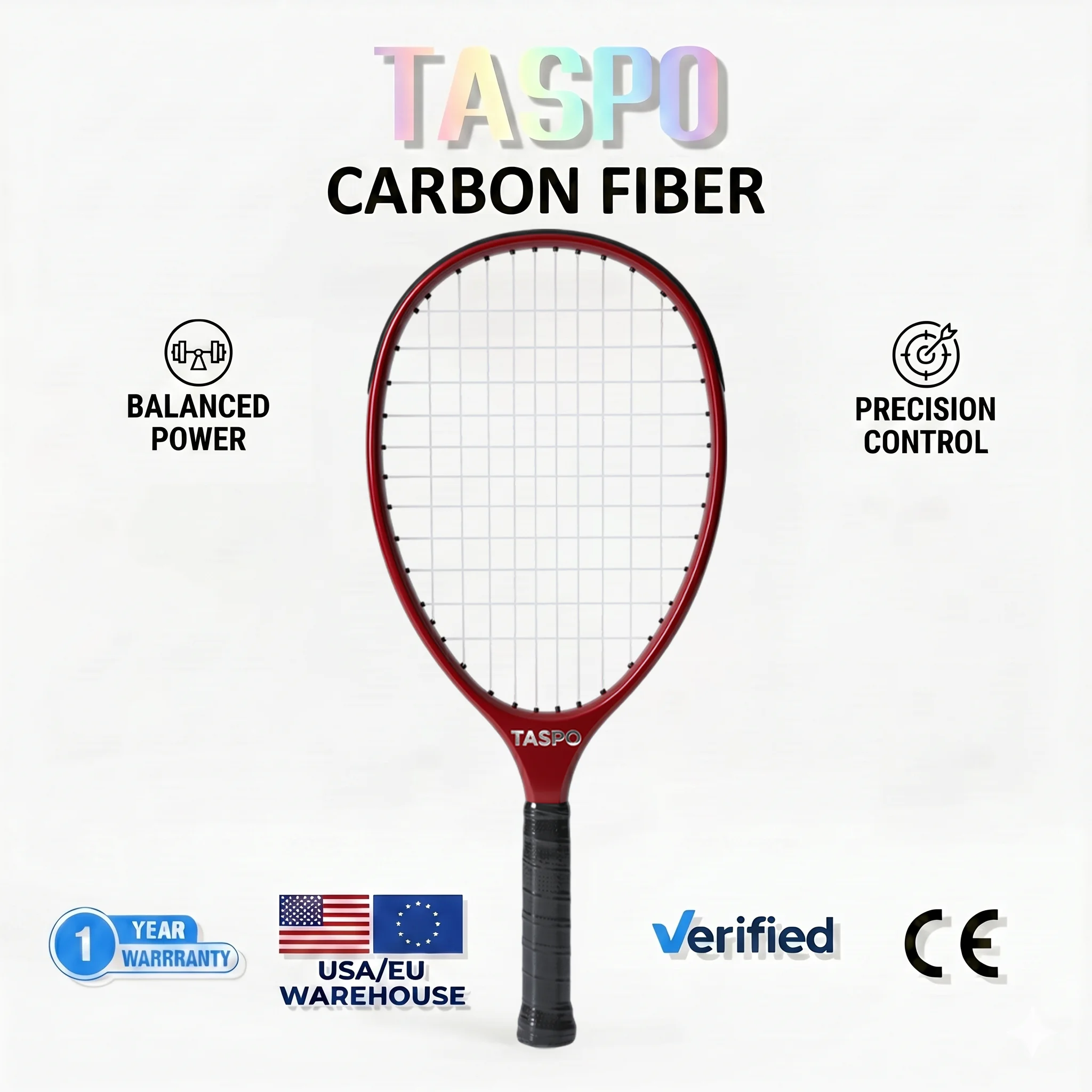
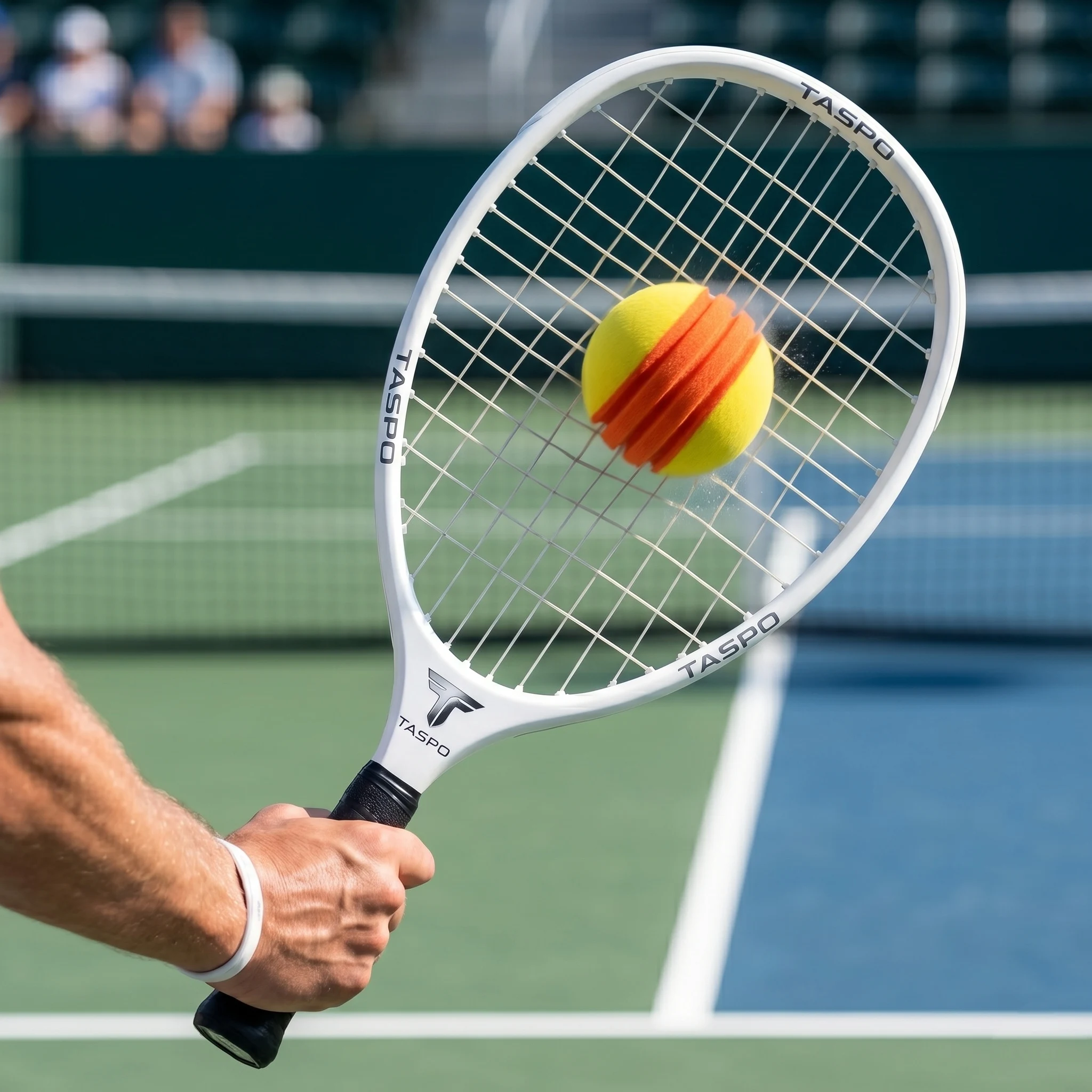
Scaling a profitable, tour-caliber racket brand or academy fleet requires a manufacturing partner equipped with deep composite engineering talent and standardized industrial capacity. Taspo operates as a premier B2B tennis racket manufacturer supported by over one hundred and thirty experienced engineers and self-owned standardized production bases. Specializing in high-pressure air-bladder prepreg molding, autoclave curing, resin transfer molding, and five-axis CNC grommet drilling, Taspo provides comprehensive one-stop OEM and ODM solutions for custom tennis racket orders worldwide. Brand partners can customize head sizes from ninety-seven to one hundred and ten square inches, variable or constant box beams, exact RA stiffness ratings, polyurethane foam handles, and pro-room weight tolerances, alongside coordinated pressurized tennis balls, tacky overgrips, vibration dampeners, sweatbands, and thermal tour bags. Every carbon fiber tennis racket leaving Taspo passes through seven strict quality inspection gates. With custom prototypes delivered in just seven to fifteen working days and twenty-four-hour technical support, Taspo empowers global brands to lead their regional markets.
 Hot News
2026-11-24
2026-11-24
2026-11-24
2026-11-24
2026-11-24
2026-11-24
 EN