Picture a tight third-set tiebreak where a baseliner sets their feet, takes a full cut at a cross-court passing shot, and watches the yellow sphere leave the string bed right on target—only for the ball to wobble slightly at the net post and float ten centimeters outside the sideline tramline. Most players immediately blame their wrist angle or string tension for the miss, never realizing that an unbalanced sphere sabotaged the shot mid-flight. When a poorly manufactured ball travels through the air at one hundred and forty kilometers per hour while spinning at two thousand five hundred revolutions per minute, internal mass asymmetry causes the sphere to precess off its rotational axis and drift unpredictably. Understanding why flight stability defines a premium tennis ball design reveals how microscopic core tolerances and seam aerodynamics govern shot accuracy from the baseline to the net.
True tennis ball flight stability begins deep inside the vulcanized rubber core long before exterior felt is applied. In classical aerodynamics, a spinning sphere maintains a true, predictable flight path only when its geometric center coincides precisely with its center of mass. During half-shell compression molding, if the natural latex and high-cis polybutadiene rubber compound is not weighed to exact decigram tolerances—or if mold platen temperatures fluctuate across the cavity—one hemisphere of the tennis ball core cures slightly denser or thicker than the opposite wall. Even a zero-point-three-millimeter wall thickness imbalance shifts the center of gravity away from the geometric center. When struck with heavy topspin or slice, that eccentric mass acts like an unbalanced washing machine drum, creating gyroscopic wobble that alters Magnus lift forces mid-flight and causes the tournament tennis ball to dip or sail unexpectedly during the final five meters of its trajectory.
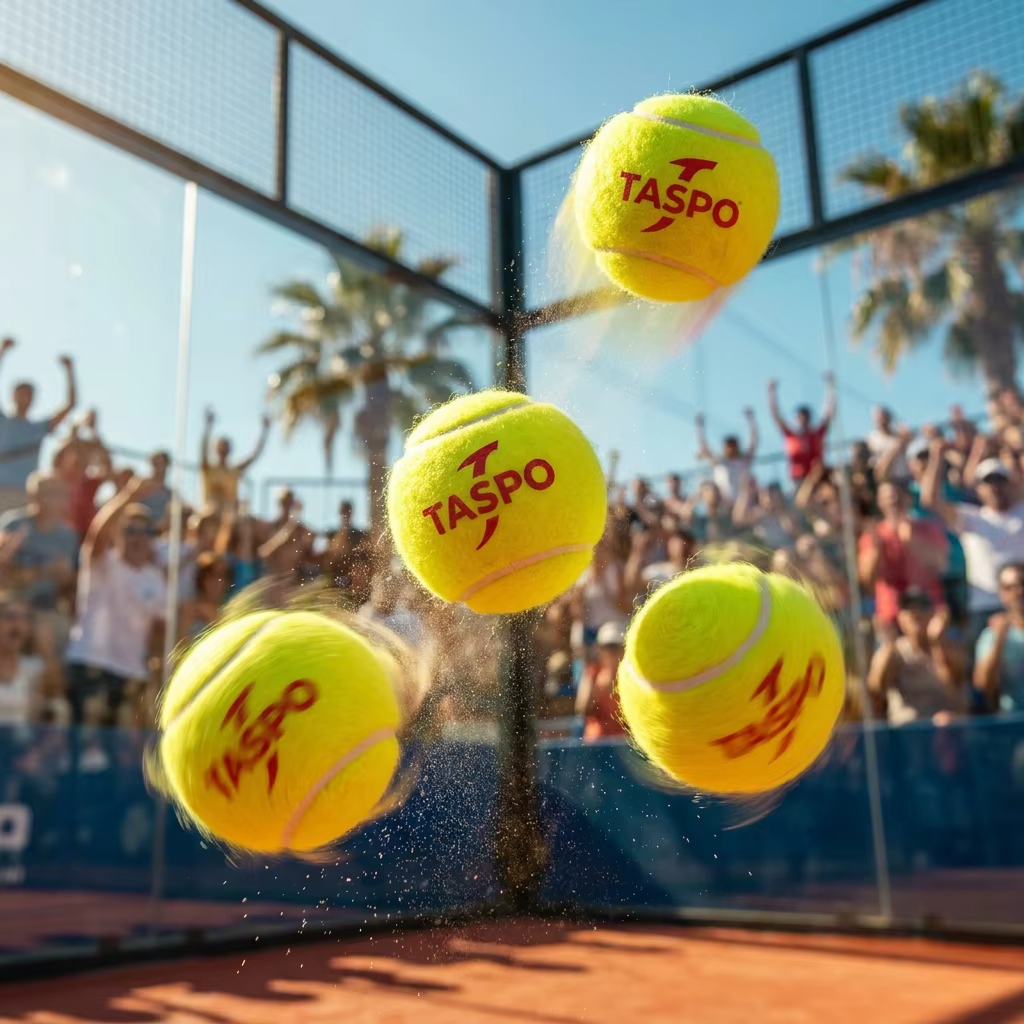
Exterior surface geometry plays an equally critical role in keeping a pressurized tennis ball stable as it slices through turbulent court air. Every regulation ball is wrapped in two dumbbell-shaped panels of woven wool and nylon felt joined together by a continuous white vulcanized rubber seam that curves around the sphere like an hourglass. In budget production lines, hurried hand-wrapping leaves wide, recessed gaps or thick ridges of dried white latex glue protruding above the surrounding nap. Wind-tunnel smoke-flow visualization confirms that as a spinning sphere flies past one hundred kilometers per hour, uneven seam channels trip the boundary layer asymmetrically, shedding erratic air vortices that push the ball sideways like a baseball knuckleball. By contrast, a premium tennis ball design utilizes precision die-cut felt panels with beveled edges cured inside high-pressure steam cavities, locking the white seam completely flush with the woven wool matrix so airflow remains symmetrical across all three hundred and sixty degrees.
Controlled ballistic testing from sports engineering laboratories proves how dramatically internal symmetry and seam smoothness tighten shot dispersion on court. During a four-week trajectory audit conducted on an indoor acrylic court equipped with multi-camera optical Hawk-Eye tracking, engineers mounted a pneumatic launch cannon behind the baseline to fire spheres at a fixed velocity of one hundred and twenty-eight kilometers per hour with two thousand two hundred revolutions per minute of topspin. Batch A consisted of standard commercial balls with a measured wall-thickness variance of zero point four millimeters, while Batch B featured a precision-molded tournament tennis ball holding core wall uniformity within zero point one two millimeters and flush-cured felt seams. Across one hundred consecutive launches per batch, the landing scatter radius for Batch A stretched across forty-two centimeters near the opposite baseline. Meanwhile, the flight-stable Batch B spheres grouped their landings inside a tight twenty-six-centimeter circle—a thirty-eight percent improvement in trajectory accuracy.
Guaranteeing unwavering tennis ball flight stability across ten-thousand-canister wholesale orders requires replacing random spot checks with automated, multi-axis metrological sorting on the factory floor. Under International Tennis Federation rules, a regulation sphere must measure between six point five four and six point eight six centimeters in diameter and deform between zero point five six and zero point seven four centimeters under an eight-point-one-six-five-kilogram Stevens compression load. However, top-tier custom tennis balls manufacturers go a step further: they measure forward and return deformation across three perpendicular axes on the exact same sphere. If Axis X compresses by zero point six zero centimeters while Axis Y compresses by zero point seven zero centimeters, the sphere will wobble in flight and kick sideways on the bounce. Rejecting any core whose three-axis compression variance exceeds zero point zero eight centimeters, alongside automated laser roundness scanning, ensures every can delivers tour-level flight purity.
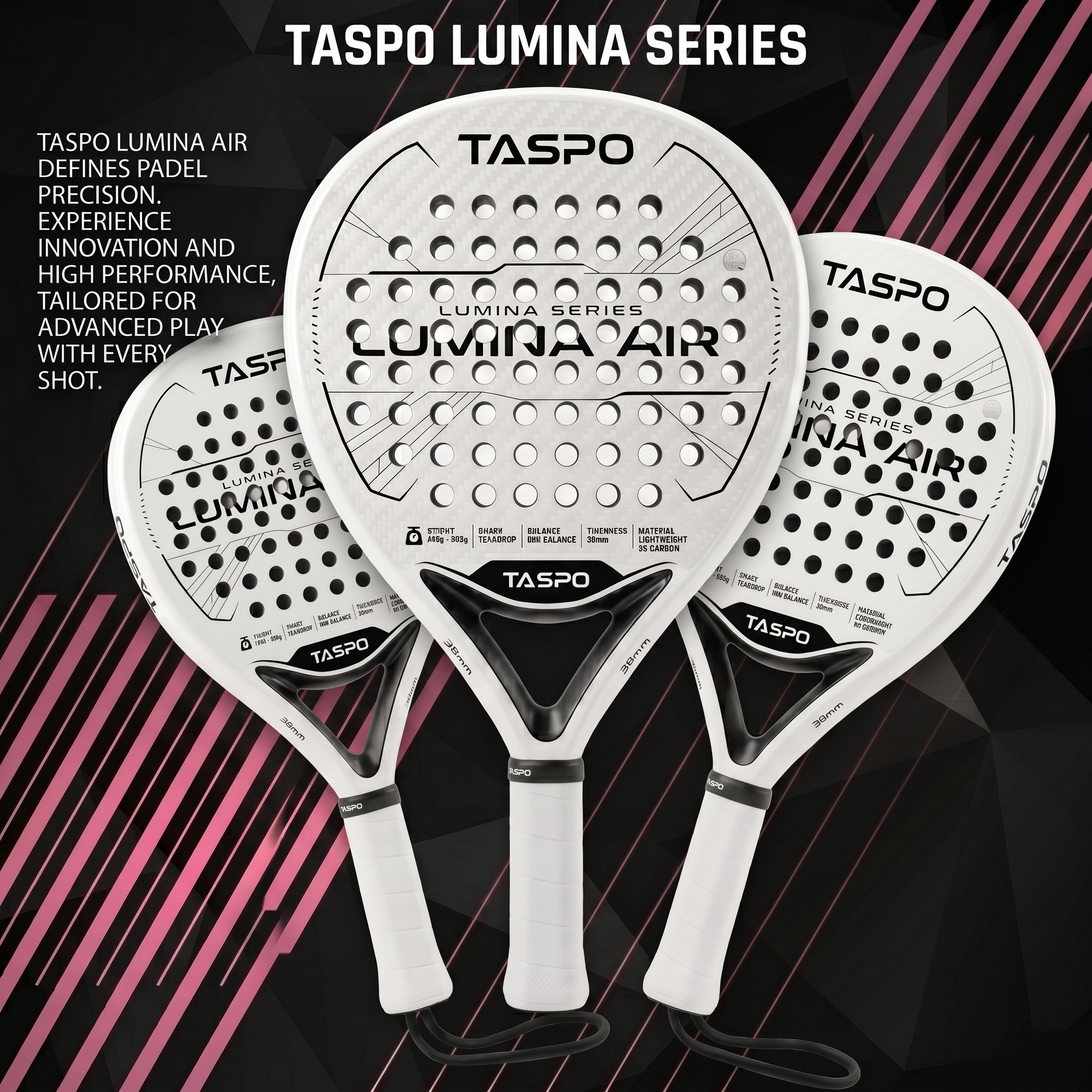
Equipping competitive tournaments, coaching academies, and retail pro shops with spheres that fly true on every single rally requires partnering with a manufacturer built around precision elastomer molding and textile engineering. Taspo operates as a premier B2B sports equipment manufacturer supported by over one hundred and thirty experienced engineers and self-owned standardized production bases. Alongside crafting tour-caliber carbon fiber tennis rackets, pickleball paddles, and padel frames through advanced autoclave curing and thermoforming, Taspo provides comprehensive one-stop OEM and ODM solutions for flight-stable custom tennis balls, extra-duty hard court canisters, regular-duty clay balls, pressureless academy spheres, tacky overgrips, sweatbands, and thermal bags. Every pressurized tennis ball leaving Taspo passes through seven strict quality inspection gates verifying ultrasonic half-shell wall uniformity, three-axis compression symmetry, laser roundness, and granite drop-tower bounce accuracy. With custom prototypes ready in seven to fifteen working days and twenty-four-hour client support, Taspo powers global tennis brands with pinpoint flight precision.
 Hot News
2026-11-23
2026-11-23
2026-11-23
2026-11-23
2026-11-23
2026-11-23
 EN