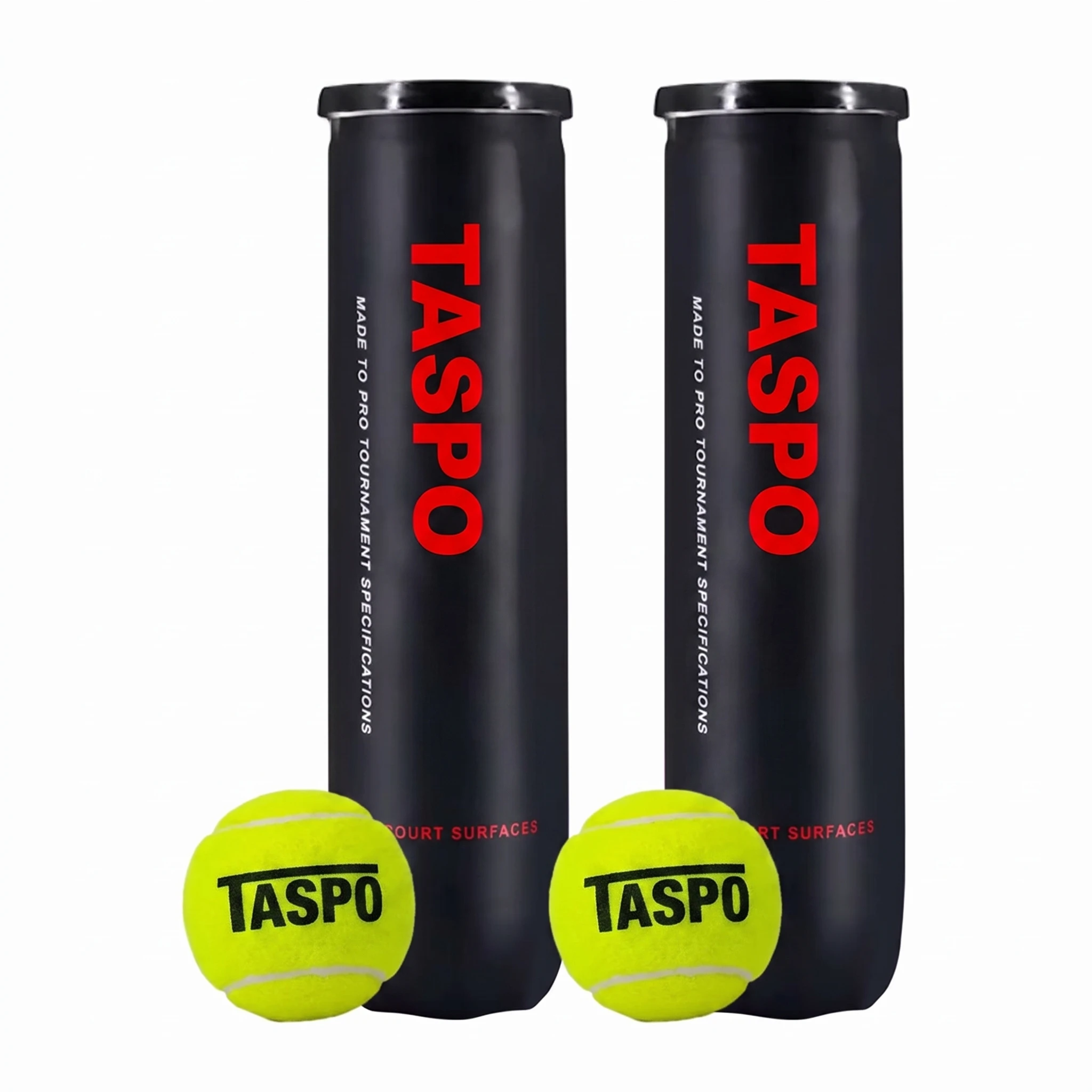
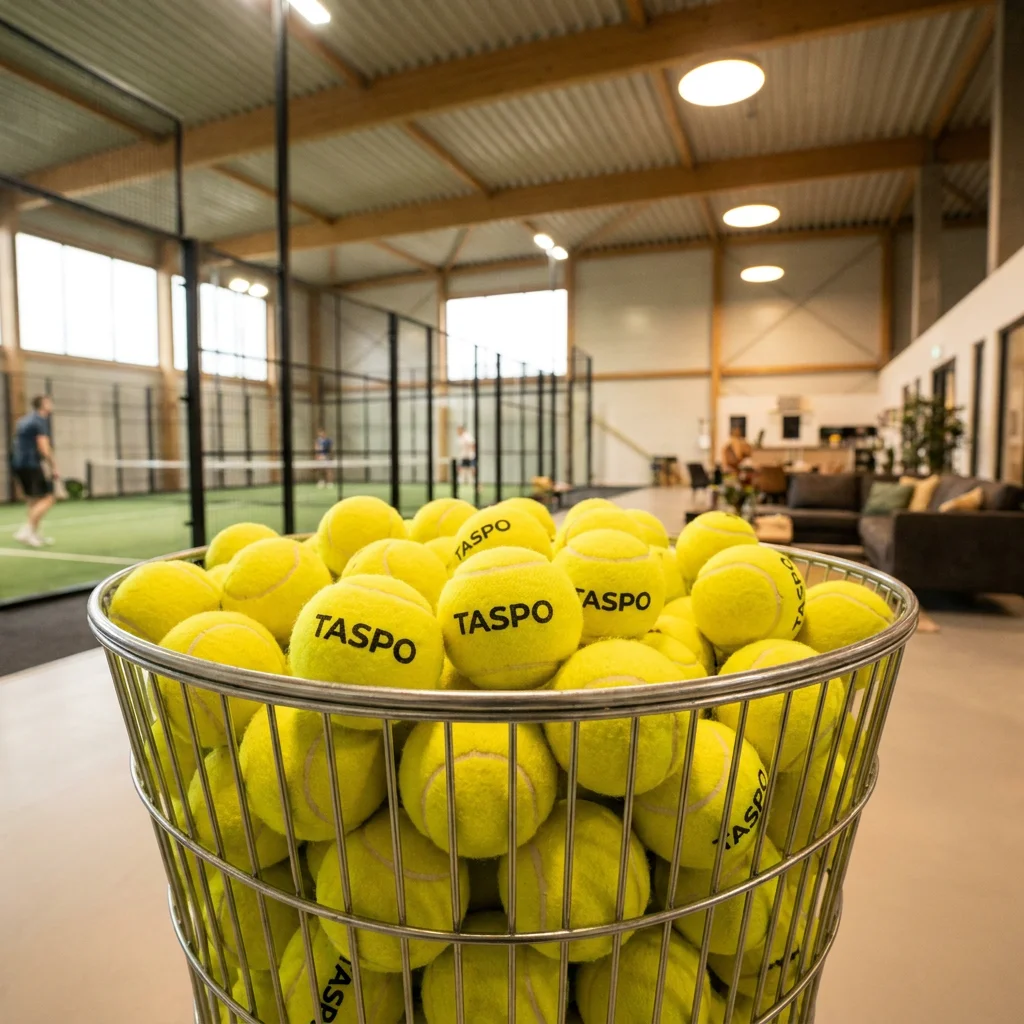
Anyone who has ever cracked open a cheap, uncertified can of tennis balls on a hard court knows the immediate disappointment that follows the first serve. Either the sphere feels like a lifeless lead rock that jars the wrist and refuses to clear the net, or it rockets off the strings like a hollow super-ball and sails two meters past the baseline. For club purchasing directors, academy head coaches, and sporting goods distributors, stocking substandard spheres is a costly operational mistake. When a factory cuts corners on rubber wall curing or felt density, dynamic stiffness varies wildly from one ball to the next inside the very same pressurized tube. Biomechanical impact studies conducted across university sports labs reveal that off-spec, overly rigid spheres increase peak shock transmission to the polyester string bed and lateral elbow tendons by up to thirty percent, while erratic aerodynamics destroy a competitive player’s timing. Understanding why tournament tennis ball standards matter for buyers protects both athlete health and retail store credibility.
Separating a true championship sphere from a supermarket recreational toy requires mastering the technical rulebook enforced by the International Tennis Federation. While casual buyers only check if a ball feels fuzzy and round, federation lab technicians measure four strict mechanical parameters before granting tournament approval. First, a standard Type 2 official sphere must weigh precisely between fifty-six point zero and fifty-nine point four grams and measure between six point five four and six point eight six centimeters in diameter. Second, when dropped from two hundred and fifty-four centimeters onto a granite block, it must rebound within a tight window of one hundred and thirty-five to one hundred and forty-seven centimeters. The most critical benchmark, however, is dynamic compression deformation—measured on a specialized Stevens machine after pre-compressing the sphere along three perpendicular axes. Under an eight-point-one-six-five kilogram load, a tournament tennis ball must deform forward between zero point five six and zero point seven four centimeters, and recover within zero point七 four to one point zero eight centimeters on the return stroke. Furthermore, governing standards classify spheres into Type 1 fast balls for slow clay courts, Type 2 medium balls for all-court hard surfaces, and Type 3 oversized slow balls for fast grass or high-altitude venues.
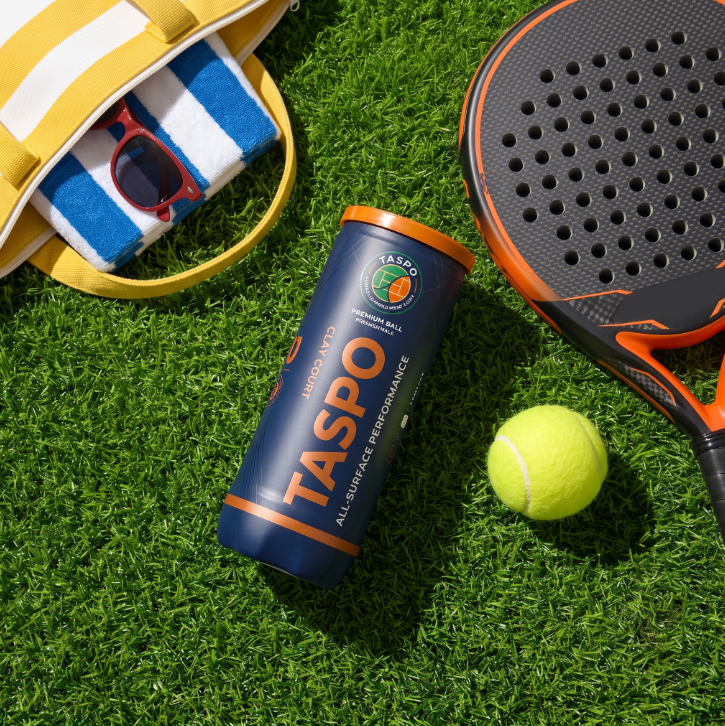
Achieving those razor-thin federation deformation tolerances on the court depends on the marriage between an airtight vulcanized rubber core and an engineered outer textile skin. At the center of a premium pressurized tennis ball sits a two-piece natural rubber bladder compounded with gas-barrier elastomers and pressurized to roughly fourteen pounds per square inch above atmospheric pressure. Wrapping those two dumbbell-shaped felt panels around the rubber core is where wholesale tennis ball quality diverges dramatically. Budget factories use needle-punched synthetic felt made predominantly from cheap polyester fibers. On gritty acrylic hard courts, needle-punched felt fluffs up rapidly during the first three games—slowing the ball down in mid-air—before shearing off completely and leaving a slick, bald sphere that skids uncontrollably. In contrast, a certified tournament tennis ball utilizes interlocking woven play-duty felt containing sixty to sixty-five percent virgin New Zealand wool reinforced with high-tenacity nylon and treated with hydro-repellent fluorocarbon coatings. Woven wool felt locks fibers horizontally and vertically, maintaining uniform aerodynamic seam drag for nine full games of professional serving at two hundred kilometers per hour.
Examining seasonal purchasing ledgers from multi-court tennis facilities proves that enforcing strict tournament standards actually improves bottom-line return on investment. Consider a premier thirty-two-court tennis center and regional retail distributor in Atlanta, Georgia, serving over four thousand league players and junior academy trainees. Three years ago, the procurement team bought two containers of discounted, unbranded pressurized cans from a general trading broker to supply their summer city leagues and coaching carts. Within a month, adult league captains threatened to move their matches to rival facilities because one ball in every can felt flat out of the box, while coaches complained that fuzzy shed felt clogged their ball-machine wheels. The following spring, the director partnered directly with a specialized factory to source a custom tennis ball line built strictly to ITF Type 2 Extra-Duty hard-court specifications using sixty-two percent woven wool felt. Not only did player complaints vanish overnight, but each sphere retained regulation bounce long enough after league matches to serve another three weeks inside the junior academy hoppers. Over two quarters, wholesale case reorders from partner clubs jumped by forty-nine percent.
For private label brands, regional tennis associations, and wholesale buyers, locking in consistent compression deformation and airtight canning across full container loads requires bypassing trading middlemen and working directly with an engineering-led manufacturer. When orders are farmed out to unverified workshops, variations in vulcanization temperature or cheap pull-tab lid crimping lead to dead cans sitting on retail shelves. Partnering directly with a vertically integrated ball factory eliminates that supply chain risk completely. This is where Taspo delivers unmatched manufacturing excellence to global tennis buyers. Operating state-of-the-art ISO-certified rubber compounding mixers, automated core vulcanization presses, precision laser felt-cutting stations, and digital Stevens compression testing labs, Taspo engineers every tournament tennis ball batch to exact international federation benchmarks. Every production lot at Taspo undergoes twenty-four-hour barometric stabilization, high-velocity cannon impact fatigue testing, and airtight PET or metal can seal verification. By consolidating bulk wholesale tennis ball orders alongside Taspo’s high-modulus carbon fiber tennis rackets, absorbent overgrips, sweatbands, and court bags, brands secure factory-direct margins and deliver tour-proven playability on every surface.
 Hot News
2026-11-25
2026-11-25
2026-11-25
2026-11-25
2026-11-25
2026-11-25
 EN