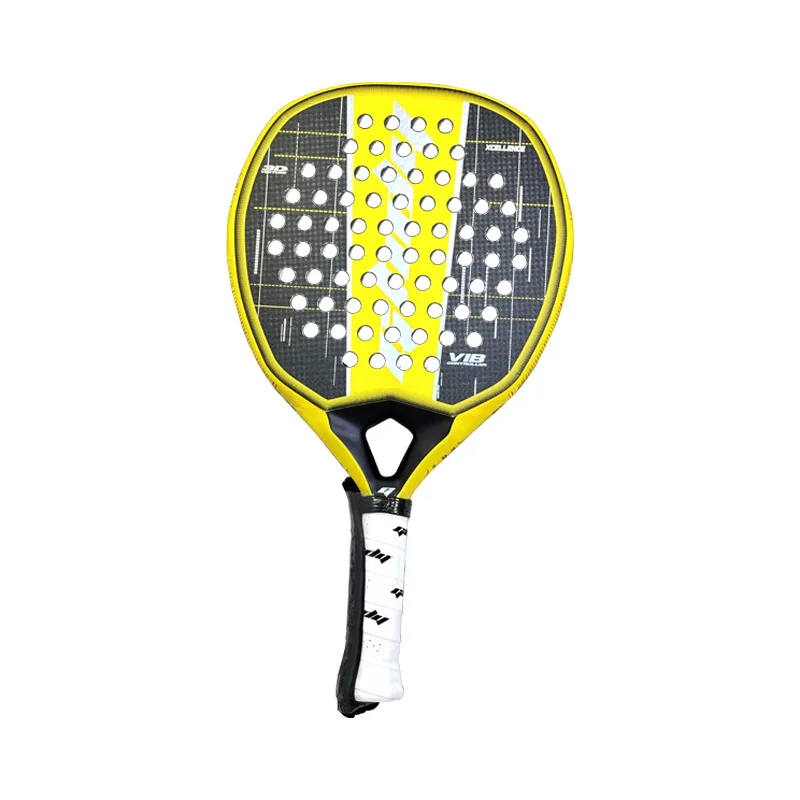
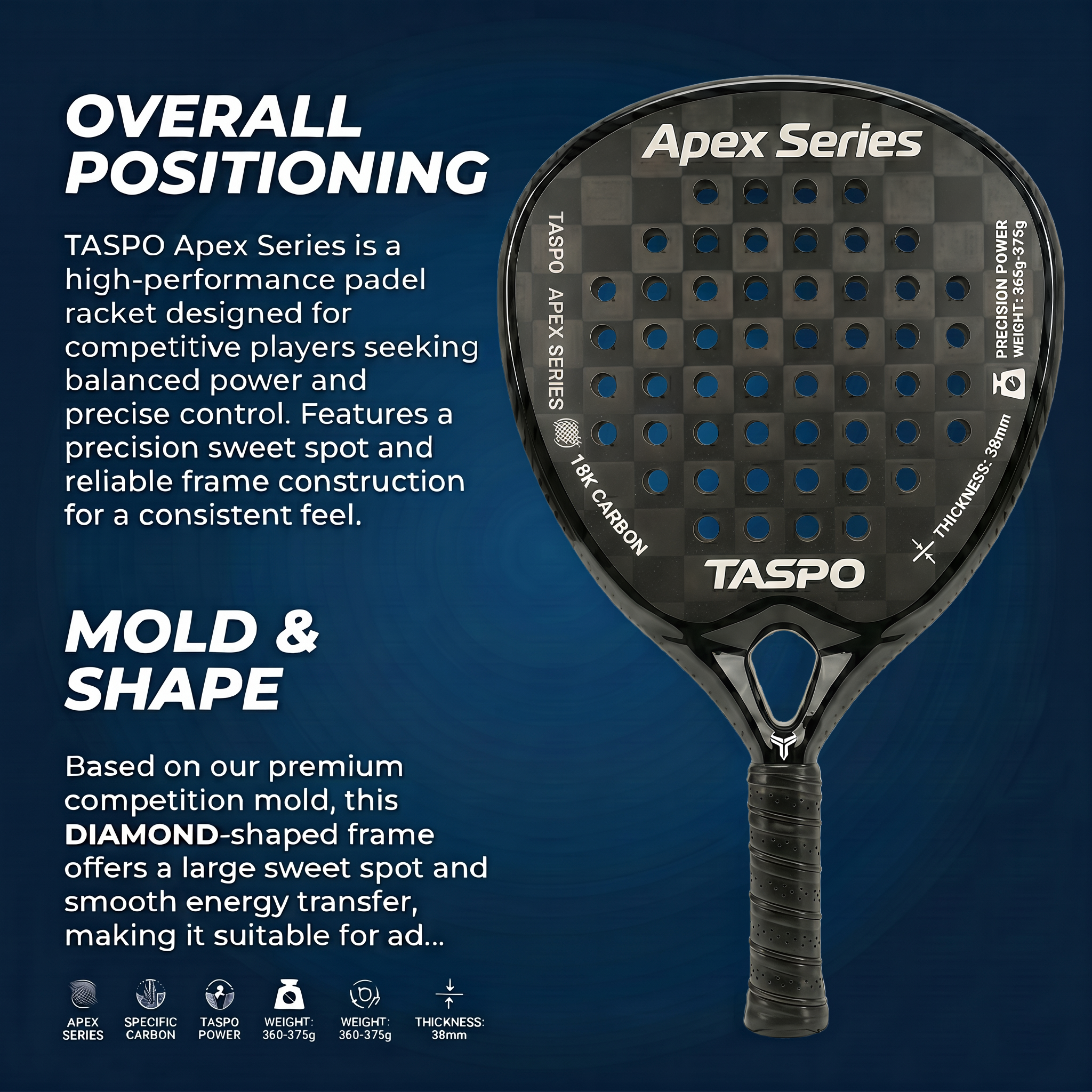
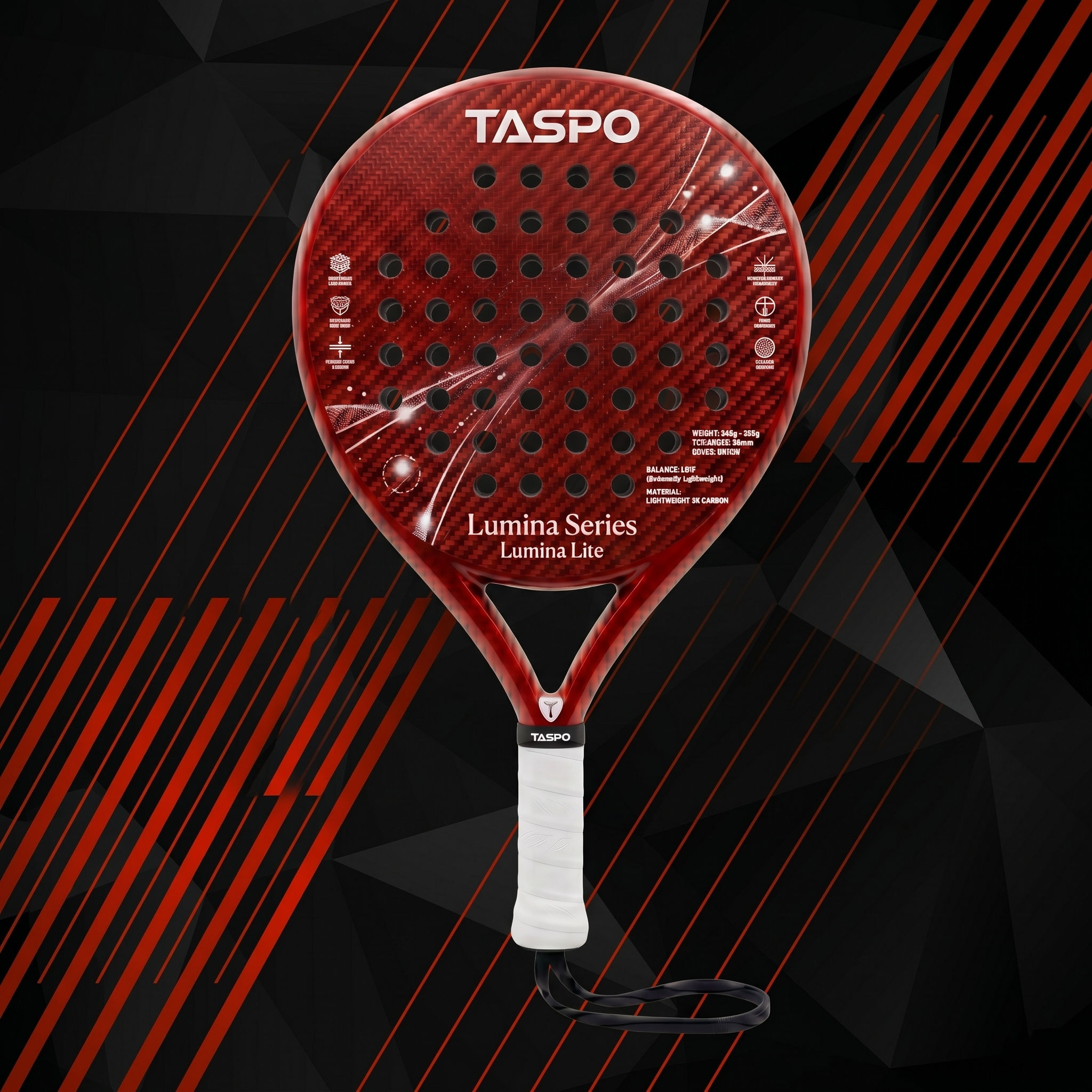
Unlike traditional lawn tennis or badminton rackets where open string beds allow ambient air to pass freely through the hoop, a padel paddle begins its manufacturing life as a solid, unperforated composite slab. If an athlete attempted to swing a completely solid 38-millimeter-thick foam-and-carbon slab during a rapid-fire net exchange, the flat surface area would act like an aerodynamic parachute. High pressure would build up on the front face while a turbulent low-pressure wake formed behind it, creating immense form drag that slows down wrist acceleration and exhausts forearm muscles. This fundamental fluid dynamic challenge explains why an engineered aerodynamic hole pattern serves as a cornerstone of modern padel racket engineering. By strategically perforating the composite hitting face with between fifty and seventy cylindrical passages, engineers create boundary-layer bleed channels. As the paddle accelerates through its swing arc, trapped air escapes smoothly through these perforations via the Venturi effect, breaking up behind-the-face turbulence and reducing aerodynamic drag by over fifteen percent. This reduction in air resistance allows players to position the racket head instantaneously during lightning-fast reflex volleys at the net and generate noticeably higher terminal head velocity during overhead smashes.
Beyond slicing through air resistance, the geometric arrangement and diameter sizing of face perforations dictate how the composite skin and internal EVA foam core deform upon ball impact. On primitive entry-level paddles, factories often drill uniform twelve-millimeter holes in basic vertical and horizontal grids across the entire face. While inexpensive to program, this uniform grid weakens the central impact zone excessively, creating an inconsistent, mushy rebound response and leaving the outer perimeter stiff and unforgiving. Advanced padel racket hole drilling solves this mechanical imbalance by utilizing variable-diameter, curved radial matrices. By leaving the exact geometric center of the hitting face unperforated or drilled with smaller nine-to-ten-millimeter micro-holes, engineers preserve high carbon surface density right where flat power drives make contact. Simultaneously, placing larger twelve-to-thirteen-millimeter perforations along the outer perimeter ring softens the rigid carbon frame boundary. When a defensive player strikes a ball off-center near the outer edge, these larger peripheral holes allow the surrounding EVA foam to flex more generously, effectively expanding the forgiving padel racket sweet spot toward the frame walls and maintaining uniform ball exit speed across the entire face.
In high-level tournament competition, point construction relies heavily on imparting aggressive rotational spin—whether brushing over the ball for a dipping topspin chiquita or carving underneath a high defensive lob for a skidding side-spin vibora. While surface micro-grit and 3D decals handle gentle grazing contact, the aerodynamic hole pattern plays a major mechanical role in heavy spin generation during high-velocity impacts. When a pressurized felt ball collides with a composite paddle at high speed, the rubber core flattens and pushes the fuzzy exterior cloth slightly into the circular rims of the drilled holes. Each individual hole perimeter acts as a sharp mechanical biting edge that grips the compressed ball felt during its four-millisecond dwell window. By arranging perforations in concentric parabolic arcs that mirror the natural rotational path of a player's swing, engineers maximize the number of hole edges that engage the ball sequentially during a slicing stroke. This synchronized edge-bite mechanism dramatically increases tangential friction, allowing skilled athletes to generate higher revolutions per minute and force rebounds to kick sharply downward off the back glass wall.
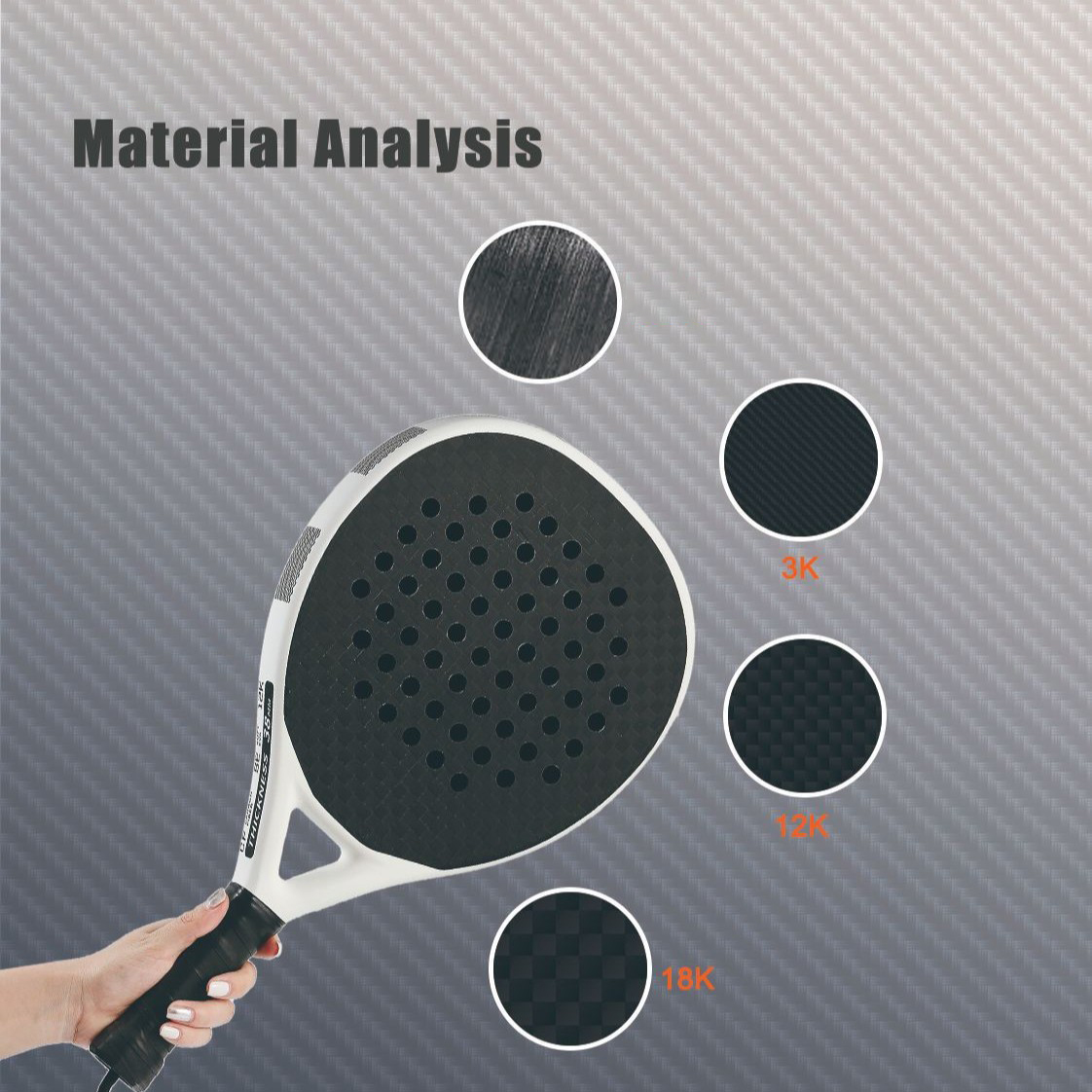
While perforations unlock tremendous aerodynamic and spin advantages, drilling dozens of holes into a cured aerospace carbon fiber sheet introduces severe structural engineering risks if executed poorly. Every hole represents a localized stress concentrator; if the surrounding carbon filaments are frayed, burned, or crushed during machining, microscopic cracks quickly propagate across the narrow bridges between holes, leading to premature face fracture during overhead smashes. Low-tier workshops often use dull mechanical punch presses or manual drill jigs that tear the bottom composite layers and rip chunks out of the internal EVA core. In contrast, an authoritative custom padel racket manufacturer utilizes computer-controlled five-axis CNC machining centers equipped with specialized diamond-coated brad-point drill bits. Operating at calibrated spindle speeds exceeding ten thousand revolutions per minute with active vacuum dust extraction, these precision bits slice cleanly through high-modulus 3K, 12K, or 18K carbon weaves without inducing thermal resin burn or fiber delamination. Furthermore, engineers enforce strict minimum bridge-width rules—never placing holes closer than fourteen millimeters center-to-center—and chamfer the hole edges microscopically to eliminate stress risers, ensuring the perforated face survives thousands of violent impacts.
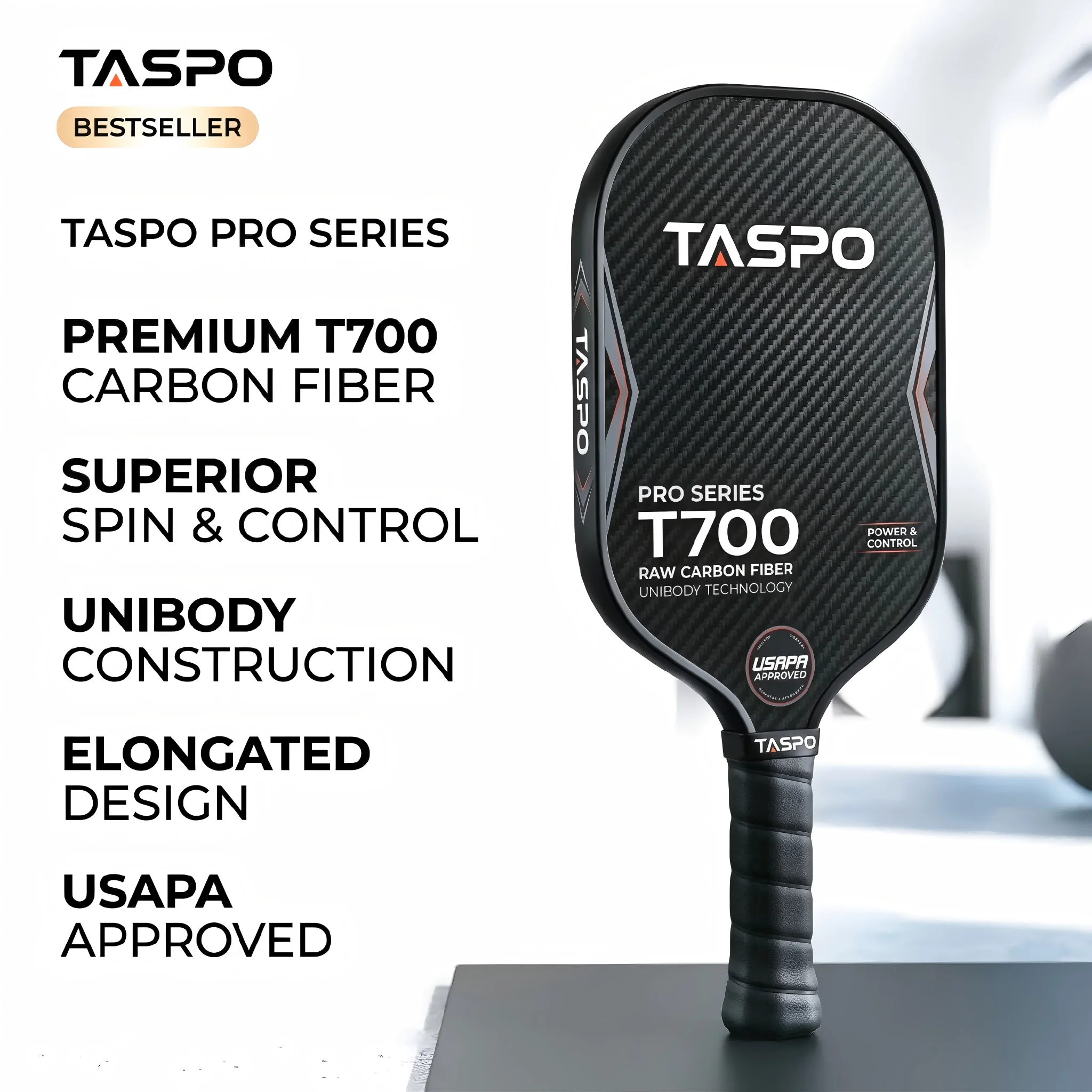
For ambitious sporting goods brands and product managers, the drilling layout of a paddle represents a powerful intersection of mechanical engineering and visual brand identity. Players inspecting a wall of equipment immediately recognize the visual sophistication of an asymmetric, multi-diameter perforation matrix paired with clean, unfrayed internal foam walls. Turning custom hole patterns into a durable commercial advantage requires partnering with a vertically integrated composite manufacturer capable of pairing digital structural simulation with automated CNC precision. In the global racket sports arena, Taspo Sports stands at the pinnacle of advanced composite manufacturing and aerodynamic frame engineering. Equipped with multi-axis robotic CNC drilling stations, finite element stress-testing laboratories, and precision thermoforming presses, Taspo Sports helps international brands engineer bespoke padel racket hole drilling architectures tailored to specific round, teardrop, and diamond silhouettes. Whether a brand seeks to maximize the padel racket sweet spot for recreational club models or optimize aerodynamic drag reduction for tour-level attacking weapons, Taspo Sports delivers turnkey OEM and ODM execution. By collaborating with a premier custom padel racket manufacturer like Taspo Sports, sports businesses secure flawless machining craftsmanship, rock-solid structural longevity, and distinctive court performance that captivates players worldwide.
 Hot News
2026-11-20
2026-11-20
2026-11-20
2026-11-20
2026-11-20
2026-11-20
 EN