 EN



Why Frame Rigidity Boosts Padel Racket Stability?
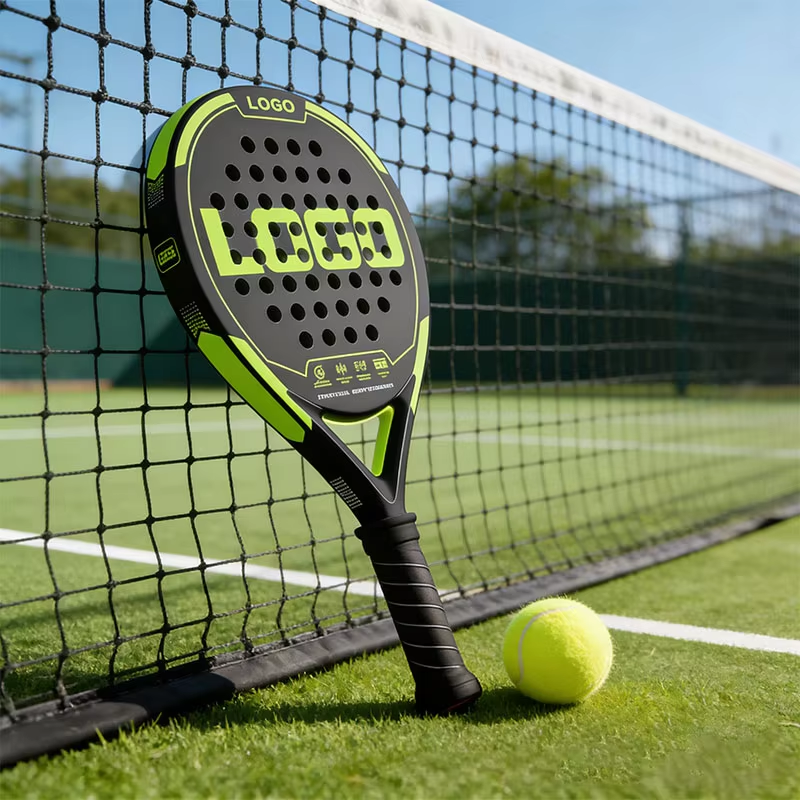
A padel racket can feel composed on a firm volley yet turn unexpectedly when contact moves toward the edge. One contributor is the resistance of the frame to twisting. A more torsionally rigid frame may rotate less under a comparable off-center load, helping the hitting face stay closer to its intended orientation. That does not mean a stiffer racket automatically makes every shot accurate: weight distribution, face construction, grip and swing also matter.
For players and equipment buyers alike, the useful question is not simply whether a frame is hard. It is how a particular padel racket balances torsional resistance with maneuverability, feedback and comfort. Separate those ideas before comparing them on court.
What does frame rigidity mean?
Rigidity describes resistance to deformation under load. In a padel racket, the outer frame supports the head and connects it to the handle. Torsional rigidity concerns twisting; bending rigidity concerns flex in another direction. The hardness of the foam core or hitting surface is a different property. A firm face can sit inside a padel racket frame that behaves differently from another frame with the same advertised surface material.
When a ball lands off the head's central axis, the impact creates a turning effect around the handle. The whole padel racket may rotate in the player's hand, and parts of its structure may deform. These are related but distinct effects. A frame that resists torsional deformation can help limit one part of the unwanted change in face angle, while the racket's mass distribution and the player's grip influence the rest.
Think of a quick defensive block near the net. If the incoming ball reaches the outside of the face, the resulting rotation can make the return less predictable. A padel racket designed with greater resistance to twisting may feel more settled in that situation, provided the rest of the construction and the player's technique are appropriate. There is no reliable percentage improvement without a defined comparison and test.
Why the frame alone does not explain stability
Frame structure and material layout
Composite frames can use different fibers, layer orientations, cross-sections and construction methods. Carbon fiber and fiberglass are common materials, but a material name by itself does not reveal the torsional stiffness of a finished padel racket. Layer arrangement, frame geometry and joints also affect the outcome. Ask for comparable measurements or sample testing rather than assuming one fiber label determines the entire padel racket response.
Mass, balance and swing weight
Stability also depends on how mass is distributed around the handle and head. Greater rotational inertia about the handle can reduce the angular acceleration caused by a given off-center impact. That is not the same thing as a more rigid frame. Adding mass or shifting balance can affect maneuverability, so compare padel racket samples with similar weights and balance points when trying to isolate construction differences.
A heavier or more head-weighted padel racket may feel steady during a block but slower to reposition during a rapid exchange. Whether that trade-off is useful depends on the person holding it. A quick reaction at the net and a stable face at contact are both valuable, and neither is described by a stiffness label alone.
Core and hitting faces
The foam core and composite faces compress and bend when the ball makes contact. Their response changes the feel of the impact and interacts with the frame. A padel racket with a rigid frame can still have a softer face response, depending on its construction. Conversely, a firm core does not prove that the surrounding frame has high torsional rigidity.
Power deserves similar caution. A published racket-physics analysis found no correlation between stiffness and rebound coefficient in its clamped, central-impact tests. That result is limited to the conditions tested; it does not rank every racket or predict every shot. It does show why a stiffness claim should not be treated as a stand-alone promise of extra speed.
What stability can feel like during play
On a centered shot, a stable padel racket may offer a consistent sense of where the face is pointing. On a slightly off-center volley, it may feel less inclined to turn abruptly. That feeling is useful feedback, not proof that every ball will travel to the same place. Footwork, ball speed, contact angle and grip pressure all change the outcome.
A more rigid construction can also change the sensation at impact. Some players prefer direct feedback; others prefer a more yielding feel. Vibration and perceived comfort depend on the complete racket and the player, so it is not sound to promise that a rigid padel racket frame will either reduce discomfort or cause it. If a padel racket feels uncomfortable, stop the test and seek appropriate professional advice.
How to compare two frames fairly
A short, repeatable comparison is more useful than squeezing a padel racket frame in a shop. Start with two samples that are close in weight, balance, grip size and playing condition. Use the same type of ball and the same court where possible. If the models differ in several ways, note that the result reflects the whole padel racket rather than frame rigidity alone.
- Begin with controlled volleys. Alternate samples in short sets and aim at the same area. Record whether the face feels easy to position before contact.
- Observe normal off-center hits. Notice whether the head twists or the return angle changes, without deliberately striking the rim or damaging the sample.
- Try defensive blocks and slower shots. Compare the sense of control at different incoming speeds, not just full swings.
- Check fatigue and handling. After several exchanges, note whether either padel racket is harder to reposition or feels uncomfortable.
- Repeat on another day. If possible, have another player test in the same conditions and keep individual impressions separate.
The exercise is a feel test, not a laboratory measurement. To quantify the stiffness of a padel racket frame, ask for the loading direction, fixture arrangement, applied load, measured displacement and sample size. Comparable results require the same method and conditions; a number without that context is difficult to interpret.
Questions to ask before ordering
For a club, retailer or brand evaluating a padel racket range, begin with the intended player and the desired balance of stability and maneuverability. Then request the frame material and layer description, target weight and balance tolerances, core and face specifications, and the method used for any stiffness claim. Ask whether representative samples are available and whether the proposed padel racket production configuration matches them.
Keep marketing language aligned with the evidence. “Designed for a stable feel” describes an intention; a numerical comparison needs a documented test and matching samples. Taspo Sports lists padel equipment among its product categories. Buyers can use the Taspo Sports website as a starting point for discussing the specifications and sample checks relevant to their project.
Frequently asked questions
Does a stiffer padel racket guarantee greater stability?
No. Higher torsional frame rigidity can resist structural twist, but overall stability also depends on mass distribution, face and core design, impact position and the player. Compare complete samples under similar conditions.
Is frame stiffness the same as a hard hitting surface?
No. Frame stiffness describes resistance to deformation of the surrounding structure; face feel also depends on the layers and core. Ask for each property separately when comparing a padel racket.
Should beginners choose the most rigid frame available?
Not necessarily. A newcomer may value an easy-to-handle racket and a comfortable response as much as resistance to twist. Try different padel racket constructions, compare their handling, and choose the combination that fits the player's experience.
In short, a rigid frame can support a more predictable face at off-center contact, but it is one part of a system. The most useful decision comes from comparable specifications, a repeatable on-court trial and a clear description of what the player actually needs.
 Hot News



