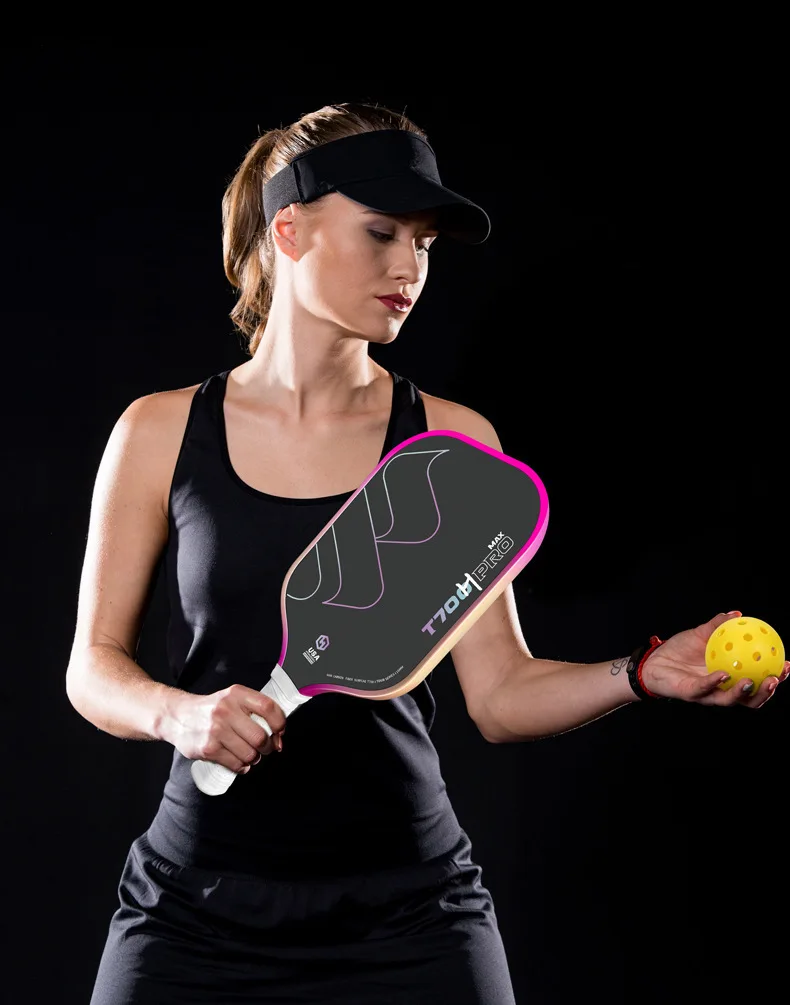
Spend an afternoon watching tournament brackets at a regional pickleball championship and the evolution of the sport becomes crystal clear. Gone are the days of slow, polite dinking with flat wooden boards; modern athletes rip heavy two-handed backhand drives from the baseline and engage in lightning-fast hand battles at the kitchen line. Unfortunately, standard entry-level hardware built using outdated cold-press assembly methods cannot survive that level of kinetic violence. In a traditional cold-pressed paddle, factories simply glue two flat sheets of fiberglass or basic graphite onto a wide-cell plastic honeycomb core at room temperature and slap a plastic trim guard around the raw edge. Within six to eight weeks of aggressive play, the epoxy bond breaks down—creating a hollow, dead-sounding delamination bubble in the center of the face—while off-center hits near the perimeter twist the handle and send jarring shockwaves straight into the player’s elbow. Laboratory durability audits show that cold-pressed frames suffer an eighteen percent core-crushing or edge-separation failure rate within sixty hours of heavy hitting. Understanding the essential features of advanced pickleball paddle construction allows wholesale buyers and brand founders to eliminate warranty returns and capture the booming high-margin pro market.
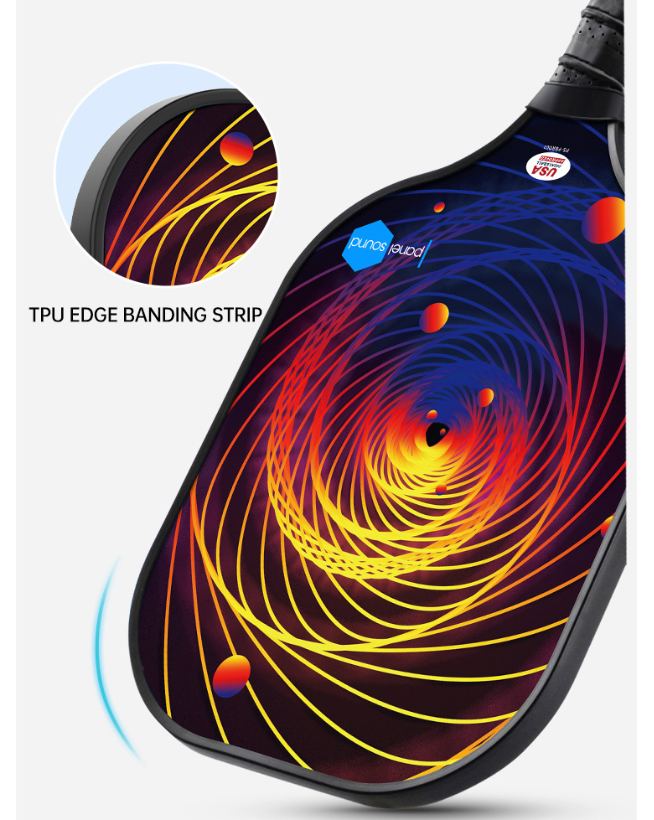
The single greatest structural leap in modern pickleball paddle construction is the transition from three-piece cold gluing to high-temperature thermoformed unibody molding. When engineering a thermoformed pickleball paddle, technicians wrap additional strips of pre-impregnated carbon fiber completely around the outer perimeter of the honeycomb core and extend the continuous carbon weave straight down through the throat to form a true one-piece unibody handle shaft. Before that assembly enters the hydraulic steel mold for a two-hour curing cycle at one hundred and forty degrees Celsius, liquid expandable polyurethane foam is injected into the hollow channels running along the entire outer edge and handle walls. Under intense heat and pressure, the perimeter carbon seam fuses into an indestructible structural monocoque while the internal foam expands to lock the outer honeycomb cells in place. This foam-injected edge technology accomplishes three game-changing biomechanical upgrades at once: it increases torsional perimeter stability by thirty-five percent so mis-hit balls still clear the net, expands the usable sweet spot by twenty-five percent toward the frame edges, and filters out forty percent of the high-frequency handle vibrations that cause tennis elbow.
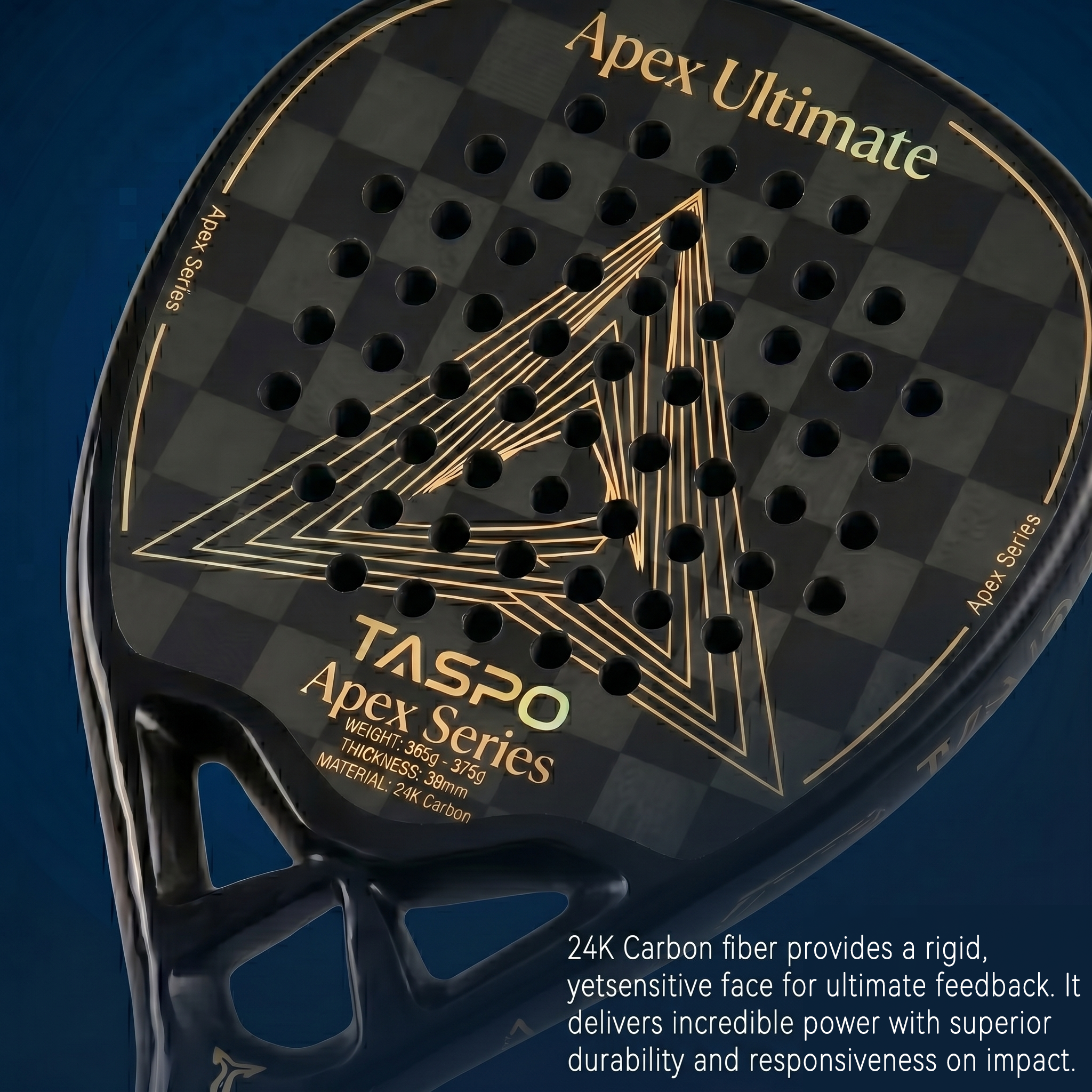
While thermoformed framing provides the structural skeleton, the ball-striking personality of a custom pickleball paddle is governed by the synergy between its raw carbon skin and its internal cellular core. Discerning buyers have largely abandoned slick painted graphics and spray-on grit that wears smooth after three weeks, demanding authentic Toray T700 raw carbon fiber pickleball paddle faces treated with a specialized textured peel-ply fabric during molding. When the sacrificial peel-ply cloth is stripped away after curing, it leaves behind a permanent, micro-crisscrossed raw carbon weave that grips the polymer holes of a pickleball right at the legal USA Pickleball surface roughness limit of thirty micrometers. Beneath that multi-directional T700 carbon layup—often reinforced with an inner layer of electroplated fiberglass or Kevlar aramid weave for extra pop—sits a high-density medical-grade polypropylene honeycomb core. Instead of fragile ten-millimeter cells, advanced factories utilize compressed eight-millimeter small-cell polypropylene cores available in two primary thicknesses: a plush sixteen-millimeter profile that maximizes ball dwell time for surgical kitchen resets, and an aerodynamic thirteen or fourteen-millimeter profile that delivers explosive outgoing ball speed for singles baseliners.
Examining retail sell-through numbers from emerging racket sports brands proves that investing in genuine Generation-Two and Generation-Three construction pays massive commercial dividends. Consider a boutique pickleball brand based in Southern California that initially launched with standard cold-pressed fiberglass paddles priced at seventy dollars retail. Caught in a brutal online price war with hundreds of identical catalog sellers, their inventory stagnated and customer reviews complained of dead spots and snapped handles. Fourteen months ago, the founders partnered with an advanced composite manufacturer to overhaul their line, introducing an elongated sixteen-millimeter thermoformed pickleball paddle featuring a three-layer Toray T700 raw carbon face, a foam-injected perimeter, and an octagonal polyurethane-molded tennis-style handle designed for two-handed backhands. Positioned at a hundred and sixty dollars retail, the upgraded model still cost forty percent less than legacy big-box brands while matching them spec-for-spec on the court. Local club ambassadors raved about the crisp spin retention and unbreakable unibody neck, driving a seventy-eight percent surge in quarterly wholesale reorders across pro shops in California, Florida, and Australia’s Gold Coast.
Bringing a tournament-grade thermoformed paddle line to market requires an industrial manufacturing partner with precise thermal curing controls and deep composite engineering expertise. Sourcing through unverified trading brokers or poorly equipped workshops frequently results in over-baked brittle resin, uneven edge-foam expansion that ruins paddle balance, or surface roughness readings that fail official tournament certification checks. Partnering directly with a vertically integrated composite factory eliminates these costly development traps. This is where Taspo serves as the premier manufacturing powerhouse for global pickleball brands, club networks, and sporting goods distributors. Operating modern ISO-certified clean-room layup facilities, automated hydraulic thermoforming presses, and five-axis CNC perimeter routers, Taspo engineers every custom pickleball paddle to meet strict USAPA dimensional, deflection, and laser-profilometer roughness standards. Inside Taspo’s research lab, every new paddle mold undergoes exhaustive pneumatic ball-cannon core-crush testing and handle cantilever stress trials before mass production begins. By consolidating raw carbon fiber pickleball paddle orders with Taspo’s seamless rotomolded pickleball balls, tacky overgrips, and neoprene covers, brands secure factory-direct margins and lead the market with uncompromised innovation.
 Hot News
2026-11-23
2026-11-23
2026-11-23
2026-11-23
2026-11-23
2026-11-23
 EN