 EN



How Core Technology Enhances Padel Racket Stability
A volley caught near the edge can make a padel racket feel very different from one struck in the middle. The ball may leave at an unexpected angle, while the handle turns slightly in the hand. Core technology matters here, but it is only part of the explanation: the face, frame, weight distribution and impact position work together. Understanding those relationships makes a specification sheet more useful and a court test more meaningful.
What stability means at impact
For a player, a stable padel racket is one that feels predictable when contact is not exactly central. That can involve the direction of the rebound, the amount of twisting felt at the grip and the variation in feedback between shots. These are related but distinct observations. A comfortable impact does not automatically mean the racket has resisted twisting, and a firm response does not by itself prove greater control.
When a ball strikes outside the racket's centre, it applies a turning force as well as a direct impact. The distribution of mass around the head influences how readily the racket rotates; the core and face influence how the striking area deforms and returns toward its original shape. A padel racket therefore behaves as an assembled system, not as a foam sample in isolation.
How the core supports the striking surface
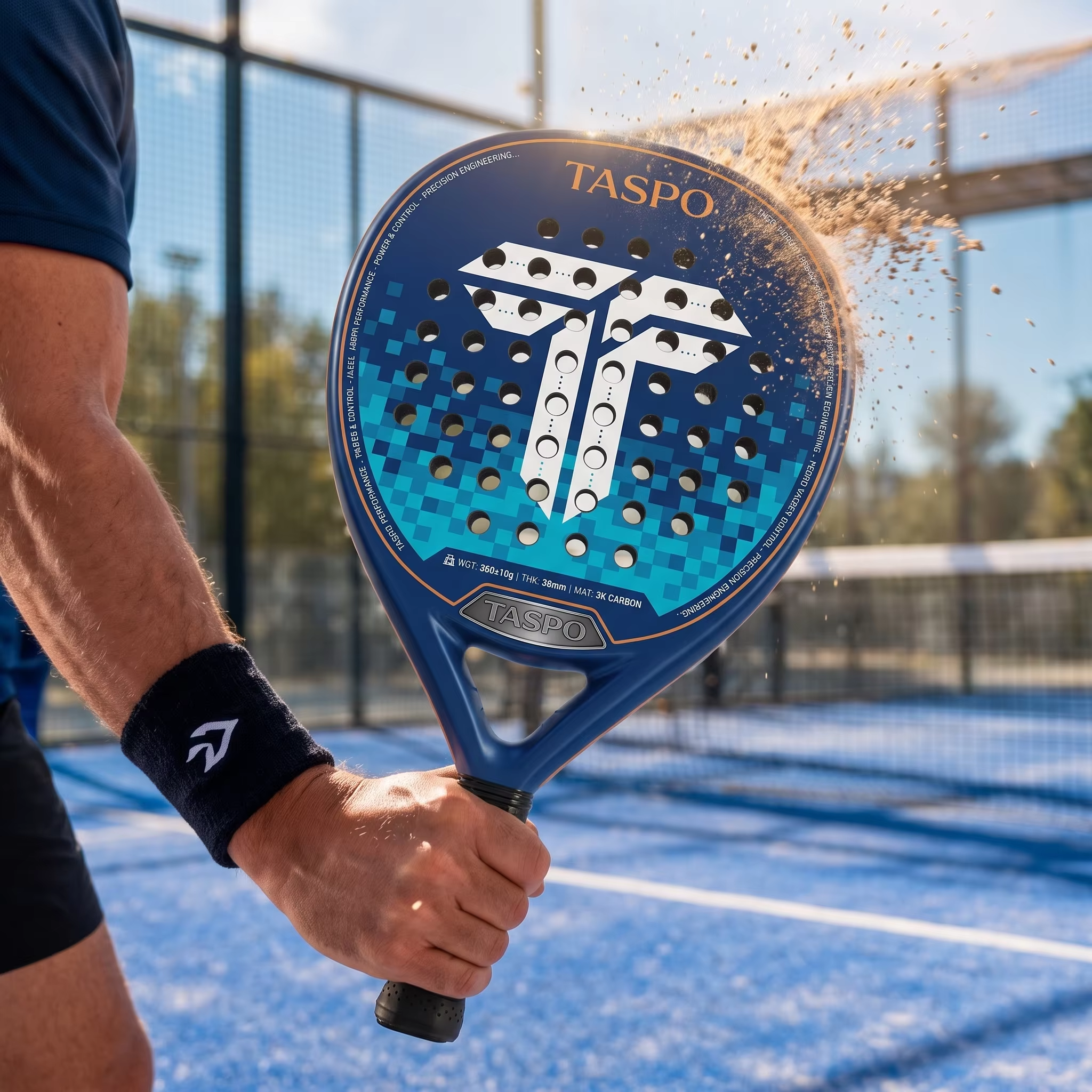
The core sits between the two faces. In many designs it is a foam material, often ethylene-vinyl acetate, or EVA. On impact, the ball, face and core all deform. The core supports the face beneath the contact area and contributes to how force is spread and energy is absorbed and returned. Bonding between the layers also matters: a core that works well with one face layup may feel different when paired with another.
Think of a low-speed defensive block compared with a forceful overhead. The same padel racket experiences different impact loads in those situations. A softer core may compress more readily under a gentle hit, while a firmer construction may feel more direct. Neither observation establishes which racket will be steadier for a particular player. Surface stiffness, frame construction and the way the racket is held can alter the result.
Soft, medium and firm are starting points
Core labels can help narrow a shortlist, but they are not a shared performance measurement. A padel racket described as soft by one maker is not necessarily equivalent to another maker's soft model. Ask for the foam specification and test method if an exact comparison matters. Density and hardness are different properties; a higher density does not necessarily mean a harder feel or a more stable racket.
A softer feel may appeal to someone who wants accessible rebound on slower shots. A firmer padel racket may appeal to a player who prefers a crisp sensation at higher swing speeds. Both are preferences to test, rather than promises about comfort, injury or shot placement. Temperature, ball condition and the player's technique can also change the impression on court.
Why the face and frame change the result
Fiberglass and carbon-fibre faces are often discussed as if the material name alone determines performance. In practice, fibre type, weave, layer orientation, resin and construction all affect the response. A padel racket with a compliant core and a stiff face can feel unlike another with the same core and a more flexible face. Ask for the full layup rather than comparing material labels alone.
The frame connects the hitting area to the handle and contributes to the structure's overall response. A firm perimeter may support the face differently from a more flexible one. The hole pattern and the quality of the bond between core, face and frame also affect the assembled racket. Without comparable testing, it is not possible to attribute a perceived difference to one component alone.
Balance is another part of the picture. A padel racket with more mass toward the head may resist some rotation differently, yet it may also feel less manoeuvrable. Two rackets with the same total weight can feel different if that weight is distributed differently. A steady volley and a quick defensive recovery are both worth testing before deciding which trade-off suits you.
Compare a padel racket in a repeatable way
Use similar balls and the same court session where possible. Compare rackets with similar grip size and record their weight and balance if that information is available. Change one major specification at a time when evaluating samples; otherwise it is difficult to tell whether a core, face or balance difference caused the sensation.
- Start in the centre. Hit controlled volleys and groundstrokes at a comfortable pace. Note the sound, rebound and feedback rather than relying on a single shot.
- Include slight mis-hits. Allow ordinary off-centre contacts during a drill. Observe any handle rotation and whether the ball direction varies, without deliberately striking the frame.
- Change the pace. Compare a gentle block, a medium-paced return and a faster overhead. The padel racket may feel different as impact intensity changes.
- Repeat after a rest. Alternate the samples and repeat the sequence. Record the conditions and observations so that fatigue or a fresh set of balls does not become a hidden variable.
This is a practical comparison, not a laboratory measurement. For procurement or product development, request the supplier's test method, number of samples and results alongside the core and face specifications. If a stability claim is important, ask how twisting or off-centre response was measured and whether the same setup was used for every sample.
Reading product names and specifications
Searches such as “nox wpt equation” or “padel racket head flash” can lead to models from different ranges or years. Treat a product name as a starting point, not proof that two models share the same core or offer a particular level of stability. Check the current manufacturer's specifications for the exact version, then compare the whole padel racket on court. This article does not rank those products or claim that their constructions are identical.
For competition, the International Padel Federation's rules specify a maximum racket thickness of 38 mm and a 2.5% tolerance when thickness is checked. That limit applies to the racket measurement, not to a guarantee of a particular core feel. Check the current rules and the specific competition's requirements before purchase; this information does not establish that any individual padel racket is approved.
Questions to ask before choosing a core
- What core material and hardness or compression test are specified, and how are those properties measured?
- What face materials and layer construction accompany the core?
- What are the actual sample weight, balance and grip dimensions?
- How consistent do centre and off-centre shots feel at the speeds you normally play?
- Can the supplier provide comparable sample and test information before a specification is finalized?
Start with the response you want from a padel racket, then evaluate the construction as a whole. A foam label is useful context, but a controlled sample comparison is a more practical way to judge stability for your game or your product brief.
 Hot News



