 EN



Natural Rubber Core padel ball for Consistent Play
A padel ball can look much like another in the same tube, yet feel noticeably different after a few rallies. The core is one part of that story. A natural rubber core may contribute to the way a ball deforms and rebounds, but its material label alone cannot tell you how it will perform on court. Pressure, construction, felt, storage and use all matter too.
For clubs, distributors and players, the useful question is not simply whether a padel ball contains natural rubber. It is whether a particular sample behaves predictably in the conditions where it will be used. Here is a practical way to look beyond a material description and assess consistency.
What the core contributes to a padel ball
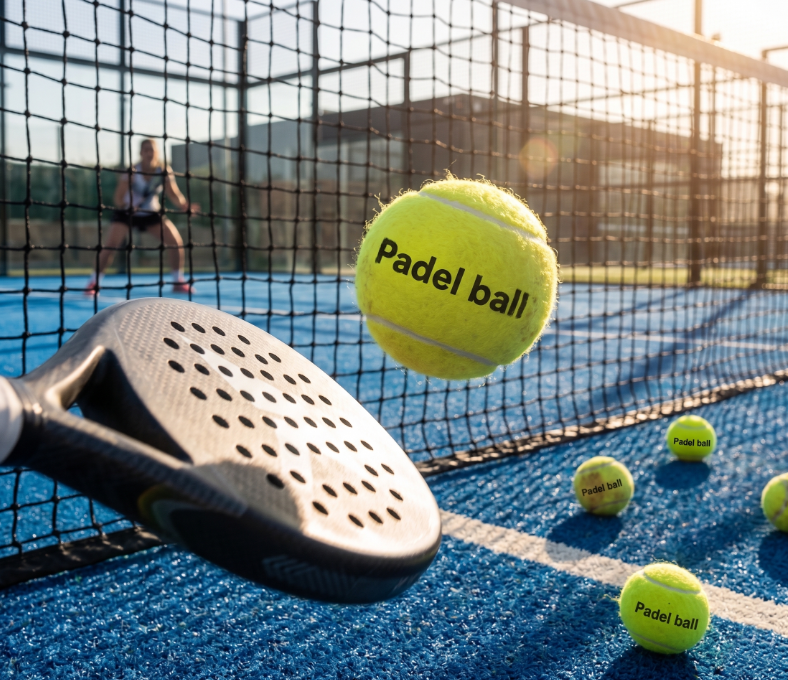
The rubber shell forms the body of a pressurised padel ball. On impact it deforms and returns toward its shape; the enclosed air and the rest of the construction also influence the response. The felt covering affects how the surface interacts with the court, walls and racket. Think of the core as one component in a system, not an independent performance rating.
A specification describing natural rubber does not by itself disclose the complete formulation, wall construction or manufacturing tolerances. Two balls with similar material descriptions may therefore feel different. Ask the supplier what the description covers and request the relevant specification for the actual model. If the document refers to a blend, ask which part of the construction it describes rather than assuming the entire core uses one material.
What consistent play actually means
A consistent padel ball should give players a response they can anticipate across ordinary exchanges. A club running lessons may value a repeatable bounce between balls in a basket; a match player may care about how the ball reacts off the back glass and during a long rally. These are related priorities, but they are not identical.
Compare a padel ball on several observable dimensions: bounce after a vertical drop, pace through the air, response off the wall, feel at the racket and changes during play. A ball that starts lively but changes markedly during a session may not suit a buyer who needs a stable training set. Equally, a slower feel is not automatically a defect if it matches the intended environment and players' preferences.
How official specifications frame the discussion
The International Padel Federation's Rules of Padel describe a ball diameter of 6.35 to 6.77 cm and a weight of 56.0 to 59.4 g. A new ball is specified to rebound between 135 and 145 cm when dropped from 2.54 m onto a hard surface. The rules also state that official competitions use balls approved by the federation.
Those figures provide context, not proof that a particular natural rubber padel ball meets a competition requirement. A simple club comparison is not a substitute for an official test or approval. For organised competition, check the current event rules and verify the exact ball model and approval status with the relevant organiser or federation.
Run a useful sample comparison
A small, repeatable trial can help separate a promising padel ball from one that merely has appealing packaging. Use fresh samples from clearly labelled tubes, and note when each tube is opened. Where possible, test several balls from the same batch and another batch, because one ball cannot show how a supply will vary.
- Control the setting. Use the same court and surface for each sample. Record the date, approximate conditions and whether the balls were stored together before opening.
- Observe the bounce. Drop each padel ball from the same height onto the same hard surface and compare the rebound. This is a screening exercise; do not label it an official certification test.
- Play comparable shots. Try controlled ground strokes, volleys and rebounds off the glass. Rotate the order of the samples so that fatigue or warming up does not decide the result.
- Review after play. Repeat the observations at the end of the session. Note changes in bounce, felt and feel, and keep the comments linked to each sample and batch.
Ask more than one player to record observations independently. Instead of writing “good feel,” describe what happened: for example, whether a padel ball came off the glass higher or lower than another sample under the same conditions. Differences in technique remain possible, so treat informal results as a guide for a follow-up conversation, not a universal ranking.
Pressure, felt and storage matter as much as the label
A pressurised padel ball can lose pressure over time, changing the way it bounces. The felt can also wear during use. That means a test comparing a newly opened tube with a set that has already seen several sessions is not a fair material comparison. Record the age and playing history of each set before drawing conclusions.
Keep unused balls in their original sealed packaging until needed and follow the supplier's storage directions. After opening, store them in a suitable container protected from excessive heat and moisture. Storage tools vary, and their effect depends on the product and conditions; do not assume any device will restore a worn ball or deliver a particular service life without evidence.
Court temperature, altitude and playing surface may also change the perceived response. If a padel ball will be used in different venues, repeat the trial in the settings that matter to the buyer. For high-altitude events, check the applicable rules rather than applying a standard-court expectation without qualification.
Questions to ask before ordering
Before making a purchase decision, turn the sample observations into a short specification discussion. A buyer can ask:
- What does the natural rubber description refer to, and is the core material a blend?
- What are the stated size, weight and rebound specifications, and which test method was used?
- Can samples from more than one production batch be supplied for comparison?
- What packaging and storage instructions apply to this padel ball?
- If competition use is intended, what evidence identifies the exact model and its current approval status?
Request supporting documents for the precise model rather than relying on a general catalogue claim. Written specifications, sample labels and a shared evaluation record make it easier for a club, distributor or brand team to discuss the same requirements. Availability, quantities and commercial terms should be confirmed separately.
Choosing for the way you play
A natural rubber core is a useful starting point, not a shortcut to a predictable padel ball. Compare the whole construction, evaluate fresh samples in representative conditions and check the evidence behind any competition claim. If the ball works for the intended session and remains suitably consistent throughout it, you have a stronger basis for a purchase decision than a material label alone can provide.
For broader racket-sport equipment context, visit Taspo Sports. Confirm ball availability and specifications directly before ordering.
 Hot News



