Watch an open-division tournament match today, and the sheer athleticism required to finish a point is staggering. Modern curly-monofilament artificial turf courts slow down ground bounces, while well-drilled defensive pairs camp comfortably behind the service line, lobbing back almost every standard overhead shot with ease. When advanced competitors play with conventional, heavy-feeling spheres, their hardest flat smashes die against the back tempered glass instead of rebounding high back over the net. Understanding why a high speed padel ball is preferred by advanced players comes down to offensive reward: accomplished hitters possess the hand-eye timing to control fast exchanges, and they demand a lively sphere that rewards explosive racquet head speed with decisive point-ending bounce. Upgrading to a tour-calibrated fast padel ball transforms sluggish baseline wars into dynamic, high-flying tactical chess matches.
Over the past five years, official tournament suppliers and the International Padel Federation have recognized that a single ball specification cannot serve every climate, altitude, and skill level equally. As a result, elite equipment lines split their offerings into standard control spheres and specialized high speed padel ball models—often designated with "S" or "Speed" markings on the canister. While both categories comply strictly with official FIP dimensional rules—measuring between six point three five and six point seven seven centimeters in diameter and weighing between fifty-six and fifty-nine point four grams—their internal mechanics are tuned differently. A standard sphere carries roughly ten pounds per square inch of internal gas pressure inside a medium-soft rubber wall. By contrast, a tournament padel ball engineered for high speed increases internal nitrogen-air pressurization to eleven or eleven point five pounds per square inch and utilizes a slightly firmer, high-resilience polybutadiene rubber core formula that shortens impact contact time against the racket face by half a millisecond.
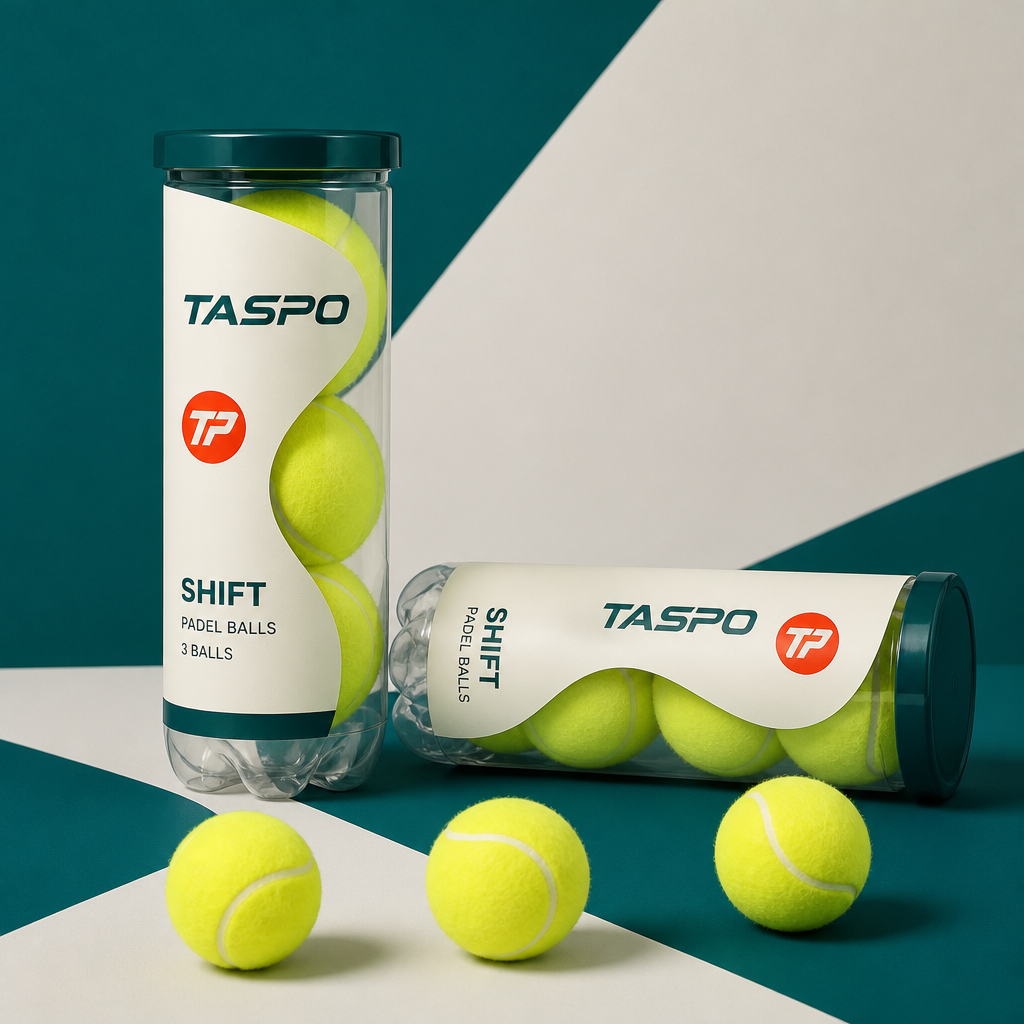
Internal core pressure is only half the equation; exterior textile aerodynamics dictate how well a high speed padel ball holds its velocity once it leaves the carbon face. When a standard needle-punched or high-wool felt sphere scrapes against sandy turf and wire mesh, its outer fibers fluff up into a thick halo. That raised nap acts like a miniature parachute in flight, creating aerodynamic drag that bleeds off velocity before the sphere ever reaches the opponent's back glass. To prevent this mid-air braking effect, a professional padel ball built for speed utilizes a tightly interlocked, short-nap woven felt blending roughly forty-five to fifty percent fine New Zealand wool with high-tenacity nylon and hydrophobic silicone treatments. Because the nylon filaments hold the wool fibers tight against the rubber core, the outer profile remains sleek and compact across three full sets. Less surface fuzz means lower wind resistance through the air and a faster, crisper skid off the turf during low slice volleys.
Field telemetry from competitive sea-level venues proves why elite players overwhelmingly vote for faster canister specifications. During an eight-week league trial across six coastal indoor and outdoor clubs in Spain, Portugal, and Italy—where humid sea air naturally deadens ball flight—forty-eight first-category players competed using two blind-coded tournament canisters. Canister A contained standard club balls, while Canister B housed a butyl-lined pressurized padel ball calibrated to high-speed tour specifications with short-nap hydro-repellent felt. High-speed radar tracking positioned above the net showed that matches played with Canister B maintained an eleven point two percent higher average rally speed during the third set. Even more telling, left-side attackers using the high speed padel ball increased their success rate on flat "bring-it-back" smashes—hitting the turf hard enough for the ball to bounce off the back glass and return over the three-meter net into their own court—by thirty-two percent.
For tournament directors, club coaches, and pro shop buyers, knowing when to deploy a fast padel ball maximizes both player enjoyment and canister longevity. High-speed spheres are the gold-standard choice for three specific court environments. First, any club located at sea level or in humid coastal regions needs the extra internal PSI and moisture-blocking felt to counteract heavy, dense air. Second, during autumn and winter months when indoor and outdoor court temperatures drop below eighteen degrees Celsius, standard rubber cores stiffen and lose bounce; switching to a high-energy tournament padel ball restores lively summer pace immediately. Third, facilities installed with thick, slow curly-fibrillated turf without loose top sand benefit immensely from a faster sphere that keeps rallies dynamic. Conversely, clubs situated above one thousand meters of altitude or operating in scorching thirty-eight-degree desert heat typically pair their courts with standard control balls so rallies do not become uncontrollably fast.
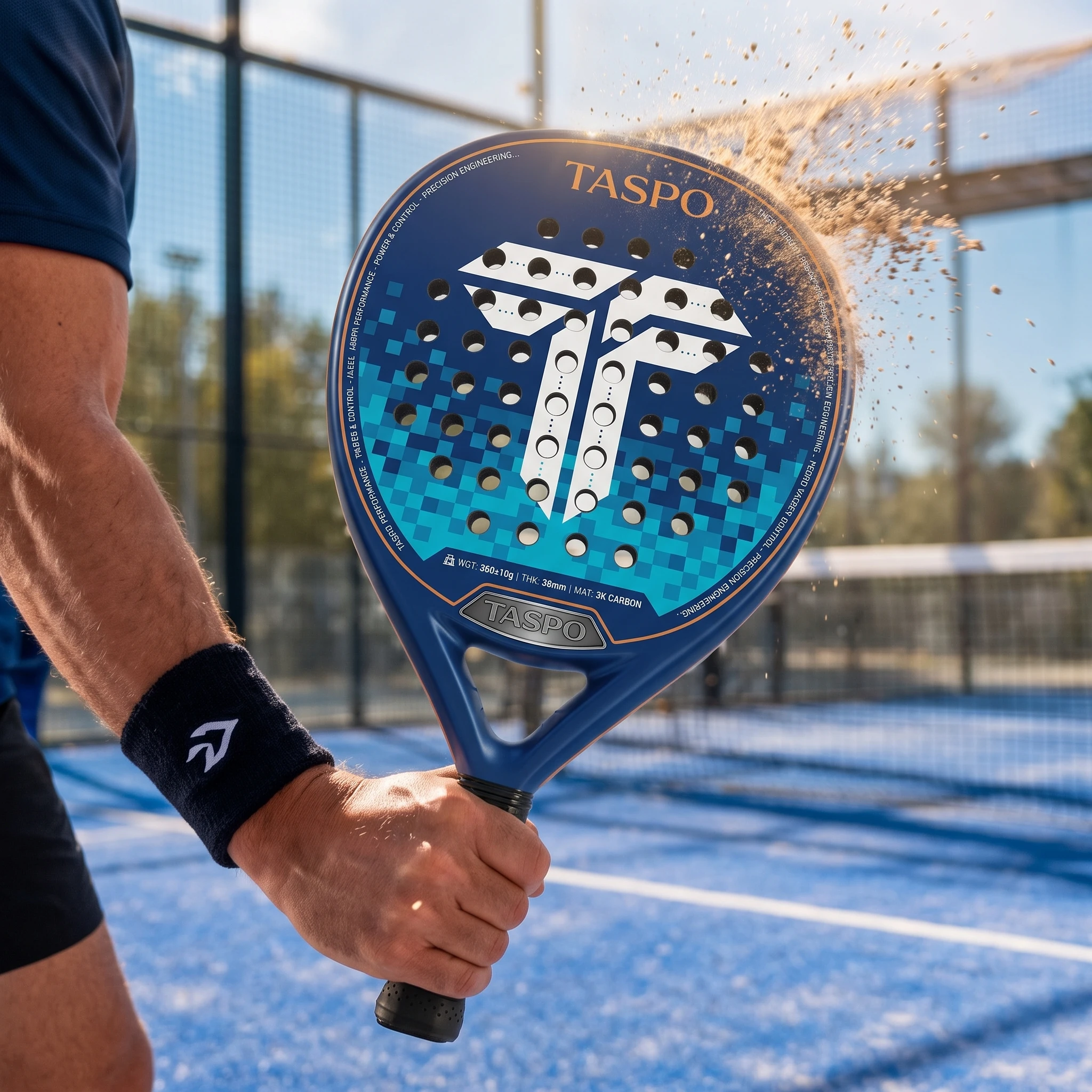
Developing a private-label ball collection tuned precisely for advanced tournament speed and long-lasting pressure retention requires partnering with a manufacturer that masters elastomer vulcanization and textile engineering. Taspo operates as a premier B2B sports equipment manufacturer supported by over one hundred and thirty experienced engineers and self-owned standardized production bases. Alongside crafting elite 3K, 12K, and 18K carbon fiber padel rackets through high-pressure autoclave curing and resin transfer molding, Taspo provides comprehensive one-stop OEM and ODM solutions for custom high speed padel ball lines, pressurized PET canisters, tacky overgrips, protective frame tapes, sweatbands, and thermal court bags. Brand partners can customize internal PSI targets, butyl-lined rubber core hardness, short-nap wool-nylon felt ratios, and custom canister branding. Every pressurized padel ball produced at Taspo passes through seven strict quality inspection gates verifying compression deformation, granite drop-tower bounce height, and vacuum seal integrity. With custom prototypes ready in seven to fifteen working days and twenty-four-hour technical support, Taspo powers global padel brands.
 Hot News
2026-11-23
2026-11-23
2026-11-23
2026-11-23
2026-11-23
2026-11-23
 EN