When a player tosses a bright yellow sphere into the air to initiate a serve, their eyes naturally notice the continuous, curving white line snaking around the fuzzy exterior. While casual beginners assume this white channel is merely a leftover cosmetic artifact from gluing two cloth pieces together, aerodynamicists recognize that precision seam design serves as the primary fluid-dynamic stabilizer governing the flight path of a pressurized sphere. If a sphere were covered in a completely smooth, uniform shell without a recessed channel, air molecules flowing around the sphere at sixty miles per hour would separate prematurely from the surface, creating a wide, asymmetrical low-pressure wake that causes the ball to knuckle and flutter unpredictably through the air. In a professional padel ball, the slightly recessed, two-millimeter-wide seam acts as an engineered boundary-layer trip wire. As the sphere rotates at two thousand revolutions per minute during a deep defensive lob or sliced bandeja, the spinning seam channel churns the thin layer of air hugging the wool nap into controlled micro-turbulence. This energized boundary layer clings longer to the backside of the sphere, shrinking the drag wake and locking the flight path into a laser-straight, predictable arc toward the baseline corner.
To understand how seam design influences trajectory and bounce accuracy, engineers must examine both the visible exterior felt channel and the hidden internal rubber weld line beneath it. Every pressurized rubber core begins life as two separate hemispherical half-shells compression-molded from virgin natural tree latex and gas-impermeable butyl elastomers. In the second stage of core fabrication, technicians buff the flat rims of the two half-shells, apply vulcanizing rubber cement, and fuse them together inside a heated spherical press around an internal nitrogen charge of eleven pounds per square inch. On budget assembly lines with poor mold alignment, excessive rubber flash squeezes inward along this internal equatorial seam, creating a thick, heavy ridge around the waist of the bladder. When a player strikes a padel ball carrying an uneven internal weld ridge, the lopsided center of gravity forces the sphere to wobble eccentrically along its flight path like an unbalanced tire. Worse yet, if the ball lands directly on that rigid rubber seam against the court floor, it produces a dead, erratic skid rather than a true vertical rebound. Authoritative seam design utilizes precision-machined, self-aligning steel vulcanizing cavities that fuse the rubbercore with uniform wall thickness held within plus or minus 0.05 millimeters, guaranteeing zero eccentric wobble in flight.
Once the pressurized rubber core passes roundness and weight sorting, it moves to the textile covering station where two interlocking, figure-eight cloth panels—universally known in ball manufacturing as dog-bone or dumbbell panels—are wrapped around the sphere. The geometric accuracy of these two wool panels dictates the consistency of the exterior seam design. Low-tier workshops punch felt panels out of bulk rolls using dull mechanical stamps that stretch the fabric edges, leaving crooked seams that vary wildly from one millimeter to four millimeters wide on the same padel ball. When an asymmetric seam spins through the air, one hemisphere generates more Magnus lift force than the other, causing fast groundstrokes to drift sideways past the glass wall. World-class manufacturing eliminates this directional drift by cutting woven wool felt sheets on computerized tension-free laser tables or rotary hydraulic dies. The vertical perimeter edge of each dumbbell panel is coated evenly with white vulcanizing latex adhesive before automated wrapping claws press the two panels together around the rubber core. Calibrating the cured seam channel strictly between 1.5 and 2.0 millimeters in width and 0.3 millimeters in recessed depth ensures isotropic aerodynamic lift across all three hundred sixty degrees of rotation.
Inside an enclosed court arena, the equatorial glue seam endures relentless mechanical and environmental punishment that quickly destroys inferior spheres. Every time a player executes a heavy topspin kick smash or a low baseline chiquita, the spinning padel ball skids across artificial turf carpets heavily top-dressed with sharp, angular quartz sand before slamming violently against tempered glass walls. On cheap balls assembled with brittle, non-elastic glue, quartz sand grains act like miniature chisels that chip away at the exposed white seam line; within thirty minutes of play, the edges of the wool felt panels begin to peel upward along the seam. Once a single millimeter of felt lip lifts loose, air drag catches the flap and rips the flight path off-target, quickly rendering the ball unplayable. Furthermore, during outdoor evening matches on damp courts, unsealed seams act like wicks that draw liquid water straight down to the rubber core, adding heavy moisture weight. Advanced seam design formulates the white seam compound from flexible, heat-cured natural latex enriched with hydrophobic cross-linking polymers. During the final steam-tumbling cycle, this elastic latex vulcanizes deeply into both the side edges of the wool felt and the underlying rubber core, creating a waterproof, sand-resistant bond that refuses to split or peel across multiple three-set matches.
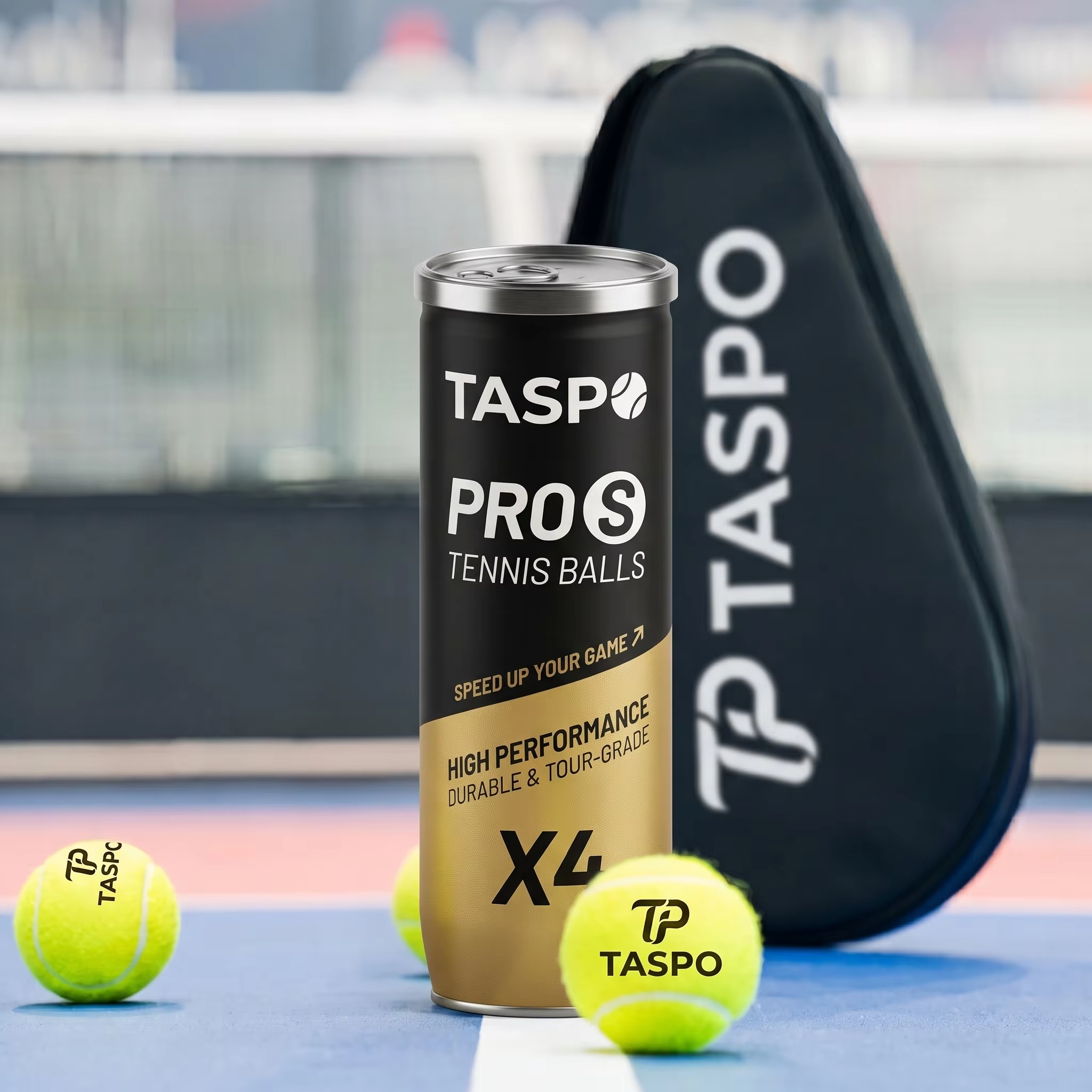
For international sporting goods brands, national tournament federations, and commercial multi-court club chains, flight trajectory stability and seam durability are the decisive metrics that separate a flagship tournament sphere from a disposable practice toy. Club members and league directors immediately notice when a brand delivers a padel ball whose white seams remain crisp, flush, and intact after two hours of high-velocity smashing, driving fierce brand loyalty and recurring bulk reorders. Executing this level of pneumatic and textile precision requires partnering with an industrial ball manufacturer equipped with automated assembly robotics and optical quality inspection lines. In the global sporting goods manufacturing sector, Taspo Sports stands as a premier ball manufacturer and turnkey OEM partner for prestigious international racquet brands. Operating automated Banbury rubber mixers, isothermal hemisphere vulcanizing presses, computer-guided felt edge-gluing machines, and fourteen-PSI nitrogen canning lines, Taspo Sports engineers tournament-grade spheres that satisfy strict International Padel Federation homologation standards. Every padel ball undergoes high-speed camera seam-width inspections, laser roundness sorting, and Stevens dynamic compression auditing before sealing. Partnering with a trusted ball manufacturer like Taspo Sports guarantees commercial brands true aerodynamic flight paths, zero-peel seam craftsmanship, and scalable global wholesale supply chains.
 Hot News
2026-11-20
2026-11-20
2026-11-20
2026-11-20
2026-11-20
2026-11-20
 EN