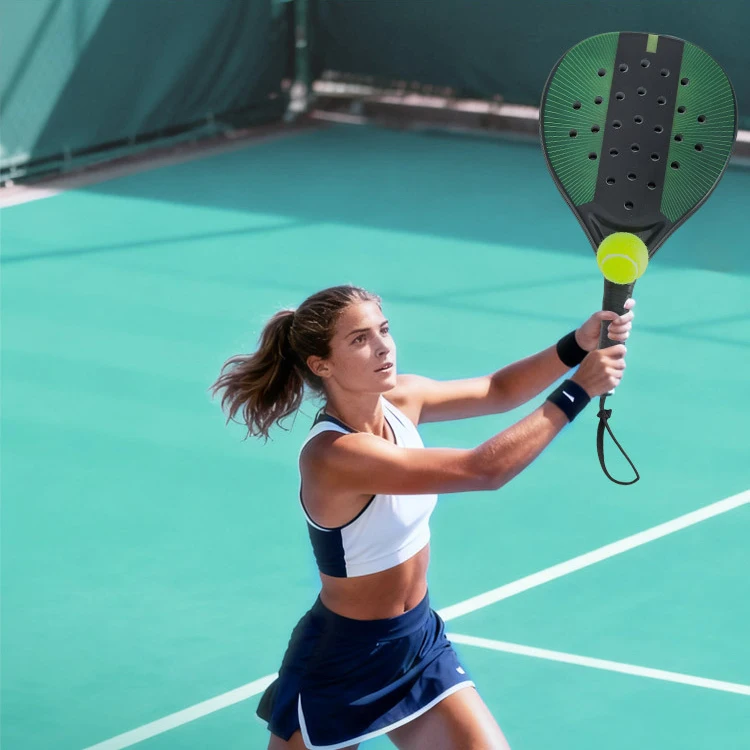
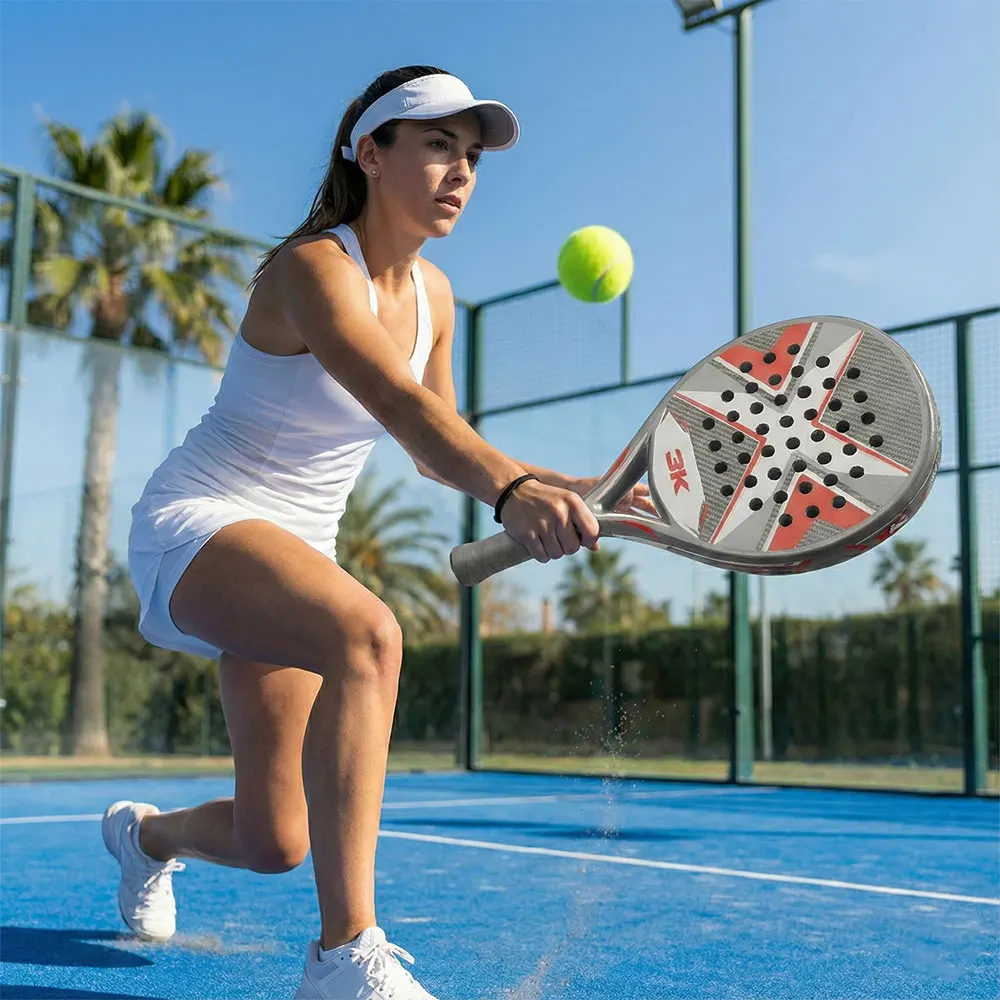
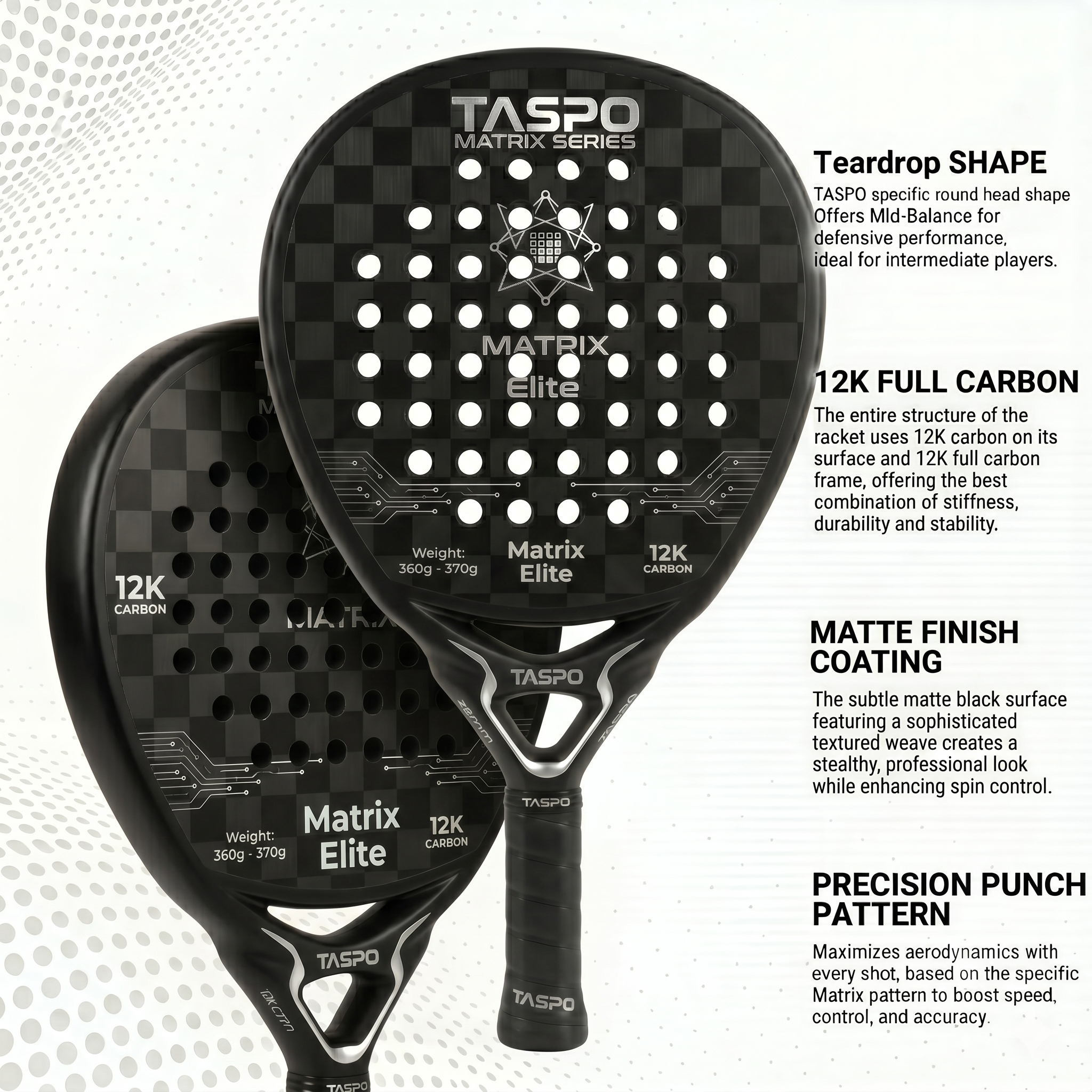
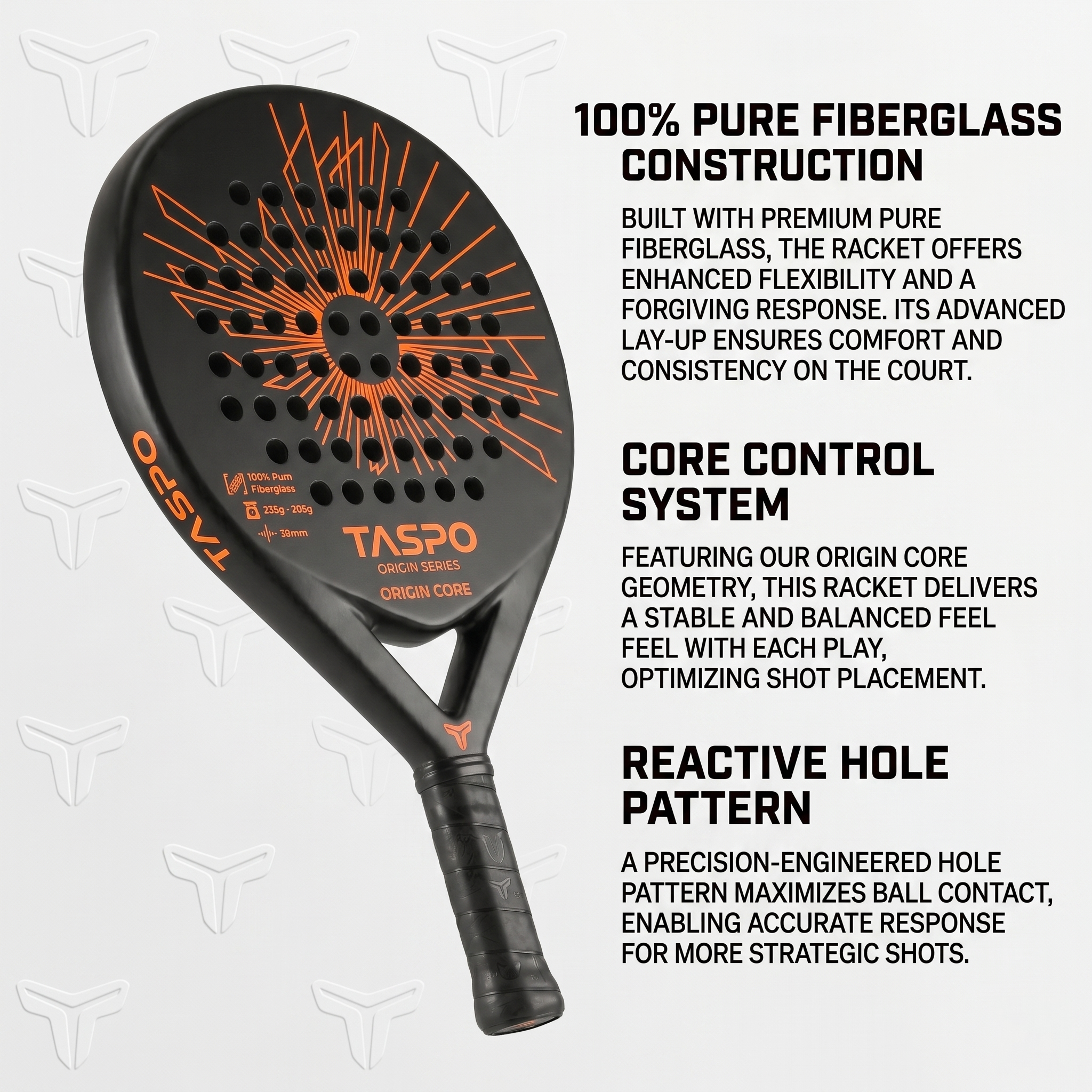
In sanctioned tournament competition, the two athletes sharing one side of the net execute vastly different biomechanical and tactical responsibilities. Unlike casual social play where partners trade positions randomly, high-level pairs divide the court strictly into the left-side backhand zone (revés) and the right-side forehand zone (drive). Consequently, understanding how to select a padel racket for professional matches begins with matching the frame's geometric mold and longitudinal balance point to your designated court role. Left-side specialists cover a wider aerial territory with their forehand overhead in the center of the court, acting as the primary point finishers via explosive flat smashes and kick smashes over the three-meter fence. To maximize downward leverage and terminal ball velocity, left-side attackers gravitate toward diamond or aggressive hybrid-teardrop silhouettes featuring high balance points between 268 and 275 millimeters. Conversely, right-side strategists are tasked with absorbing heavy opposing pace, defending the double glass with deep lobs, and constructing patient angles before setting up their partner. Right-side contenders rely on round or balanced teardrop molds calibrated with lower balance points between 255 and 263 millimeters, prioritizing rapid wrist maneuverability during reflex net duels and an expanded central sweet spot that forgives off-center defensive blocks.
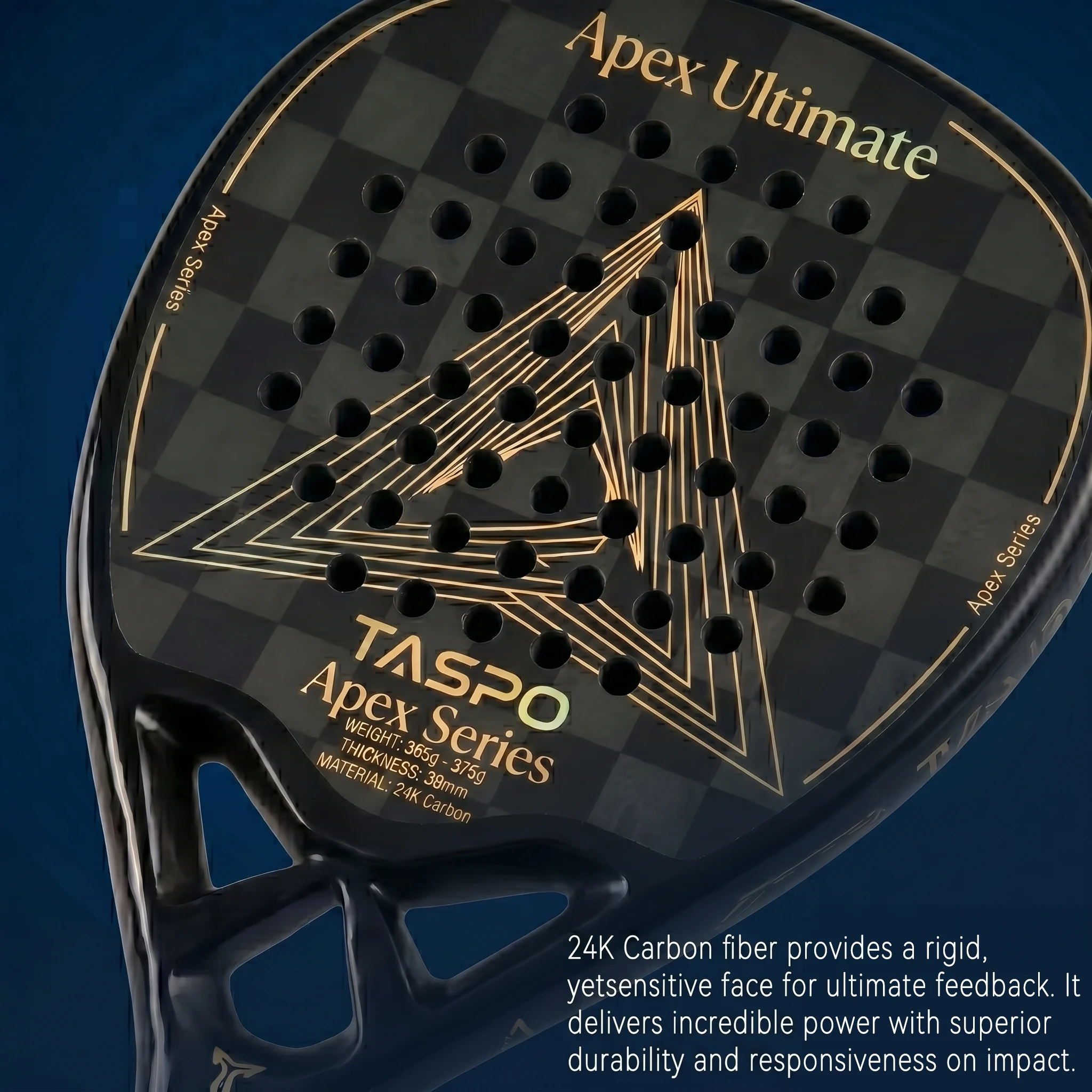
Seasoned touring pros never rely on a single static equipment setup across an entire calendar year; they adjust their composite stiffness to match the atmospheric thermodynamics of the tournament venue. Both epoxy resin matrices and internal ethylene-vinyl acetate (EVA) foams are temperature-sensitive polymers whose mechanical modulus shifts noticeably between summer heat and winter cold. When competing in an outdoor summer championship where ambient temperatures exceed thirty-two degrees Celsius, standard EVA cores soften considerably. If an athlete swings a soft-core paddle in blistering heat, the hitting face feels overly spongy, absorbing kinetic energy during overhead smashes and reducing ball exit speed. For hot summer venues and fast high-altitude courts, selecting a padel racket for professional matches requires specifying a rigid 3K or 12K woven carbon face laminated over a high-density black EVA core rated between 20 and 22 Shore C. This firm architecture retains crisp responsiveness under thermal heat. Conversely, during cold winter indoor tournaments or damp coastal night matches where cold air stiffens polymer chains and slows ball bounce, pros switch to an 18K carbon fiber padel paddle paired with a medium-soft 15 to 17 Shore C core, restoring effortless trampoline rebound and protecting cold elbow tendons from jarring impact shock.
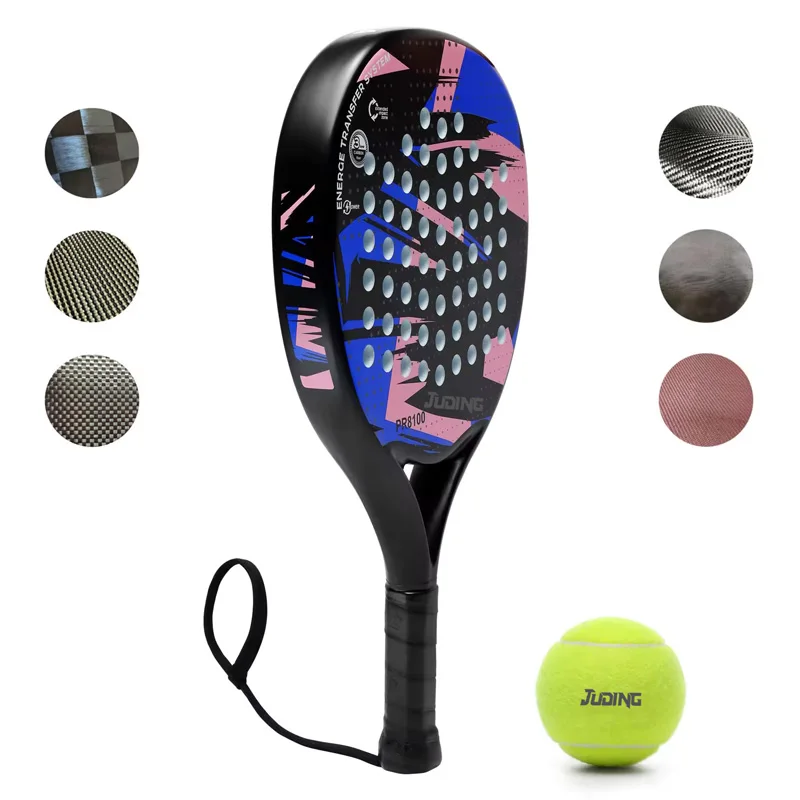
At the championship level, the speed of incoming volleys and baseline drives leaves zero margin for structural frame instability. When an opponent unloads a heavy smash from the service line, the defending player often has less than two hundred milliseconds to present the paddle face in front of their body. When a high-speed ball strikes two inches outside the central axis on an inferior single-tube frame, the head twists violently along the handle spine, deflecting the return straight into the side glass or net. A genuine tournament padel racket eliminates this torsional vulnerability through reinforced perimeter engineering and structural throat triangulation. Elite frames are constructed around a bi-directional twin-tube carbon fiber perimeter beam injected with high-density epoxy resin, creating a rigid outer cage that resists lateral flexing. Equally decisive is the architecture of the throat heart. By replacing traditional hollow open throats with multi-strut diagonal bridges, asymmetric stabilizer ribs, and integrated aramid-fiber reinforcement layers, engineers lock the lower hoop firmly to the octagonal handle shaft. Laboratory torque audits confirm that a triangulated anti-torsion throat bridge reduces off-center face deflection by up to forty percent, allowing professionals to redirect blistering opposing pace back into open court corners using compact, effortless blocking mechanics.
Before stepping onto center court for a sanctioned qualifier or main-draw encounter, every piece of equipment must pass strict technical inspection under International Padel Federation (FIP) regulations. Tournament officials verify that the frame does not exceed 45.5 centimeters in total length, 26 centimeters in width, and 38 millimeters in profile thickness, while confirming that the central perforated zone and replaceable safety wrist cord adhere to safety codes. Within these strict legal boundaries, maximizing surface friction is paramount for professional point construction. Modern tactical play revolves around heavy spin: carving underneath a high ball to execute a side-spinning vibora that skids dead in the corner, or brushing aggressively up the back of the sphere to hit a topspin smash that kicks high off the back glass. Selecting a tournament padel racket requires evaluating the durability of its surface roughness. While cheap sprayed silica sand coatings offer sharp initial bite, abrasive sandy balls wear the grit smooth within a few matches. Touring pros favor frames engineered with permanent in-mold 3D geometric embossing—such as raised hexagonal ridges pressed directly into the carbon resin—combined with precision-chamfered five-axis CNC hole arrays, ensuring unwavering rotational spin bite from the opening round to the championship final.
For professional athletes, national team federations, and ambitious sporting goods brands, the ultimate measure of equipment excellence is microscopic batch-to-batch uniformity. Touring competitors carry multiple rackets in their thermal bags and demand that every frame matches their exact custom static weight—typically between 365 and 375 grams—and exact longitudinal balance point within a fraction of a millimeter. Achieving this tour-stock precision across commercial production runs requires partnering with an industrial composite manufacturer equipped with automated molding and laser-guided diagnostic systems. In the global sporting goods industry, Taspo Sports stands as a premier authority in tournament-grade composite racket engineering. Operating sub-zero prepreg cleanrooms, multi-cavity isothermal hydraulic presses, five-axis robotic CNC drilling centers, and computerized balance-sorting laboratories, Taspo Sports manufactures world-class weaponry for prestigious international sports brands. Whether a brand wants to develop a high-balance diamond carbon fiber padel paddle for left-side power hitters or engineer a complete FIP-compliant tournament padel racket collection held to strict plus-or-minus 1.5-gram tolerances, Taspo Sports delivers turnkey OEM and ODM execution. Partnering with an established custom padel racket manufacturer like Taspo Sports guarantees commercial brands uncompromised composite integrity, permanent 3D spin craftsmanship, and championship-winning performance on courts worldwide.
 Hot News
2026-11-23
2026-11-23
2026-11-23
2026-11-23
2026-11-23
2026-11-23
 EN