 EN



What Defines Custom Pickleball Paddle Core Thickness
A core thickness number is a starting specification, not a complete description of how a paddle plays. For a custom pickleball paddle, it describes the depth of the internal layer between the two faces if the supplier is measuring the core itself. The same number can mean something different on a finished-paddle drawing. Before selecting a thickness, clarify what is measured, which materials surround it, and how the sample will be evaluated.
For a brand or distributor, that distinction matters because the printed design may change without changing the construction. Conversely, two paddles with similar artwork can feel different if their cores, faces, or balance differ. A useful specification turns a desired playing response into a testable sample rather than a promise based on a single dimension.
Core thickness versus the finished paddle
The core is the material inside the paddle, commonly a polymer honeycomb in many current designs. Its thickness is the distance through that inner layer, measured before the face layers and bonding materials are added. Overall paddle thickness is measured across the assembled body and may also be affected by surface layers, adhesive, manufacturing variation, and where the measuring tool is placed.
When discussing a custom pickleball paddle, ask the supplier whether the stated millimeter value refers to the unassembled core, the finished face-to-face body, or a nominal product designation. Request a drawing that identifies the measurement location, tool, tolerance, and acceptable variation. Avoid measuring across the edge guard when the agreed dimension refers to the paddle body. A nominal value and an actual sample measurement are not interchangeable.
For example, a buyer might ask for a 14 mm core and later receive a sample described as 14 mm overall. Those specifications do not necessarily identify the same construction. Resolve that difference on the drawing before the sample becomes the reference for production.
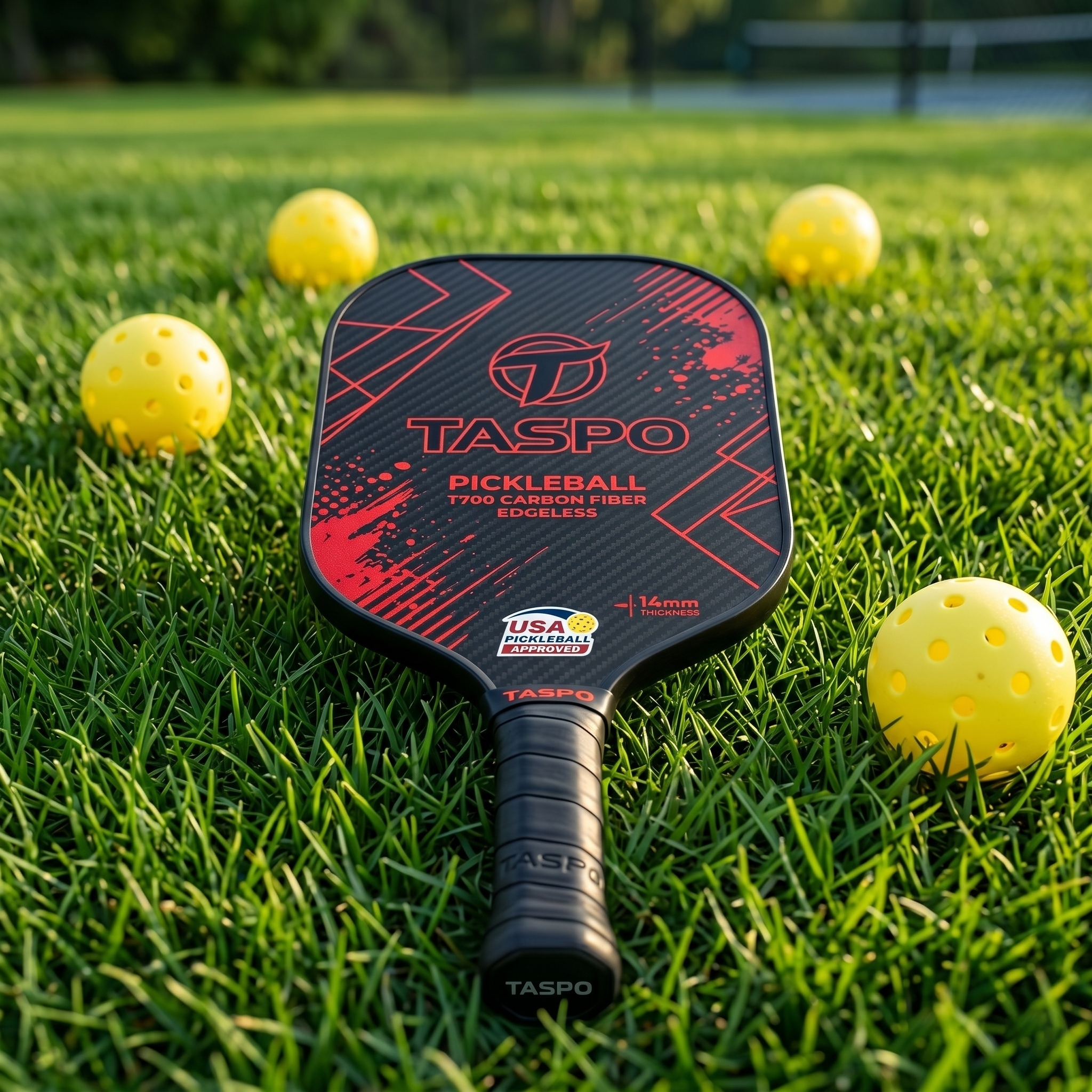
How 13 mm, 14 mm, and 16 mm compare
Commercial descriptions commonly use 13 mm, 14 mm, and 16 mm as comparison points. With otherwise similar polymer honeycomb constructions, a thinner core is often described as having a firmer, more immediate response, while a thicker core is often described as feeling softer or more stable. These are tendencies reported in equipment guidance, not a rule that predicts every paddle.
- 13 mm: A comparison point for buyers exploring a more direct response. Ask testers whether quick exchanges remain comfortable and controllable for their playing style.
- 14 mm: An intermediate comparison point. It is not automatically a midpoint in feel, so evaluate the actual construction rather than averaging claims.
- 16 mm: A useful comparison point when testers want to explore a more damped response. Ask whether the added body depth and balance suit the intended users.
A custom pickleball paddle with a thicker core is not necessarily heavier, slower, or more controlled than every thinner alternative. Shape, weight distribution, cell structure, face materials, and bonding can change the result. A two-millimeter difference is easy to write in a brief; whether it produces a noticeable difference is a question for matched samples and players.
What else changes the response?
Core material and cell geometry
Core depth works alongside material properties and internal geometry. In a honeycomb design, ask about the polymer type, cell size, wall characteristics, and construction method. Two cores with the same nominal thickness can respond differently if those features differ. The supplier should identify which details can be documented for the project, rather than treating the thickness figure as a complete recipe.
Face, adhesive, and surface texture
The faces and the bond joining them to the core contribute to the behavior of the assembled paddle. Surface texture is a separate specification from core thickness. A textured face may be relevant to ball contact and product appearance, but a texture description alone does not establish a paddle's spin, durability, or competition status.
For an ODM custom textured surface paddle inquiry, describe the desired face material, finish, and artwork separately from the core target. For an ODM custom textured pickleball paddle project, request a sample and a written description of how that texture is produced and inspected. Do not assume a texture option is available until the supplier confirms it.
Shape, balance, and grip
A custom pickleball paddle must also fit the intended player and use case. Overall dimensions, handle length, grip size, total weight, and balance can affect how a paddle feels in hand. If those variables change alongside the core, it becomes difficult to attribute a difference in play to thickness. Keep a record of each sample's complete configuration.
Design a useful sample comparison
Start with a short brief: who will use the paddle, what shots matter to them, and what response they want to explore. Then request two configurations that differ in core thickness while keeping other specifications as close as the supplier can make them. Record any unavoidable differences instead of calling the comparison controlled when it is not.
- Agree on nominal core and finished-body measurements, locations, tolerances, and the method for checking them.
- Document the face construction, shape, grip, weight, and balance for each sample.
- Use the same balls and court conditions for a repeatable session. Rotate the order of the samples so the first paddle does not consistently receive the first impressions.
- Ask players to describe resets, blocks, volleys, drives, and comfort separately. Note where they prefer one sample and where they do not.
- Compare multiple samples if consistency matters to the order. Approve a reference sample and a written specification together.
This process does not turn subjective feedback into laboratory data. It does, however, give the buyer and supplier a common way to discuss a custom pickleball paddle before artwork and production decisions are locked.
What should a purchase specification include?
List the core target and tolerance, what the number measures, material and cell information where available, face and surface details, finished dimensions, total weight range, balance target, grip requirements, and the sample approval process. Ask how substitutions or construction changes will be communicated. If a performance claim is important to a sales page, agree on an appropriate test and retain the evidence before making the claim.
For competition use, thickness alone does not establish approval. The USA Pickleball equipment manual published in January 2025 stated no restriction on paddle thickness, but other equipment and approval requirements still apply. Check the current rules and the approved-equipment listing for the exact brand and model before making any tournament claim; a material or construction change may require further review.
Choosing a practical starting point
Choose the first thickness for a custom pickleball paddle as a hypothesis, not a final verdict. A brand seeking a more direct response might compare a thinner sample with a thicker version; a club prioritizing touch might begin with the thicker sample and still test the alternative. The right direction is the one supported by the intended players' feedback and a specification the supplier can reproduce.
Taspo Sports works in the pickleball equipment category and accepts custom production inquiries. Share the intended audience, sample comparison, proposed construction, and any competition requirements when discussing a custom pickleball paddle. Confirm available options and documentation with the supplier before placing an order.
 Hot News



