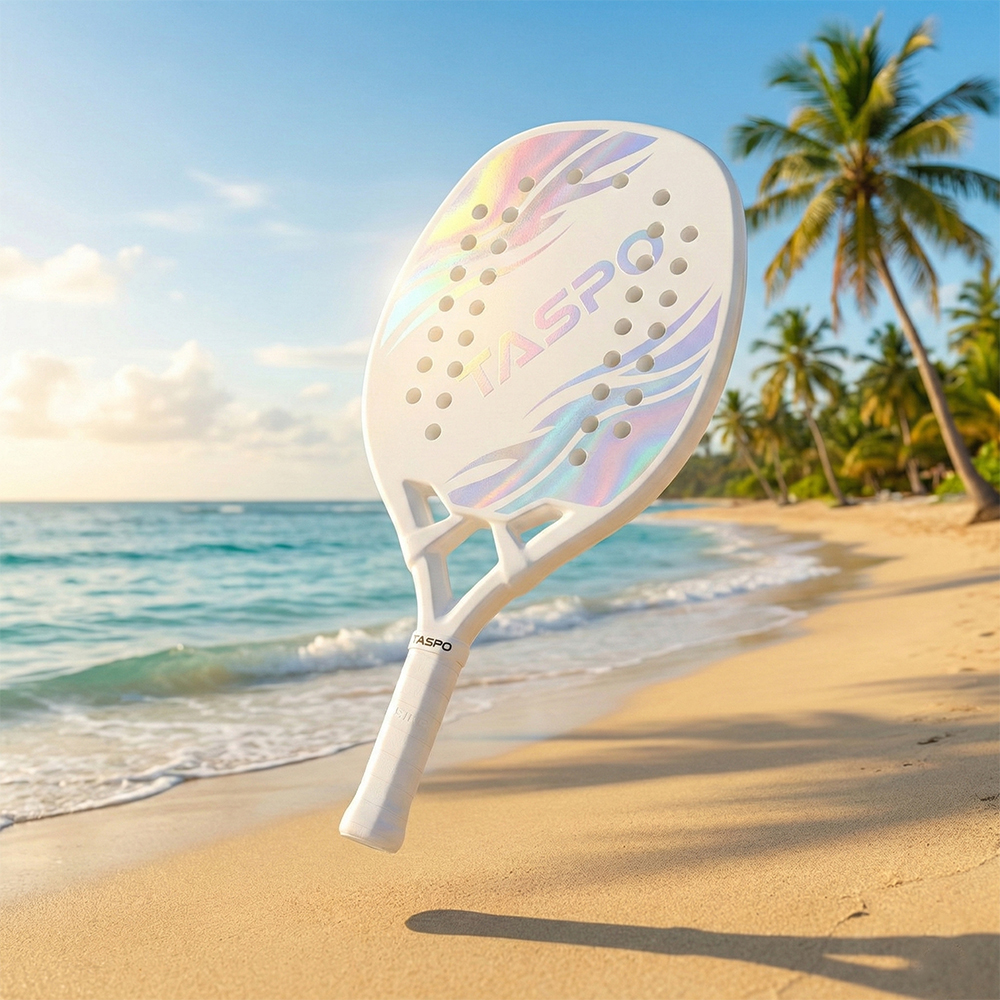
Stepping onto a sun-drenched sand court for the first time quickly teaches racket athletes that traditional stroke mechanics do not apply here. Because the ball is never allowed to touch the ground and every single point consists entirely of aerial volleys, overheads, and defensive dives over a one-point-seven-meter net, reaction windows shrink to fractions of a second. Meanwhile, soft shifting sand robs players of lower-body kinetic push, forcing the shoulder and forearm to generate all the pace while battling unpredictable coastal crosswinds. Understanding what are the key features of tennis beach rackets helps players and equipment buyers see why bringing a heavy padel bat or a strung frame to the shore leads to immediate exhaustion. A purpose-built beach tennis racket combines ultra-thin aerodynamic profiles, lightweight composite layups, and specialized surface friction to turn effortless wrist flicks into pinpoint drop shots and explosive overhead winners.
To appreciate how a professional beach tennis racket cuts through heavy ocean breezes, one must first look at the governing structural rules established by the International Tennis Federation. Under official ITF beach tennis regulations, the frame cannot exceed fifty centimeters in overall length or twenty-six centimeters in width, distinguishing it immediately from the shorter forty-five-point-five-centimeter limit of a standard padel racket. That extra four point five centimeters of length provides crucial overhead reach and serving leverage when jumping from deep sand. Equally important is the profile thickness: while padel frames measure a bulky thirty-eight millimeters across, a competitive tennis beach racket typically features a sleek, constant beam thickness between twenty and twenty-two millimeters. Wind-tunnel comparisons show that slimming the frame profile down to twenty-one millimeters reduces lateral aerodynamic drag by nearly forty percent during rapid horizontal volley transitions, allowing athletes to whip the head into position before the low-compression orange ball drops below net tape level.
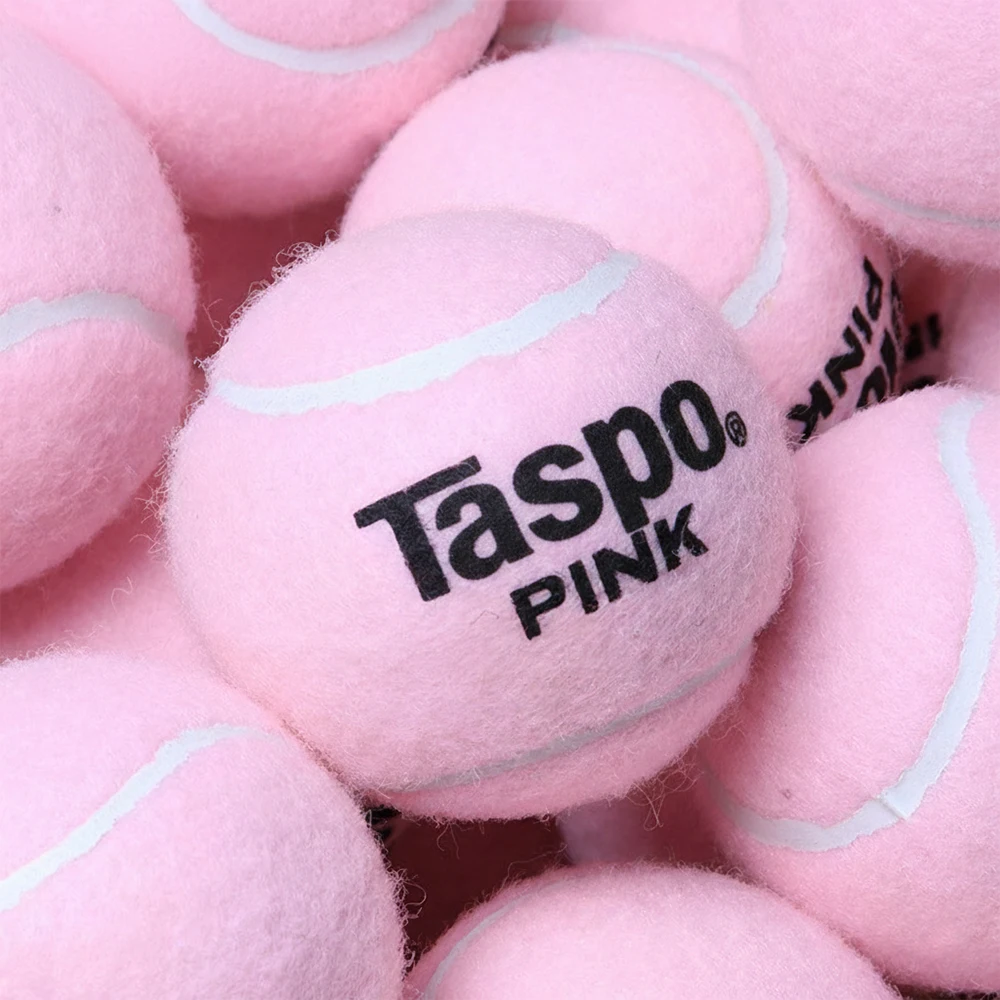
Because the sport uses depressurized Stage 2 orange balls that carry significantly less internal bounce than standard tennis balls, the internal core and exterior face of a carbon fiber beach tennis racket must do the heavy lifting. Entry-level frames use fiberglass sheets that flex deeply for easy ball output but lack directional precision during powerful smashes. Moving up to tournament tiers, manufacturers engineer faces using woven 3K, 12K, or 18K carbon fiber filaments, occasionally reinforced with aramid Kevlar fibers to dampen harsh impact vibrations. A 3K carbon fiber beach tennis racket offers a slightly softer, more elastic touch ideal for deceptive lobs and soft net taps, whereas an 18K multi-filament weave creates a rigid, ultra-responsive surface that rewards fast-swinging aggressive hitters with blistering ball speed. Beneath that carbon skin sits an ethylene-vinyl acetate foam core. Pairing a twenty-two-millimeter frame with a low-to-medium density Black EVA core creates optimal dwell time, cradling the soft orange ball briefly on the face before catapulting it deeply across the eight-by-sixteen-meter sand court.
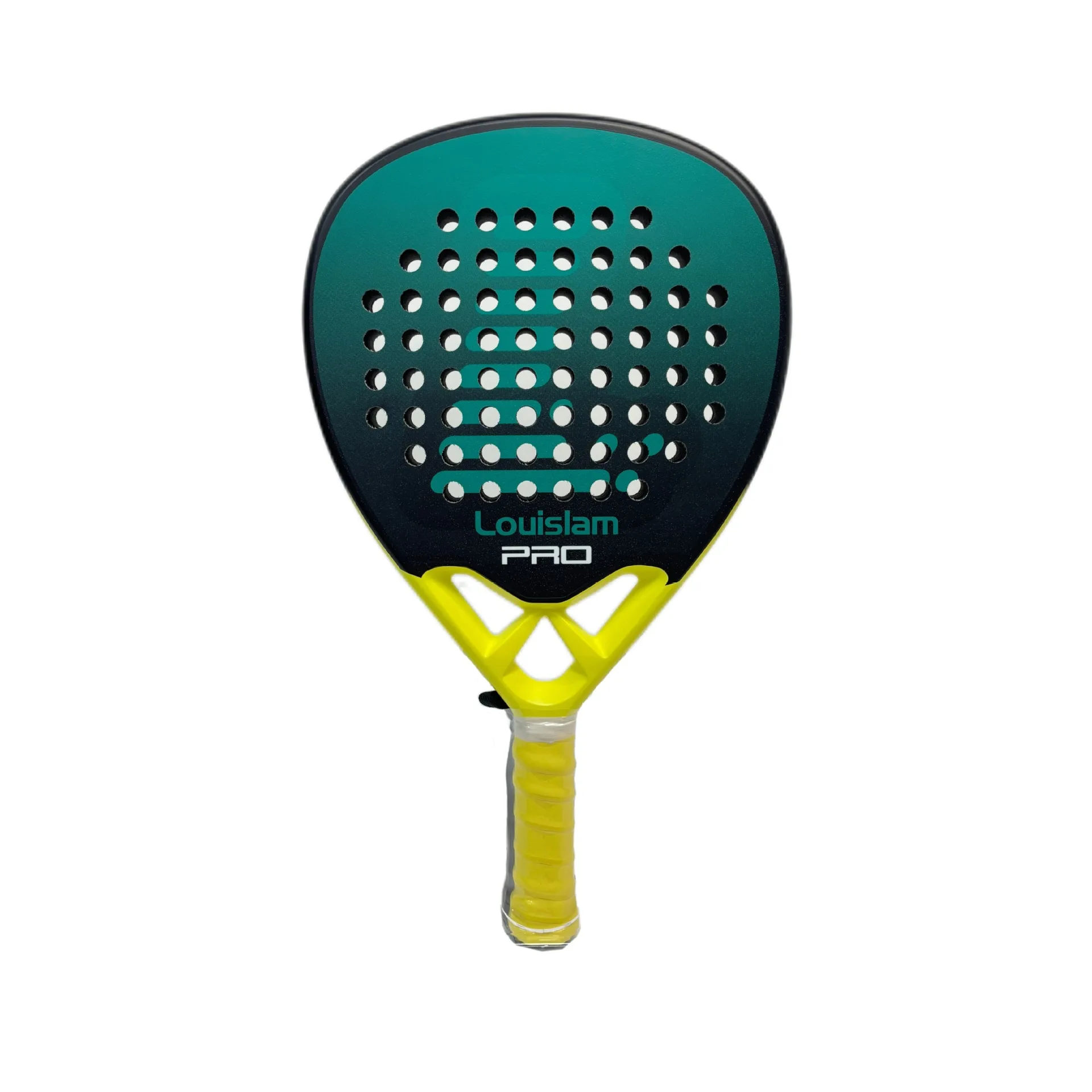
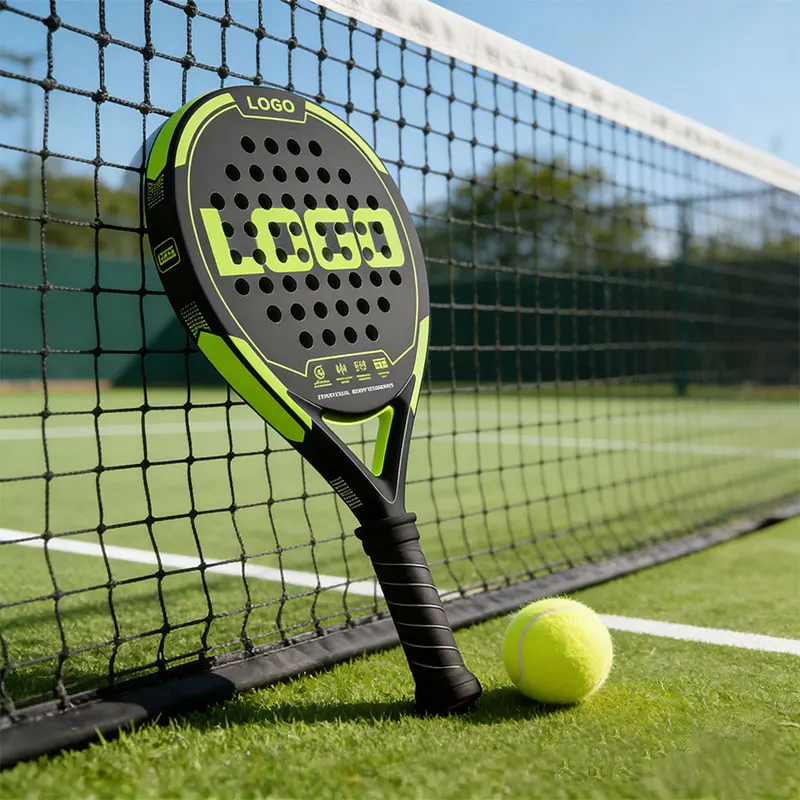
Examining the face of a high-end pro beach tennis racket reveals two critical design details that govern flight stability and spin generation: strategic hole distribution and surface grit. Unlike padel rackets that pack dozens of holes right across the central sweet spot, a tournament beach tennis racket typically concentrates its perforations along two parallel curved arcs near the outer perimeter or top corners while leaving the central hitting zone completely solid. Keeping the center face undrilled maximizes trampoline repulsion against the depressurized ball, while the perimeter holes bleed off wind resistance and fine-tune the balance point toward the middle of the frame. To compensate for the absence of strings, engineers apply a specialized rough texture over the final clear coat using calibrated quartz silica sand crystals or 3D molded decals. During coastal tournament trials in Brazil and Italy, athletes competing with quartz-grit carbon fiber beach tennis racket models recorded a thirty-one percent higher success rate on short angled slice drop shots in twenty-kilometer-per-hour ocean winds compared to smooth-gloss frames.
Coastal environments are notoriously brutal on composite sports equipment, making durability engineering a decisive factor when evaluating what are the key features of tennis beach rackets. Leaving a poorly sealed racket under direct tropical UV radiation at forty degrees Celsius causes standard epoxy resins to yellow, turn brittle, and delaminate from the internal EVA foam core. Furthermore, airborne salt spray and wet sand particles work their way into unprotected handle cavities, rotting out wooden inserts and loosening base grips. A trustworthy pro beach tennis racket utilizes UV-inhibited cycloaliphatic epoxy systems and double-baked polyurethane topcoats that prevent solar degradation and keep custom graphics vibrant season after season. Structural reinforcement at the throat bridge—often utilizing twin-tube carbon struts or triangular vibration dampeners—prevents frame torsion during off-center defensive blocks and ensures the three-hundred-and-twenty to three-hundred-and-forty-gram frame survives accidental racquet clashes in fast doubles play.
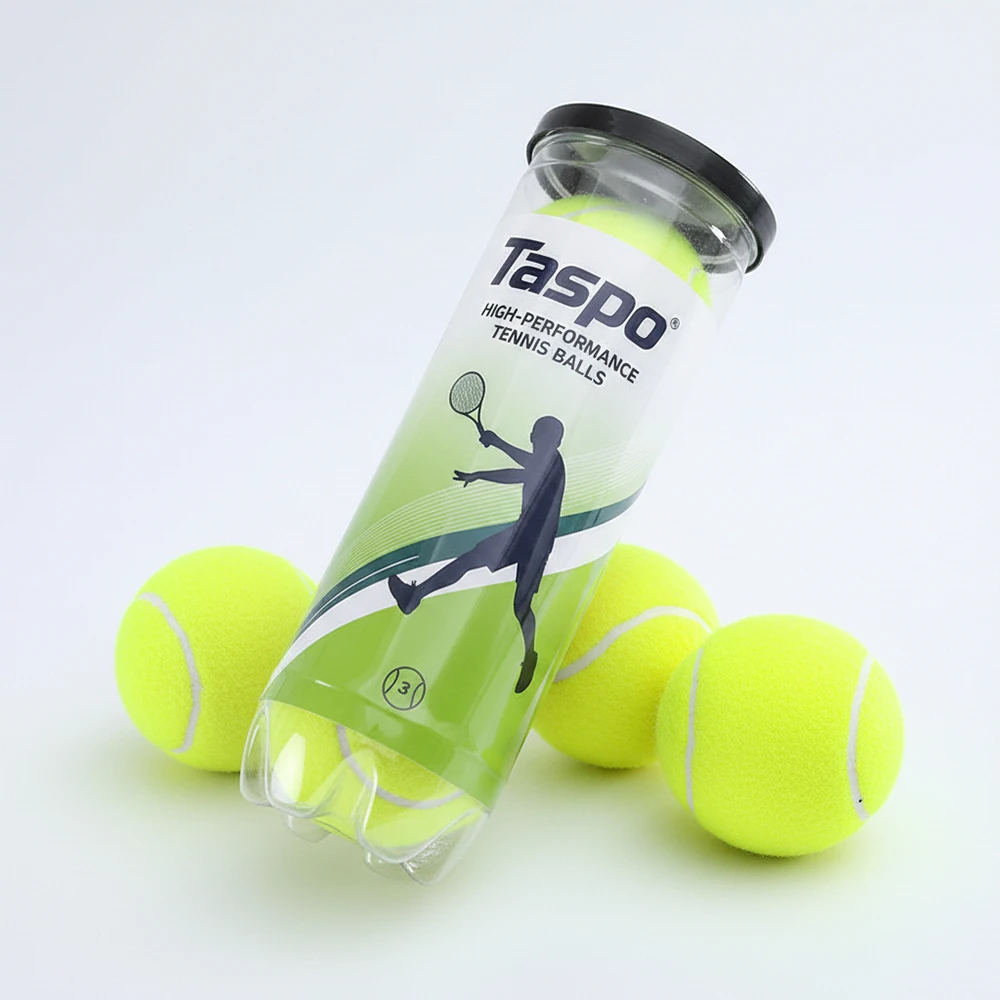
Capturing market share in the booming coastal and resort sports sector requires partnering with a manufacturer that masters thin-wall carbon composite molding. Taspo operates as a premier sports equipment manufacturer supported by over one hundred and thirty experienced engineers and self-owned standardized production bases. Leveraging advanced prepreg autoclave curing, precision CNC drilling, and custom quartz-sand surface texturing, Taspo manufactures high-performance beach tennis racket collections tailored to exact brand specifications. Clients can customize 3K, 12K, 18K, or Kevlar-hybrid layups, twenty-to-twenty-two-millimeter aerodynamic molds, custom hole patterns, and ergonomic waterproof grips, alongside coordinated beach racket bags, balls, and moisture-wicking sweatbands. Every carbon fiber beach tennis racket produced at Taspo passes through seven strict quality inspection gates checking weight tolerance, balance precision, UV coating adhesion, and impact fatigue. With custom prototypes ready in seven to fifteen working days and twenty-four-hour technical support, Taspo empowers global sports brands to deliver championship-caliber beach gear.
 Hot News
2026-11-25
2026-11-25
2026-11-25
2026-11-25
2026-11-25
2026-11-25
 EN