The industrial fabrication of a tournament-grade court weapon is a multi-stage composite discipline that transitions from virtual physics simulations to precision thermal lamination. In advanced engineering departments, the opening phase of custom padel racket crafting begins inside digital modeling suites utilizing three-dimensional computer-aided design software. Rather than copying generic catalog silhouettes, industrial designers collaborate with biomechanics specialists to sculpt proprietary round, teardrop, or diamond head geometries alongside aerodynamic throat bridges and recessed perimeter weight channels. Once the digital wireframe is drafted, engineers subject the virtual model to finite element analysis stress mapping. This computerized simulation replicates the violent kinetic impact of a fifty-eight-gram sphere colliding against the thirty-eight-millimeter face at ninety miles per hour across two thousand consecutive repetitions. Finite element mapping highlights localized shear stress concentrations where the octagonal handle shaft meets the lower throat struts, guiding engineers to reinforce those high-stress junctions in the blueprint prior to CNC-machining the hardened P20 steel compression molds to mirror-finish tolerances.
Once the steel mold cavities pass dimensional laser verification, the crafting workflow moves into positive-pressure lamination cleanrooms maintained at constant twenty-degree temperatures and low humidity. Inside this dust-free environment, skilled technicians execute the composite layup schedule that dictates the mechanical soul of the weapon. First, a thirty-eight-millimeter central core—precision die-cut from low-durometer soft EVA or high-density black memory EVA foam—is placed inside a tubular perimeter skeleton wrapped from bi-directional twin-tube carbon fiber prepreg ribbons encircling expandable nylon air bladders. Next, technicians laminate three to four structural face sheets directly over both flat sides of the EVA core. A typical tour-level custom padel layup stacks two base layers of high-elasticity S-glass fiberglass for trampoline rebound beneath a visible exterior sheet of aerospace 3K, 12K, or 18K triaxial carbon fiber prepreg. Aligning the woven carbon fiber strands at alternating zero-degree and forty-five-degree angles locks in lateral torsional stability, ensuring the face never twists when blocking heavy baseline drives near the perimeter glass.
After the multi-layer composite sandwich is assembled, technicians lay the uncured preform carefully into the lower cavity of an oil-heated isothermal hydraulic press. If the brand specification calls for permanent 3D spin topography, laser-engraved steel texture plates or sacrificial peel-ply release fabrics are positioned directly against the wet carbon fiber faces before the upper mold clamps down under forty tons of hydraulic force. Immediately upon mold closure, automated pneumatic valves inject compressed air at twelve bar of pressure into the internal nylon bladders running through the perimeter frame tubes and handle shaft. As the steel press heats precisely to one hundred sixty degrees Celsius, internal bladder inflation forces the outer carbon fiber walls outward against the engraved steel cavity while fusing the face plies permanently into the cellular pores of the expanding EVA core. Following a calibrated forty-minute thermal curing cycle, workers demold the rigid monocoque shell, pass the naked raw frame to robotic sanding arms to buff away parting-line resin flash, and place the batch into isothermal post-curing ovens for three hours to relax internal molecular stresses.
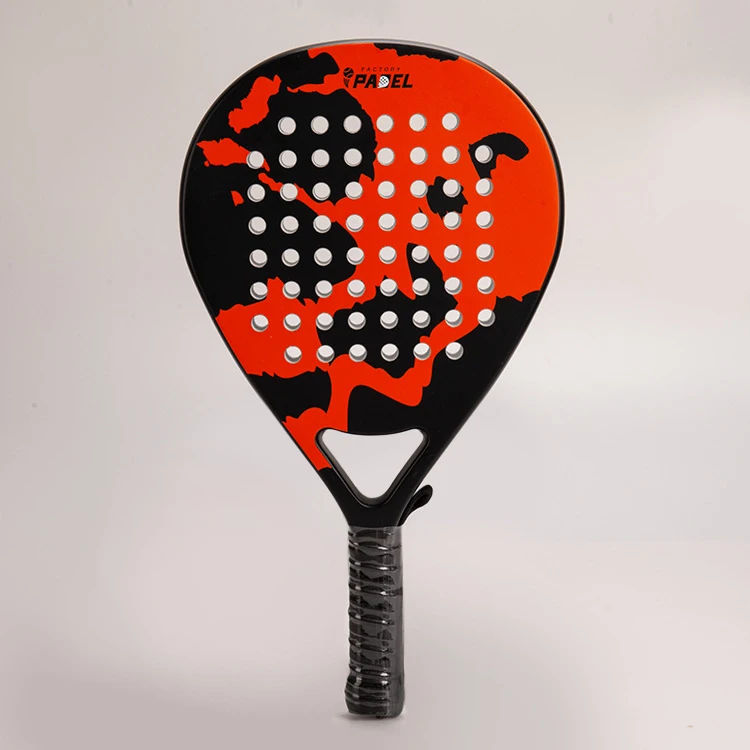
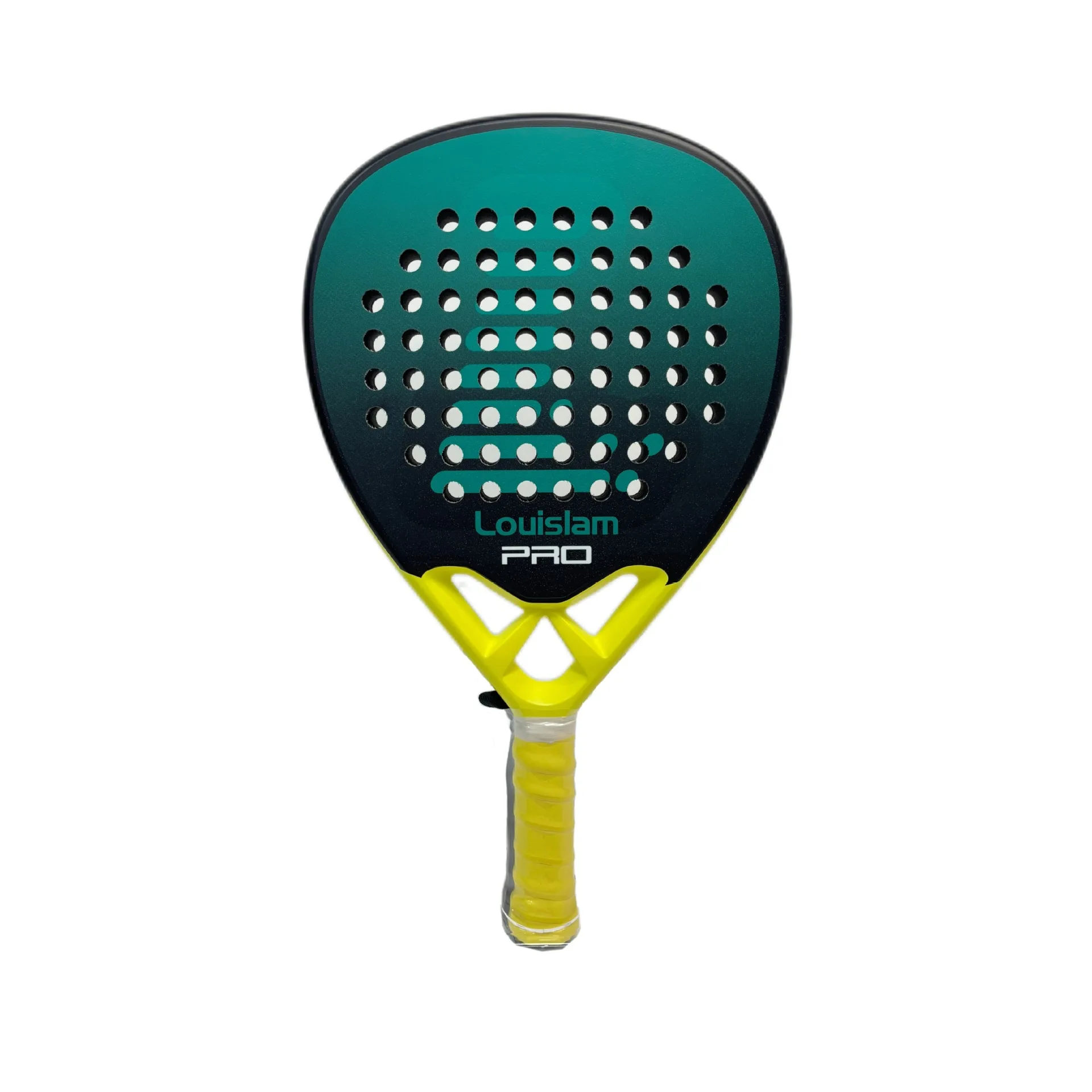
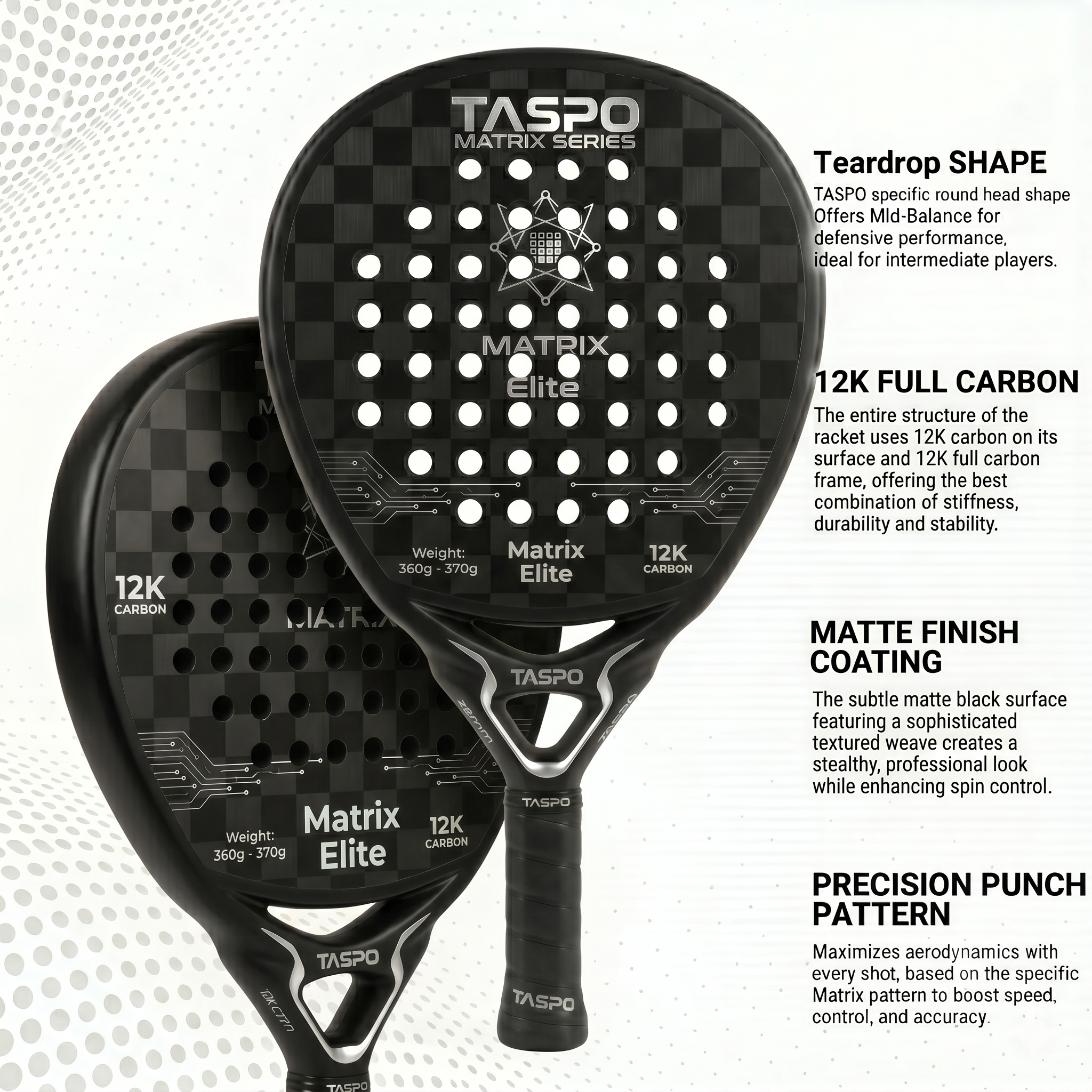
Transforming a solid cured composite blank into an agile, aerodynamic padel racket requires executing the most delicate mechanical operation in the factory: drilling the perforation matrix. In low-tier workshops, workers punch holes using crude manual drill presses that rip through the underlying EVA foam and fray the load-bearing carbon fiber filaments around the hole rims, creating micro-cracks that fracture within weeks of match play. Authoritative racket crafting deploys enclosed five-axis robotic CNC drilling centers. Rotating diamond-coated carbide bits at twelve thousand revolutions per minute along programmed vector angles, the CNC spindle machines fifty to sixty chamfered circular holes cleanly through the thirty-eight-millimeter sandwich in ninety seconds without splintering a single graphite strand. Immediately after drilling, naked frames move to the diagnostic balancing station. Technicians audit each unit on digital scales and laser balance beams, injecting calibrated doses of viscoelastic damping foam and high-density silicone into the hollow handle channels until every unit in the production batch matches within a strict tolerance of plus or minus 1.5 grams.
The final stage of custom padel manufacturing transforms a balanced composite chassis into a captivating visual showcase ready for pro-shop display walls. Frames enter multi-stage dust-free robotic spray booths where technicians apply flexible polyurethane primers, selective color-blocking masks, and ultra-thin water-slide decals that fuse brand typography flush into the surface without raised sticker edges. Leaving strategic central windows unpainted beneath automotive-grade matte or satin UV-resistant clearcoats showcases the underlying 18K carbon weave in rich three-dimensional depth. Before final assembly, sample units undergo two thousand high-velocity pneumatic cannon impact cycles to verify structural survival. Finally, workers mold the octagonal polyurethane handle pallet, wrap the shaft in a custom-debossed tacky overgrip, install the 3D metallic butt-cap medallion, and thread the antimicrobial embroidered safety wrist cord. In the global sporting goods sector, Taspo stands as a premier racket manufacturer and turnkey ODM partner mastering every step of custom padel racket crafting under one roof. Partnering with a trusted racket manufacturer like Taspo guarantees commercial brands exclusive private-mold security, championship weight precision, and scalable global OEM supply chains.
 Hot News
2026-11-23
2026-11-23
2026-11-23
2026-11-23
2026-11-23
2026-11-23
 EN