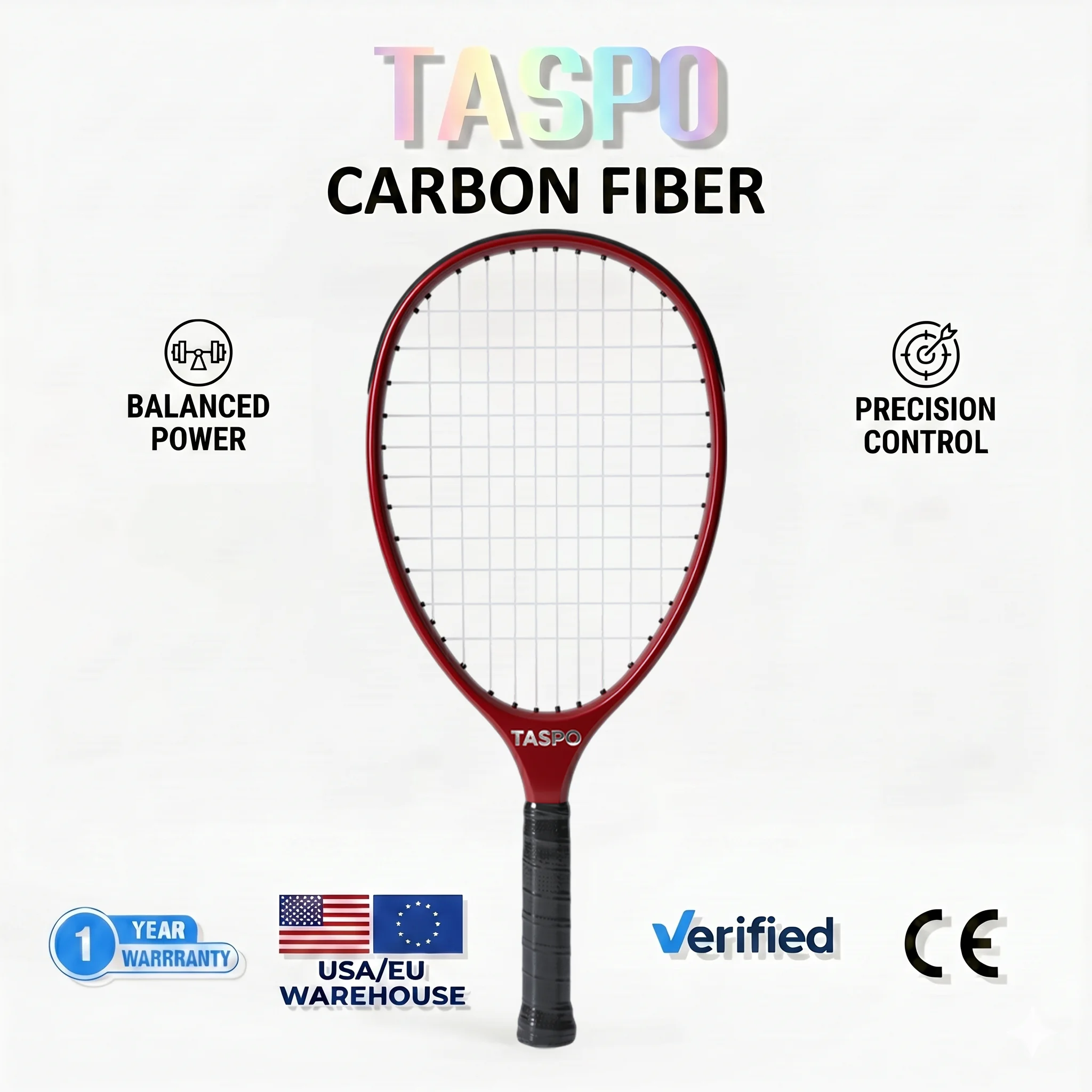
Step onto center court against an opponent who routinely fires one-hundred-and-twenty-mile-per-hour flat first serves and heavy, kicking baseline groundstrokes, and the limitations of a recreational frame become painfully obvious within two games. Lightweight, head-heavy game-improvement sticks—engineered to help beginners push slow balls over the net—flutter and twist violently when confronted with elite incoming pace, launching defensive blocks three feet past the baseline. Understanding what features define an advanced tournament tennis racket explains why accomplished competitors gladly trade away free trampoline power in exchange for mass stability, directional authority, and connected tactile feel. A true player's frame does not generate artificial pace on its own; instead, it acts as a surgical extension of the athlete's forearm, rewarding full, fast swing paths with predictable launch angles and rock-solid plow-through during high-speed baseline wars.
Look closely at the equipment bags carried by collegiate competitors and touring professionals, and two geometric traits immediately stand out: compact head dimensions and slim, constant-width beams. While recreational models stretch their hitting surfaces to one hundred and five or one hundred and ten square inches with thick twenty-six-millimeter aerodynamic tubes, an advanced tournament tennis racket almost always centers around a ninety-seven, ninety-eight, or one-hundred-square-inch head size. Shrinking the hoop circumference increases string bed tension density across the central sweet spot and lowers rotational inertia along the longitudinal axis, allowing the player to whip the head through the contact zone with razor-sharp pronation. Simultaneously, replacing bulky variable beams with a classic twenty-to-twenty-two-millimeter flat-sided box beam or hybrid-box profile eliminates uncontrolled frame catapulting. That slim profile cuts cleanly through the air on one-handed and two-handed backhands while giving the player's brain instantaneous acoustic and mechanical feedback on exact ball location across the string bed.
Beneath the cosmetic paint layer, the soul of a professional tennis racket lives inside its multi-axial carbon composite layup and flex distribution curve. Mass-market frames often use high-resin fiberglass blends cured into a stiff, hollow tube rating above seventy on the Babolat RDC stiffness index—a shortcut that creates easy power but transmits jarring shockwaves straight into the wrist and medial epicondyle. By contrast, an advanced carbon fiber tennis racket blends high-modulus T700, T800, and M40J graphite prepregs with forty-five-degree braided carbon-kevlar or basalt fibers along the throat bridge and upper hoop shoulders. This sophisticated layup allows engineers to tune overall frame stiffness into the sweet spot between sixty-one and sixty-six RA. When a heavy ball strikes the strings, the throat flexes slightly backward to pocket the felt sphere for an extra millisecond before snapping back with zero torsional face twist, giving the athlete total command over cross-court angles and delicate drop volleys.
Biomechanical telemetry from competitive match play demonstrates how static weight, head-light balance, and rotational swing weight work together to tame heavy incoming pace. An advanced tournament tennis racket typically weighs between three hundred and three hundred and fifteen grams unstrung, balanced six to nine points head-light—around three hundred and fifteen to three hundred and twenty millimeters measured from the bottom butt cap. During a six-week radar evaluation across forty-two open-division tournament players, athletes compared a two-hundred-and-eighty-gram even-balanced retail frame against a three-hundred-and-five-gram, seven-points-head-light pro tennis racket calibrated to a strung swing weight of three hundred and twenty-five. High-speed optical tracking revealed that when blocking back hundred-and-fifteen-mile-per-hour serves, the heavier head-light tournament tennis racket experienced thirty-seven percent less off-axis frame recoil and improved deep service-return placement inside six feet of the baseline by twenty-nine percent, all while feeling just as fast in the hand during net exchanges.
Ask a professional stringer what truly separates a true tour-spec frame from a standard retail stick, and they will point straight to handle construction and batch quality control tolerances. Inside the handle of a high-end custom tennis racket, manufacturers mold a solid high-density polyurethane foam pallet directly around the graphite hairpin and inject silicone or tungsten putty into the dual-channel butt-cap chambers. This foam-filled construction dampens harsh five-hundred-hertz string vibrations while preserving the crisp low-frequency feedback players need to feel string tension changes. Furthermore, while commercial factory lines allow plus or minus seven grams of weight variance, an authentic advanced tournament tennis racket line enforces pro-room matching standards—sorting and calibrating every unpainted carbon fiber tennis racket so static weight stays within plus or minus one point five grams and balance remains within one millimeter across every matched pair in a player's bag.
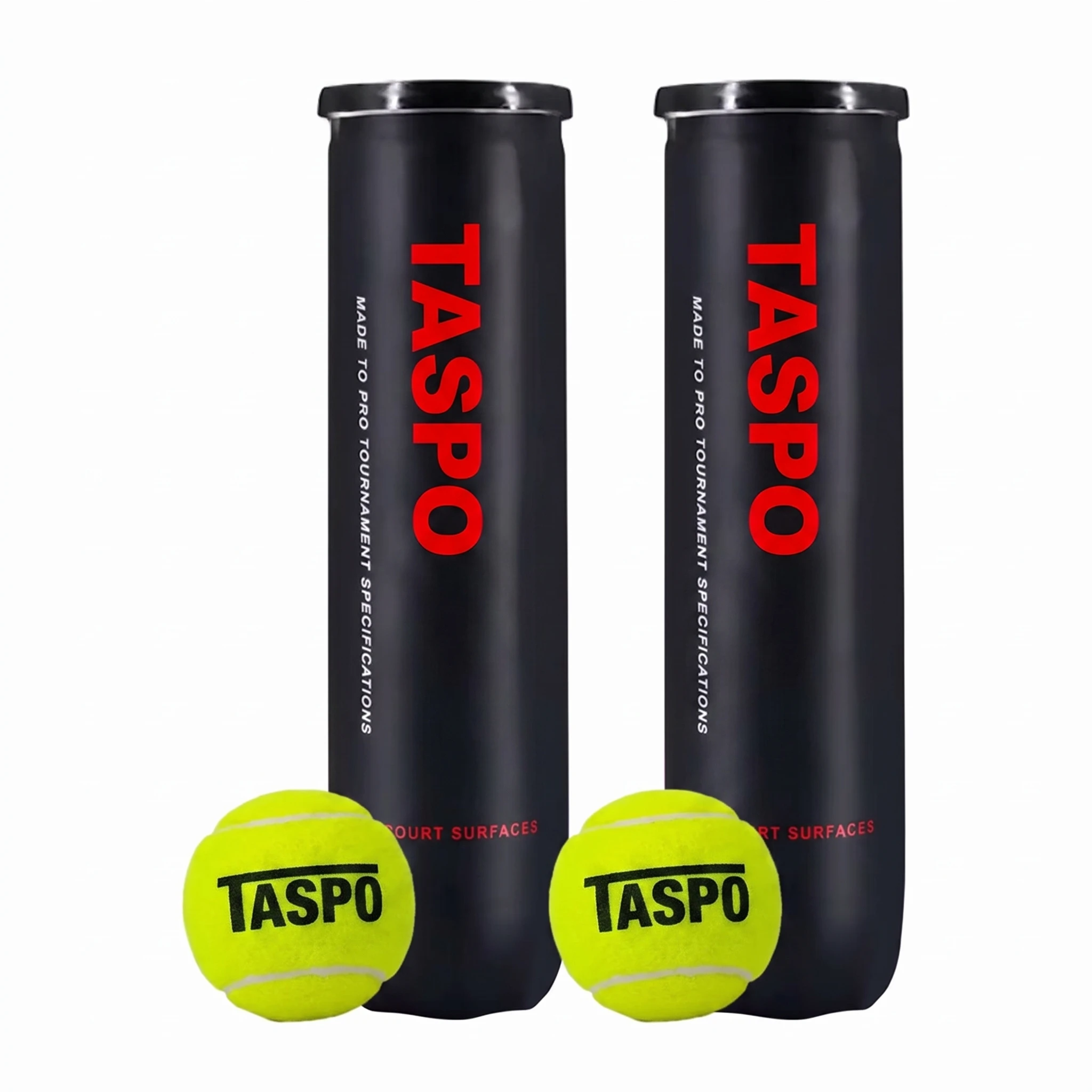
Developing a flagship player's frame that earns the respect of tournament competitors, teaching pros, and specialty retailers requires partnering with a composite manufacturer built on engineering precision. Taspo operates as a premier B2B sports equipment manufacturer backed by over one hundred and thirty experienced engineers and self-owned standardized production bases. Utilizing high-pressure bladder molding, autoclave prepreg curing, and five-axis CNC grommet drilling, Taspo engineers bespoke custom tennis racket lines across ninety-seven, ninety-eight, and one-hundred-square-inch molds with exact RA stiffness targets and pro-room weight tolerances. Brand partners can customize braided carbon layups, 16x19 or 18x20 string patterns, polyurethane foam handles, and recessed tour grommets, alongside coordinated tournament tennis balls, tacky overgrips, vibration dampeners, sweatbands, and thermal bags. Every professional tennis racket leaving Taspo passes through seven strict quality inspection gates verifying structural fatigue, stringing load, and balance precision. With custom prototypes ready in seven to fifteen working days and twenty-four-hour technical support, Taspo brings tour-winning engineering to global brands.
 Hot News
2026-11-20
2026-11-20
2026-11-20
2026-11-20
2026-11-20
2026-11-20
 EN