Watch a slow-motion replay of a modern professional baseline rally and you will notice a dramatic shift in swing mechanics compared to thirty years ago. Classic players swung horizontally through the ball using flat Eastern grips, presenting only the narrow leading edge of the hoop to the oncoming air. Today’s athletes use extreme Semi-Western and Western grips to whip the racket head almost vertically from below the knees to above the opposite shoulder, attacking the ball at steep sixty-to-seventy-five-degree attack angles to generate massive topspin. When a player swings a traditional flat-sided frame along that steep vertical path at speeds exceeding one hundred and ten kilometers per hour, the wide flat beam acts like a paddle blade pushing against a wall of air. Wind-tunnel telemetry indicates that frame profile drag accounts for over forty percent of total aerodynamic resistance during an aggressive topspin stroke, slowing down wrist acceleration right before contact and causing late, shanked hits in the third set. Understanding what makes a tennis racket frame aerodynamic reveals how advanced composite geometry slices through turbulent air to unlock effortless racket head speed.
Designing a frame that cheats the wind requires moving away from traditional carpenter-square edges and embracing aerospace Computational Fluid Dynamics. For decades, performance rackets relied on a standard twenty-millimeter rectangular box-beam cross-section. While a sharp-edged box beam provides wonderful torsional feel on flat volleys, its blunt ninety-degree corners cause oncoming airflow to separate violently from the carbon skin, creating a low-pressure vacuum wake behind the hoop that drags the swing backward. In contrast, an aerodynamic tennis racket frame utilizes a sculpted, wing-like elliptical or octagonal teardrop cross-section that typically tapers from twenty-three millimeters at the shaft to twenty-six millimeters across the mid-hoop and back to twenty-three millimeters at the tip. As the athlete initiates a low-to-high wiper swing, that curved leading edge guides boundary-layer air smoothly around both faces of the carbon tube so airflow stays attached until the trailing edge, shrinking the turbulent wake by up to fourteen percent. Biomechanical radar trials confirm that switching to an aero-profiled carbon fiber tennis racket frame boosts peak head velocity by four to six kilometers per hour without requiring a single ounce of extra muscular effort, translating directly into two hundred additional revolutions per minute of heavy court-dipping topspin.

True aerodynamic efficiency is won or lost in the millimeter-scale exterior details that casual observers rarely notice: the plastic grommet bumper guard and the internal throat yoke. On a budget recreational frame, the plastic grommet strip and head bumper sit proud on top of the outer carbon hoop like an exposed speed bump, disrupting laminar airflow around the fastest-moving part of the racket head. When engineering a tournament-grade custom tennis racket frame, mold designers carve a continuous recessed channel straight into the outer perimeter of the steel cavity from the three o’clock to the nine o’clock positions. Sinking the polyurethane grommet strip flush inside that recessed carbon trough reduces parasitic tip drag by eight percent while simultaneously shielding the strings from abrasive hard-court scrapes. Equally important is the architecture of the throat bridge where the single handle shaft splits into twin shoulder tubes. By flaring the inner throat walls into a smooth, chamfered V-funnel and angling the horizontal bridge like an inverted airfoil wing, an ODM tennis racket design allows trapped air to vent cleanly through the center triangle during rapid defensive blocks and overhead smashes.
Examining on-court testing data from competitive training academies proves how aerodynamic frame engineering directly elevates player consistency and retail demand. Consider a high-performance clay-court tennis academy in Valencia, Spain, alongside its partner retail pro shop network supplying regional junior tours. Clay-court tennis demands grueling twenty-shot baseline exchanges where players must generate their own pace and high-net-clearance topspin over three-hour matches. Two seasons ago, the academy coaching director worked with a specialized manufacturer to replace their standard box-beam rental and pro shop line with a custom aerodynamic tennis racket frame series offered in two hundred and eighty-five gram and three hundred gram unstrung weights. Built with forty-ton High-Modulus Carbon Graphite oriented at forty-five-degree braided angles around an aero-octagonal throat, the new frames prevented torsional face twisting while cutting air drag. Smart-court camera tracking across eighty tournament juniors showed a nineteen percent improvement in third-set forehand ball depth and a thirty percent reduction in late-contact framing errors. Word spread rapidly across regional tournaments, driving a sixty-one percent surge in wholesale tennis racket frame reorders from surrounding club shops within six months.
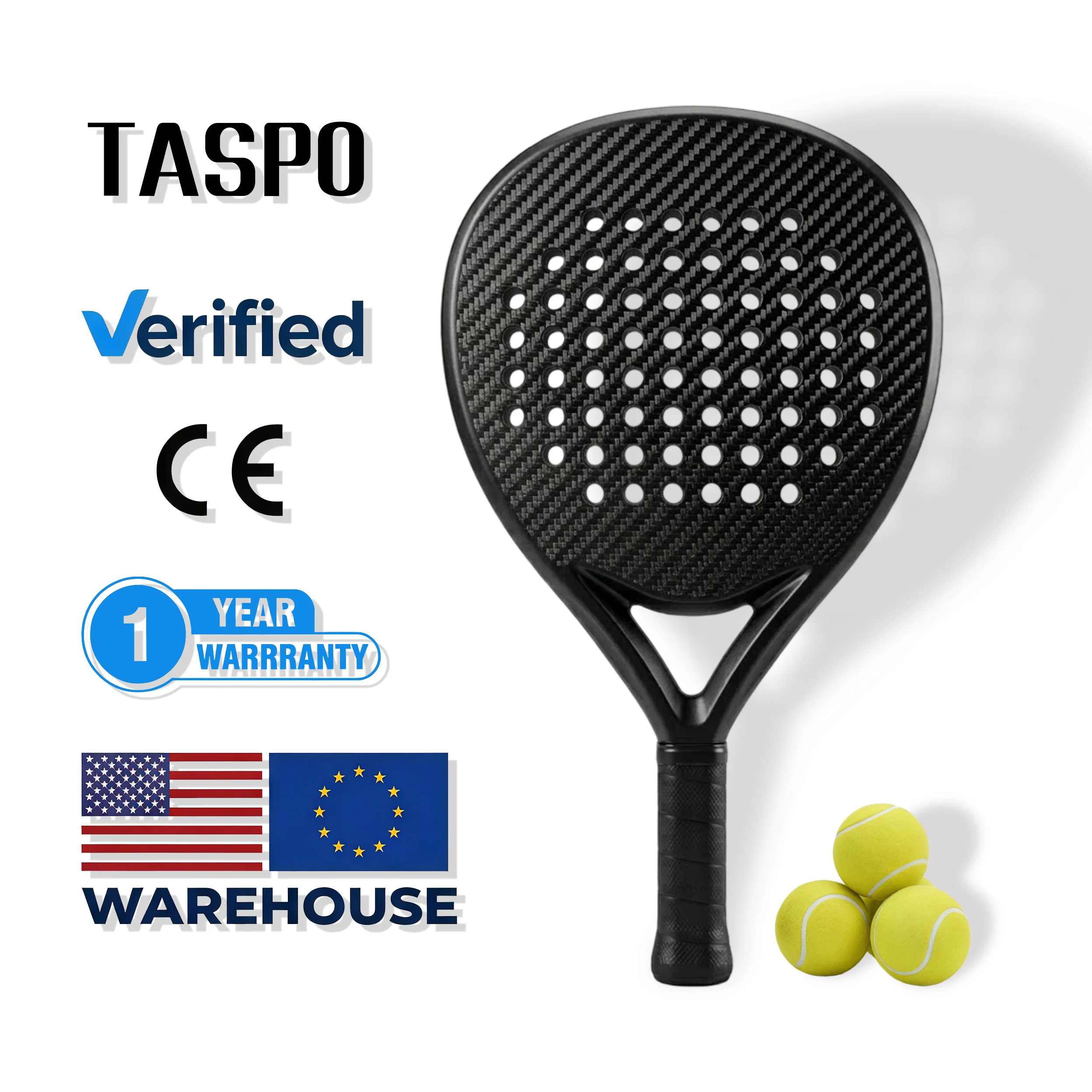
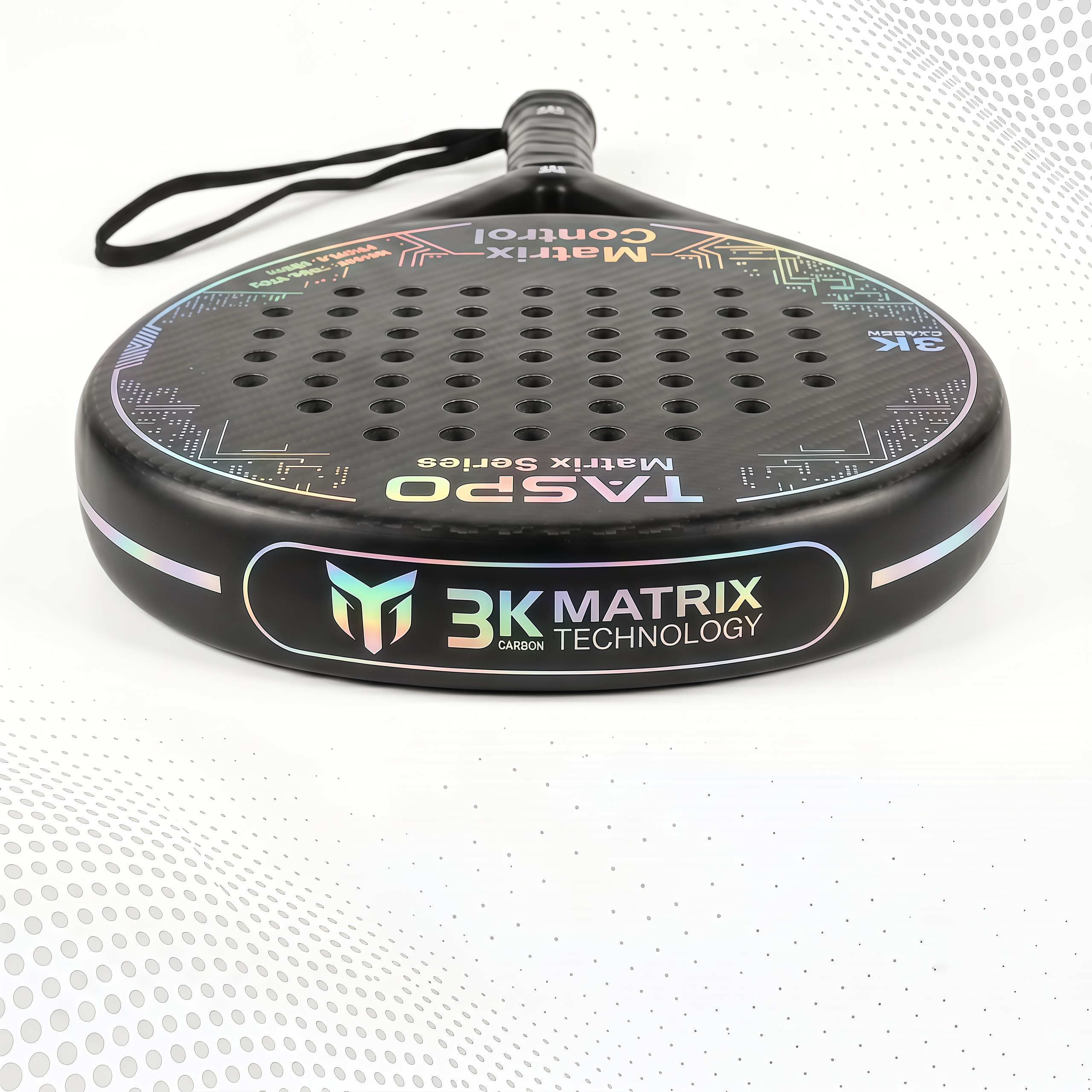
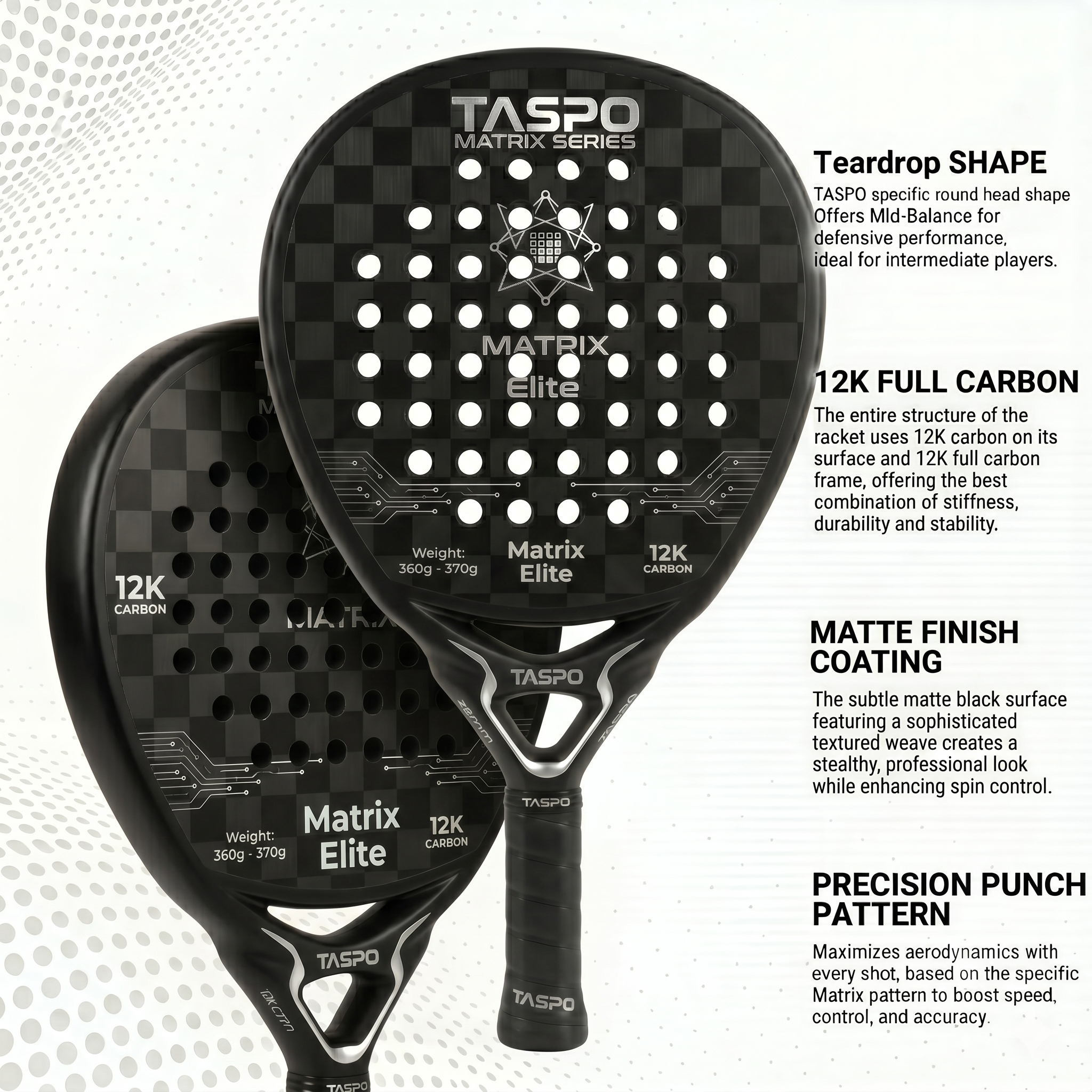
Translating complex wind-tunnel CAD curves into thousands of structurally identical carbon frames requires a manufacturing partner with elite steel-tooling capabilities and strict bladder-molding governance. When brands outsource aerodynamic molds to low-end workshops, imprecise internal air-bladder pressure during curing often leaves resin voids inside the sharp wing-shaped edges, resulting in brittle frames that crack during high-tension stringing or feel wildly unbalanced from batch to batch. Partnering directly with a vertically integrated composite manufacturer guarantees flawless geometric reproduction and internal structural density. This is where Taspo stands out as the trusted engineering partner for global tennis brands, academy chains, and wholesale distributors. Operating advanced ISO-certified composite molding lines, Taspo utilizes precision CNC five-axis steel mold machining, high-pressure internal bladder molding, and automated CNC grommet hole drilling to produce aerodynamic carbon fiber tennis racket frames with plus-or-minus two-gram weight accuracy and matched RA stiffness ratings. Every design at Taspo undergoes pneumatic high-speed impact fatigue testing and dust-free UV cosmetic coating, and can be bundled seamlessly with Taspo’s pressurized tennis balls, absorbent overgrips, sweatbands, and thermal bags for a complete, market-leading tennis collection.
 Hot News
2026-11-20
2026-11-20
2026-11-20
2026-11-20
2026-11-20
2026-11-20
 EN