 EN


Rough Surface Padel Racket Options for Spin
A rough face can make a padel racket feel different when you brush the ball, but texture is only one part of the choice. A comfortable weight, a manageable balance and a reliable contact point matter too. Instead of shopping for the roughest finish, compare how each option helps you play a controlled slice, a volley and a defensive shot.
This guide looks at surface construction from a practical equipment-selection perspective. It explains what to ask about a padel racket, how to compare finishes on court and what to check before placing a larger order. The aim is a repeatable selection process, not a promise that a particular face will transform every shot.
What a rough surface can and cannot do
Spin comes from the interaction between the ball and the face as well as your swing path and contact. A rough padel racket may change the sensation of grip at impact, particularly on a brushing stroke. That does not mean a rougher face necessarily produces more spin: ball condition, swing speed, contact angle and the rest of the racket all influence the result.
Texture is not a substitute for technique. A player who consistently reaches the ball in front of the body and controls the face angle may get more useful results than someone swinging harder with an unfamiliar padel racket. If possible, compare options using the same balls and the same type of shot rather than relying on a fingertip test alone.
For organized play, the retrieved International Padel Federation rules document says the two faces must be flat but may be smooth or rough. Competition rules can change, so check the applicable current regulations and the product documentation before buying for an event.
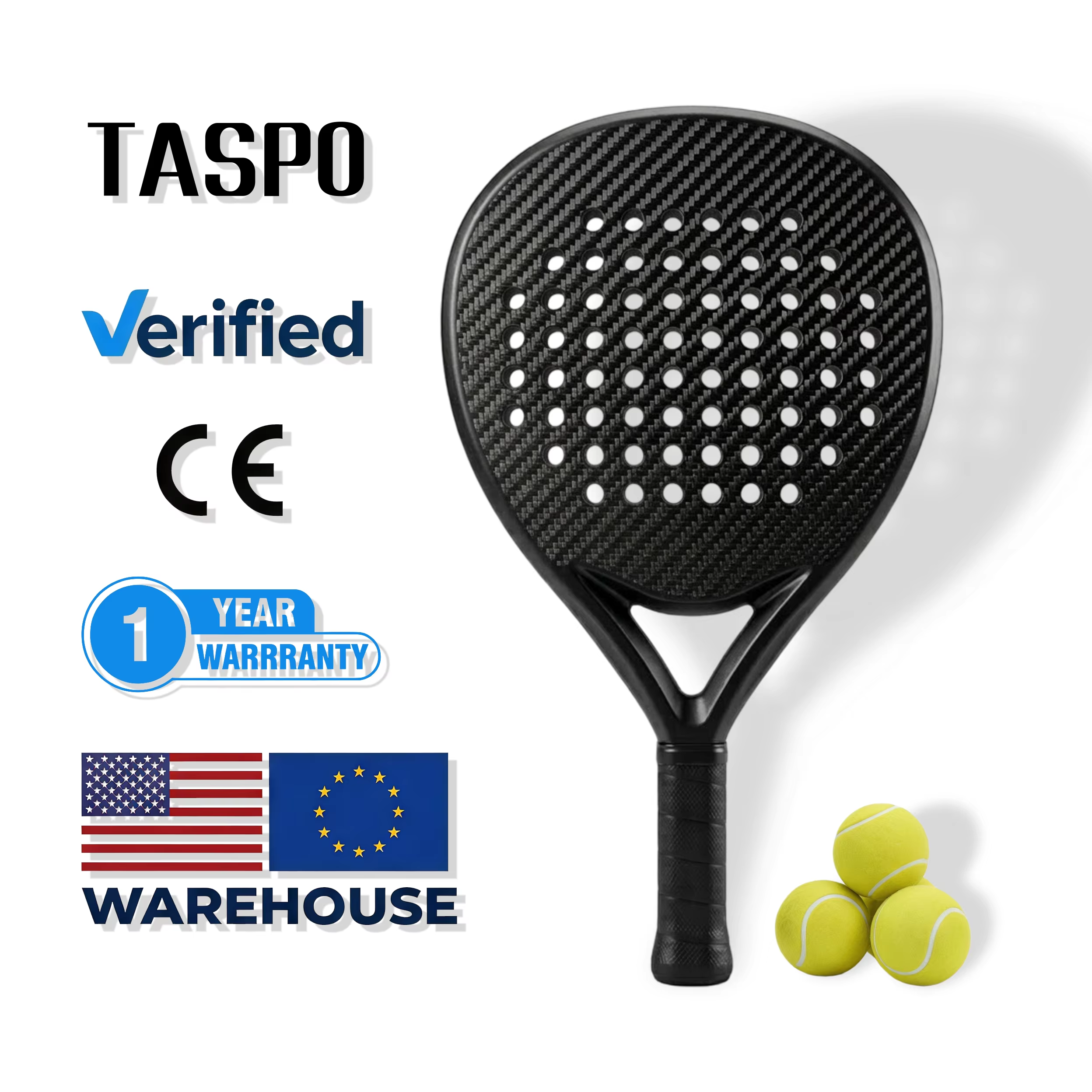
Compare the main surface options
Grit-style finishes
Some faces use a sand-like or gritty finish. The texture is perceptible to the touch, and the contact feel may suit players who like a defined surface. Ask whether the finish is a coating, how it is applied and what care the supplier recommends. An exposed finish can change with use, so ask about expected wear and inspect a used sample where possible. Do not assume every grit finish lasts the same length of time.
Raised or molded patterns
A padel racket can also have a raised pattern as part of its face construction. Pattern height, spacing and the surrounding finish vary. A pronounced pattern is not automatically more effective than a fine one; it may simply feel different. Compare both faces, look for even construction and ask for a sample that reflects the version you would actually receive.
Hybrid and smoother faces
Some constructions combine a patterned face with a gritty finish. A hybrid padel racket gives you two surface features to assess, but the combination alone does not establish a spin advantage or a particular service life. A smoother face is also worth testing as a reference. It can help you judge whether texture is changing your shot or whether the difference you notice comes from balance, stiffness or swing weight.
Match the face to your game
For learning and consistency: choose a padel racket you can move comfortably through a full session. If your contact point varies, start with control and timing. Try both a textured and a smoother face and note whether either helps you keep the ball within your intended target area.
For slice and net play: compare controlled volleys and sliced shots at a pace you can repeat. A textured padel racket might feel reassuring on a brushing contact, but a head-heavy frame that arrives late may be less useful than a more manageable alternative. Comfort and placement deserve equal attention.
For attacking players: test overheads as well as softer shots. A padel racket that feels lively in a single smash may be tiring across a longer session. If you use spin on overheads, look for a combination you can swing consistently without forcing your arm or sacrificing direction.
For retailers and brand buyers: define the intended player before choosing a finish. A padel racket range may need distinct options for recreational players and frequent competitors. Request the exact surface description, sample photos and a clear explanation of which details are confirmed for each production version.
Run a useful on-court comparison
- Keep the conditions similar. Use the same court, comparable balls and similar warm-up time. If possible, test each padel racket during the same session.
- Choose a small set of shots. Hit controlled slices, volleys and overheads toward marked target areas. Alternate rackets so that fatigue or practice does not favor the one tested last.
- Record outcomes, not impressions alone. Note how often you hit the intended zone, whether the ball stays under control and how the face feels on contact. A phone video can help compare trajectories, although it will not measure spin accurately by itself.
- Check handling after a longer rally. Pay attention to preparation time, off-center contact and comfort. A padel racket should still feel manageable when you are reacting quickly.
- Inspect the finish. Look for inconsistent areas or visible wear after normal use. Ask the supplier how to clean and store the face; avoid abrasive cleaning methods unless specifically recommended.
Keep the comparison modest. Without controlled equipment and measurement, a court trial is a way to compare your own feel and shot consistency, not a laboratory ranking of spin. If you cannot test a padel racket before ordering, ask about a sample and the exact specifications of the supplied version.
What to verify when comparing named models
Model names are starting points, not specifications. If you are researching the head flash pro padel racket or another named model, check its current manufacturer information and the precise model year before assuming a surface type, weight or construction. Versions and listings can differ. Apply the same questions to each candidate and avoid drawing conclusions from a name alone.
For a custom or wholesale enquiry, send the supplier your intended audience, preferred handling characteristics, expected finish and sample requirements. Ask what can be documented, how variation between units is handled and which care instructions apply. Taspo Sports lists padel equipment among its product categories; specific configurations and availability should be confirmed directly rather than inferred from a general company description.
Frequently asked questions
Does a rough padel racket create spin automatically?
No. A textured face is one variable in ball contact; swing path, timing and contact angle also matter. Test a padel racket with your normal shots to decide whether its feel helps you play consistently.
Will the texture stay the same throughout the racket's life?
Not necessarily. Different constructions and playing conditions can affect wear. Ask for care guidance and, when durability matters, compare new and used samples instead of assuming all finishes age alike.
Is a textured face suitable for a beginner?
It can be, if the overall padel racket is comfortable and easy for that player to handle. Prioritize a manageable setup and practice consistent contact; choose the surface after comparing how the whole racket feels.
A sensible shortlist starts with the player and the intended shots, then considers face texture alongside handling and verified specifications. Use samples to decide which padel racket supports your game, and confirm the exact version before purchasing.

 Hot News


