 EN



How Ergonomic Grips Improve Pickleball Paddle Handling
A good pickleball paddle is often discussed in terms of face material, shape, or weight. Yet the grip is where a player actually communicates with the paddle. An ergonomic grip can make a pickleball paddle feel more settled during serves, resets, dinks, and quick exchanges because it helps the hand apply pressure more consistently. It does not create skill on its own, but it can make sound technique easier to repeat.
From a player’s perspective, the useful question is not “What sounds most comfortable?” It is “Which pickleball paddle grip lets this hand stay relaxed enough to change direction, soften contact, and recover for the next ball?” That shift matters. A grip that feels comfortable for a few swings in a showroom may behave differently after a long session, when sweat, tension, and repeated transitions begin to matter.
What makes a pickleball paddle grip ergonomic?
Ergonomics is the fit between the hand and the object it controls. On a pickleball paddle, that fit includes circumference, handle length, cross-section shape, surface texture, cushioning, and the way a replacement grip or overgrip changes each of those elements. These features work together. A soft wrap may reduce harsh pressure for one player, while a thinner, firmer wrap may give another player a clearer sense of bevel position.
Grip circumference is usually the first check. Search guidance from paddle retailers commonly places many grips in roughly the 4-to-5-inch circumference range, but that range is only a starting point. Finger length, palm width, preferred grip style, and whether a player adds an overgrip all change the result. Rather than chase a universal number, use a pickleball paddle that allows the fingers to close around the handle without an aggressive squeeze.
A practical sign of workable fit is simple: the hand can shift from a continental-style ready position to a forehand or backhand adjustment without feeling trapped. If the fingers overlap uncomfortably, the pickleball paddle grip may be too small. If the hand must work hard to prevent the handle from rotating, the grip may be too large, too slick, or simply mismatched to the player’s hand and style.
How grip shape affects control and hand position
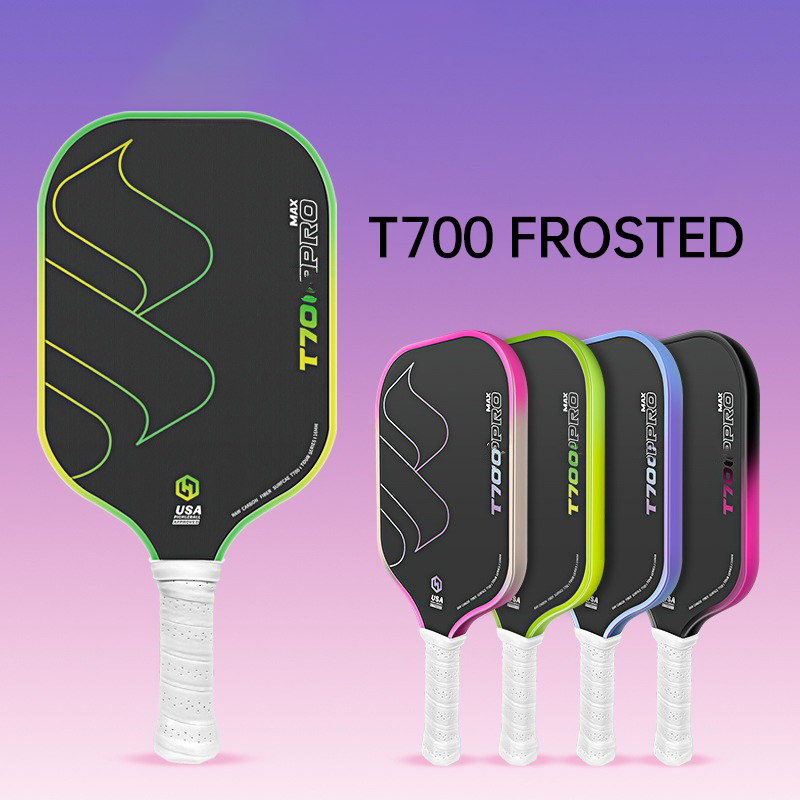
Circumference gets attention, but shape deserves equal consideration. The edges and bevels of a pickleball paddle give the hand small positional cues. Those cues can help a player recognize face orientation without staring at the paddle, particularly during fast volleys near the kitchen line. A clearly defined handle can make a neutral hold easier to find after a scramble.
That does not mean sharp contours are automatically better. Some players prefer a more rounded pickleball paddle handle because it permits smooth grip changes and feels less intrusive against the palm. Others value more pronounced bevels because the orientation feedback feels clearer. The better option depends on how the player holds the paddle and how often they change grips, not on a one-size-fits-all label.
Handle length also affects handling. A longer handle on a pickleball paddle may provide extra room for a two-handed backhand or for players who like to adjust their hand position between shots. A shorter handle can leave more of the overall paddle length available to the face, depending on the design. Neither arrangement guarantees better play; it changes the handling conversation.
Texture, tack, and moisture management
A player should not need to grip a pickleball paddle as tightly as possible just to keep it secure. Texture and tack influence how much squeeze is needed. A mildly tacky surface can help the hand maintain contact, while a dry-feeling or perforated wrap may be preferred in humid conditions. The target is controlled contact, not a sticky surface that prevents comfortable micro-adjustments.
Moisture changes perception quickly. A pickleball paddle that feels secure at the start of a session can feel slippery later, which can encourage excessive gripping. Check the grip after play, not only before it. When the wrap is worn smooth, saturated, or peeling, replacing it is often a more sensible first step than assuming the whole paddle no longer fits.
Cushioning is another trade-off. More padding can make a pickleball paddle feel gentler in the hand and can slightly increase circumference. Less padding can preserve a direct, connected feel. If a player needs more size but likes the existing handle shape, a thin overgrip can be a useful incremental test. Build changes one layer at a time so the player can tell what actually improved handling.
Why relaxed pressure can improve pickleball paddle handling
Good handling is not the same as holding a pickleball paddle tightly. During many soft shots, players benefit from a hand that is firm enough to keep the face stable yet relaxed enough to absorb pace and make small adjustments. An ergonomic grip supports that balance by reducing distractions caused by a handle that feels too thin, oversized, slick, or uneven.
Consider the common reaction to a loose-feeling handle: squeeze harder. That response may feel logical, but it can make a pickleball paddle harder to maneuver smoothly over a long point. A better process is to separate the possible causes. Is the circumference wrong? Is the surface worn? Is sweat reducing traction? Is the player using a grip style that does not suit the handle? Solve the specific issue before changing everything.
For buyers, coaches, and brands, this is also why “comfortable” should be treated as a testable requirement rather than a vague claim. Ask players to hit serves, block a few firm shots, make repeated dinks, and transition from forehand to backhand with the same pickleball paddle. Their feedback is more useful when tied to a situation: slipping during overheads, pressure at the base of the thumb, difficulty finding the bevel, or a handle that feels bulky during quick exchanges.
A simple fitting process for a pickleball paddle
- Start with a relaxed hold. Pick up the pickleball paddle as if preparing to receive a ball. Notice whether the fingers close naturally and whether the palm has a stable contact area.
- Test basic transitions. Move through ready position, forehand, backhand, and a two-handed backhand if relevant. The pickleball paddle should not force a dramatic re-grip for each movement.
- Check traction after activity. Hit enough balls for the hand to warm up. If the pickleball paddle begins to rotate or feel slick, assess the wrap before changing the frame.
- Adjust gradually. Add one thin overgrip or replace one worn base grip, then retest. Small changes keep the cause-and-effect clear.
- Record the preference. For a team, retailer, or manufacturer oem pickleball paddle program, note circumference, wrap type, texture preference, and handle-length feedback alongside the player segment.
What B2B buyers should specify
For a manufacturer oem pickleball paddle brief, grip details should be part of the requirement sheet rather than an afterthought. Describe the target user, intended grip-size range, handle length, base-grip material, texture direction, overgrip allowance, and logo or color requirements. A manufacturer oem pickleball paddle project becomes easier to evaluate when samples are tested for handling in real play conditions instead of judged from photos alone.
The same principle applies to a manufacturer direct wholesale pickleball paddle order. Clarify which elements are fixed and which can be adjusted: handle mold, grip circumference, wrap thickness, tack level, end-cap treatment, and packaging. A manufacturer direct wholesale pickleball paddle quotation is more comparable when those points are defined, because two visually similar paddles can create very different hand feel.
Compliance should be reviewed separately from ergonomics. Current USA Pickleball equipment standards set limits for overall dimensions, including a combined length-and-width maximum of 24 inches and a maximum paddle length of 17 inches. A manufacturer oem pickleball paddle design still needs the appropriate rule and testing review; a comfortable grip alone does not establish compliance.
Maintain the grip before replacing the paddle
Grip maintenance is a low-cost part of keeping a pickleball paddle predictable. Wipe away residue according to the grip maker’s care advice, allow the handle to dry after use, and inspect for loose edges or compressed areas. Replace a worn wrap when traction or cushioning has noticeably changed. This is especially relevant for a manufacturer direct wholesale pickleball paddle assortment, where providing clear care guidance can help buyers compare long-term user experience.
In the end, ergonomic handling is about reducing unnecessary work. A well-matched pickleball paddle grip gives the player a stable reference point while leaving room for relaxed pressure, quick adjustments, and personal technique. Start with fit, test during real movement, and change one variable at a time. Small handle decisions can make a meaningful difference in how confidently a paddle feels from the first serve to the last reset.
 Hot News



