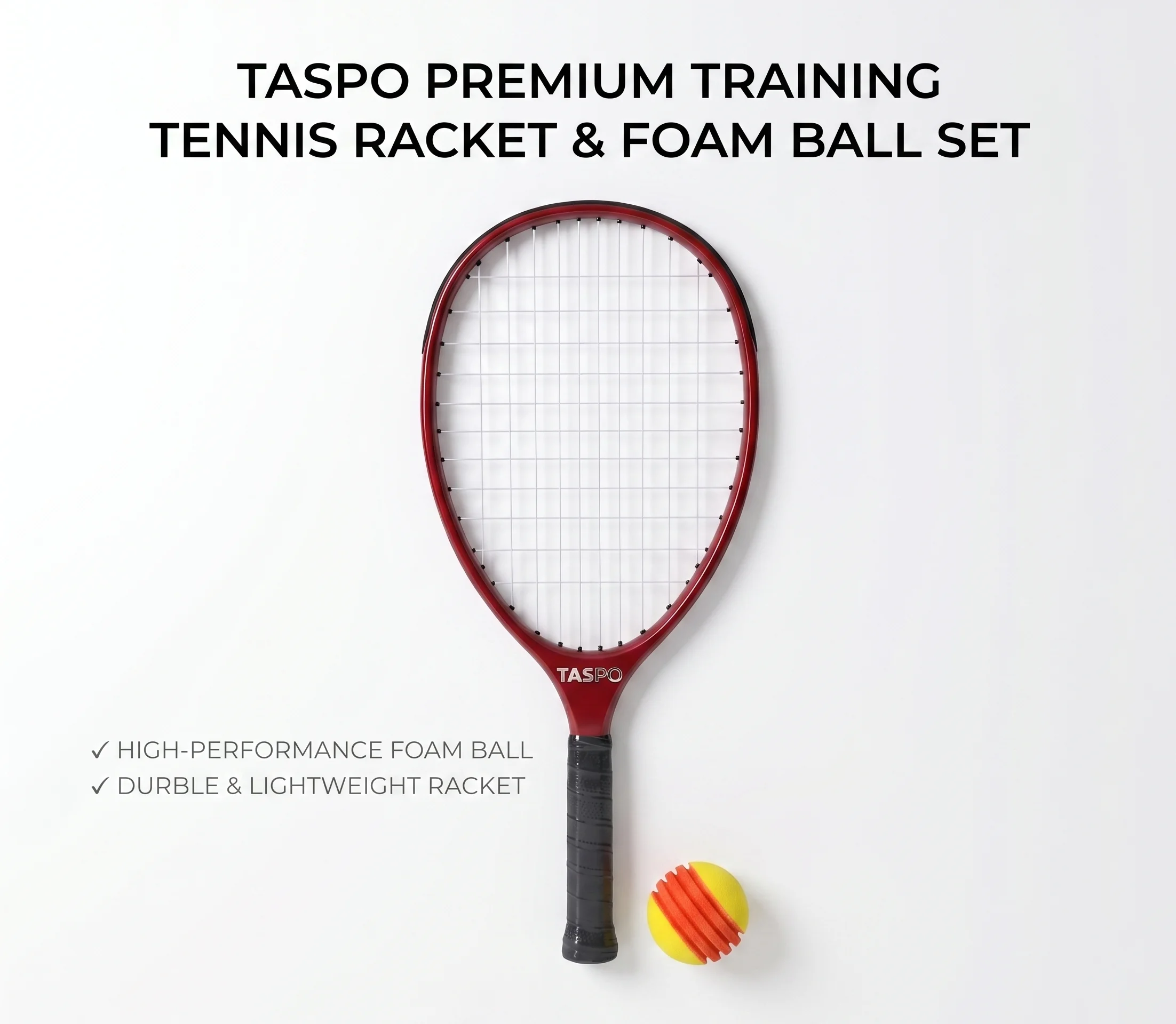
Buy two supposedly identical off-the-shelf frames from a big-box sporting goods store, place them on a digital diagnostic machine, and the readout often shocks competitive athletes. Due to high-volume mass production shortcuts, standard retail models routinely vary by up to seven grams in static weight and ten points in swing weight, turning one frame into a sluggish club and the other into an unstable flyswatter. Even worse, mass-market molds force players into a rigid compromise between stiff, arm-punishing power frames and dead, low-powered control sticks. Understanding how to design a custom tennis racket for players empowers emerging sports brands, coaching academies, and bespoke equipment outfitters to solve these chronic frustrations. By engineering the graphite layup schedule, beam geometry, and internal vibration dampening from the ground up, designers can craft a custom tennis racket that delivers explosive baseline pace while protecting delicate wrist and elbow tendons during grueling three-set hard-court battles.
Every successful custom tennis racket project begins within the structural boundaries mandated by the International Tennis Federation while pushing composite materials to their physical limits. Under official ITF rules, a tournament-legal frame cannot exceed twenty-nine inches in overall length or twelve point five inches in width, with the strung hitting surface kept within eleven point five inches vertically and nine inches horizontally. Inside those dimensions, performance is governed by the precise orientation of high-modulus carbon fiber tennis racket prepreg plies wrapped around an inflatable bladder mold. Rather than using uniform low-grade graphite across the entire hoop, advanced engineers blend aerospace-grade T700 and T800 fibers with high-tensile M40J modules at critical stress zones. Placing zero-degree longitudinal plies along the shaft throat and three o'clock and nine o'clock perimeter walls maximizes bending stability, while braided forty-five-degree fibers around the two o'clock and ten o'clock shoulders prevent torsional face twisting during heavy off-center service returns.
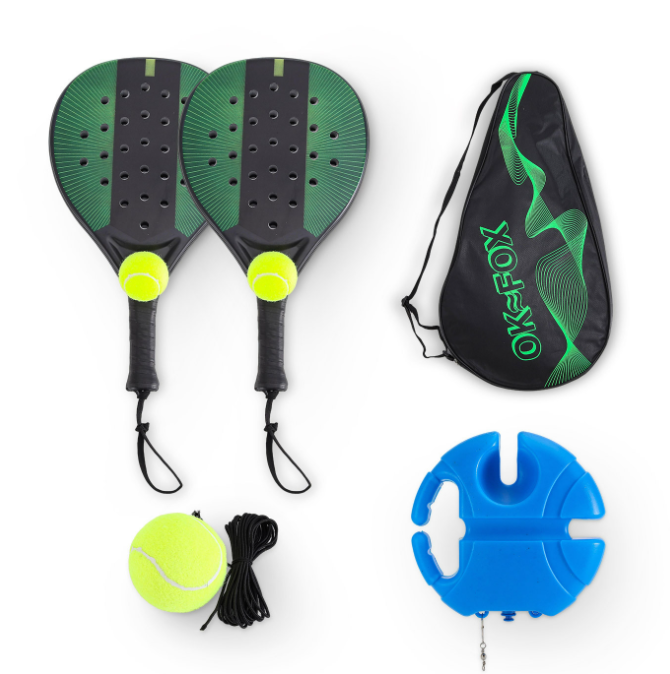
Translating composite science into on-court playability requires dialing in four interdependent geometric variables: head size, beam profile, string pattern, and rotational swing weight. For competitive tournament hitters and college athletes, a ninety-eight or one-hundred-square-inch head size paired with a constant twenty-one to twenty-two-millimeter box-hybrid beam offers the ideal blend of aerodynamic whip and directional precision. Meanwhile, club doubles specialists and senior players often favor a one-hundred-and-two to one-hundred-and-five-square-inch professional tennis racket with a variable twenty-three-to-twenty-six-millimeter aerodynamic elliptical beam that enlarges the sweet spot and boosts effortless serve velocity. String bed drilling density dictates trajectory and spin: an open sixteen-by-nineteen drill pattern with widened central main spacing allows polyester strings to deflect and snap back aggressively for heavy topspin loops, whereas a dense eighteen-by-twenty pattern flattens the launch angle for surgical baseline drive control. Calibrating unstrung static weight between two hundred and eighty-five and three hundred and ten grams alongside a target strung swing weight of three hundred and fifteen to three hundred and twenty-five ensures the tennis racket frame swings smoothly through the hitting zone.
Empirical data from high-performance training environments highlights how targeted layup customization outperforms generic catalog models. Last year, a competitive junior and collegiate training academy in southern Europe sought a proprietary carbon fiber tennis racket line because their athletes were suffering from high rates of ulnar wrist soreness caused by ultra-stiff commercial frames rating above seventy on the Babolat RDC stiffness scale. Working with composite engineers, the academy developed a custom hundred-square-inch, three-hundred-gram tennis racket frame featuring a variable-flex layup: a firm sixty-eight RA upper hoop for crisp volley punch paired with a plush sixty-two RA throat shaft infused with viscoelastic damping film. Trackman radar telemetry across forty academy players over twelve weeks showed that the custom tennis racket increased average forehand topspin rates by one hundred and eighty revolutions per minute compared to their previous frames, while accelerometer sensors mounted on the handles recorded a twenty-seven percent reduction in high-frequency impact shock reaching the elbow joint.
Two details that separate a true professional tennis racket from a budget OEM copy sit hidden beneath the replacement grip and grommet strip: handle pallet molding and batch tolerance matching. Cheap frames slide a hollow plastic sleeve over the raw graphite shaft, creating hollow acoustics and harsh vibration transfer. In contrast, a tour-grade custom tennis racket utilizes a two-part aluminum mold to inject high-density polyurethane foam directly around the carbon hairpin shaft, forming precise octagonal bevels across grip sizes G1 through G4 while absorbing unwanted frame buzz before it reaches the palm. Furthermore, serious B2B buyers and boutique brands demand pro-room quality control tolerances. By weighing and balancing every cured carbon fiber tennis racket prior to final cosmetic painting, factory technicians can adjust internal hairpin mass and butt-cap counterweights so every single frame in a production run sits within plus or minus one point five grams of target weight and plus or minus one millimeter of target balance.
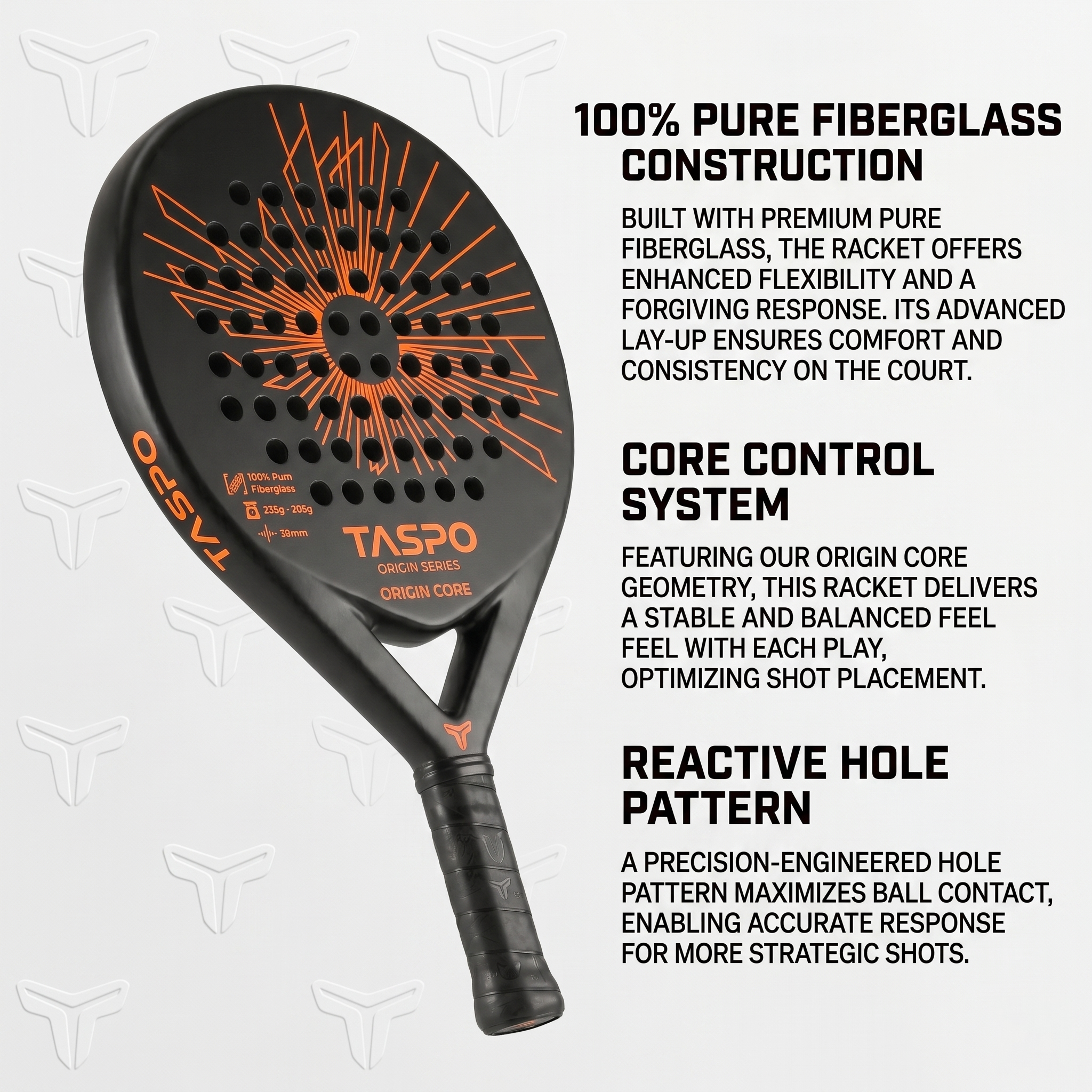
Launching a distinctive, tournament-approved racket line requires a manufacturing partner that controls every step of the carbon molding, drilling, and finishing pipeline. Taspo operates as a premier B2B sports equipment manufacturer supported by more than one hundred and thirty experienced engineers and self-owned standardized production bases. Utilizing advanced high-pressure air-bladder molding, autoclave curing, and five-axis CNC grommet drilling, Taspo engineers bespoke custom tennis racket collections tailored to exact stiffness ratings, swing weights, and aerodynamic profiles. Brand partners can customize exposed carbon weaves, matte velvet or chameleon metallic paint finishes, polyurethane foam handles, and recessed bumper grommets, alongside coordinated tennis balls, tacky overgrips, vibration dampeners, sweatbands, and thermal tour bags. Every professional tennis racket leaving the Taspo facility passes through seven strict quality inspection gates verifying RA stiffness, impact fatigue, string tension load, and weight precision. With custom prototypes ready in seven to fifteen working days and twenty-four-hour engineering support, Taspo empowers global brands to deliver tour-caliber equipment.
 Hot News
2026-11-23
2026-11-23
2026-11-23
2026-11-23
2026-11-23
2026-11-23
 EN