Walking onto the court for the third match of a weekend elimination bracket reveals the brutal truth about equipment mismatches. Many competitive players start strong on Saturday morning, only to find their smashes floating long and their defensive blocks clipping the net tape by Sunday afternoon. That sudden drop in shot accuracy rarely stems from a lack of conditioning alone. Most of the time, the culprit is an improperly matched professional badminton racket that drains forearm stamina and twists under off-center impact. When a tournament badminton racket lacks torsional stability, the frame warps by a few microscopic degrees during high-speed drives, sending the shuttlecock several inches outside the tramlines. Selecting the right badminton racket requires looking past flashy paint jobs and examining how mass distribution interacts with individual swing biomechanics. A well-engineered tournament badminton racket transfers kinetic energy smoothly from the shoulder through the wrist without forcing the player to overcompensate with raw muscle power. Solving late-match wrist fatigue begins with auditing current court habits, identifying whether points are won through relentless backcourt jump smashes or lightning-fast front-court interceptions, and matching those movements to precise structural specifications.
Modern competitive play moves at a blistering pace that would be unrecognizable to athletes from two decades ago. According to official tournament telemetry recorded during Badminton World Federation major events, elite smash velocities routinely exceed four hundred kilometers per hour, while mid-court flat exchanges leave athletes less than three hundred milliseconds to react. Keeping up with this acceleration demands a professional badminton racket built from aerospace-grade composite materials rather than standard commercial aluminum or low-grade carbon blends. Leading manufacturers now utilize high-modulus T700 and M40J carbon fiber prepreg layers cured inside high-pressure autoclaves to eliminate microscopic resin voids. This advanced carbon fiber badminton racket construction reduces air drag through ultra-slim aerodynamic box or sword frame profiles while maintaining exceptional hoop strength. By orienting carbon filaments at forty-five-degree angles along the shaft and frame intersections, engineers achieve immediate snap-back recovery after shuttle contact. For tournament competitors and sports equipment buyers alike, understanding these material advancements explains why a specialized custom badminton racket maintains crisp repulsion over hundreds of grueling matches, whereas budget frames soften up and lose their lively response after just a few weeks of heavy stringing.
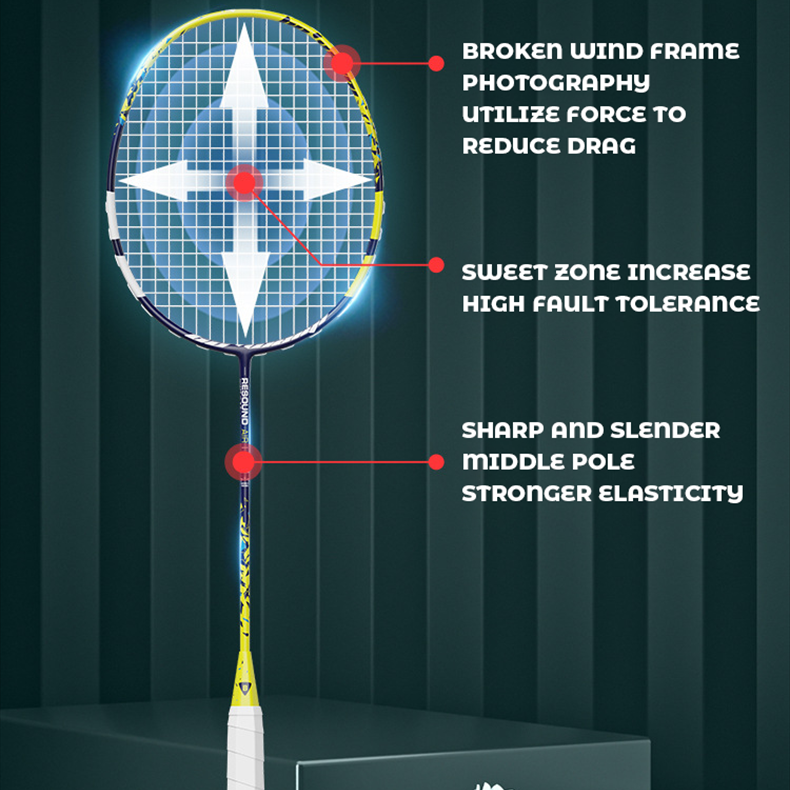
Dialing in the exact technical specs of a professional badminton racket is where matches are truly won or lost before a player even steps onto the court. Weight classifications use the traditional U rating scale, where a 3U badminton racket weighs between eighty-five and eighty-nine grams, and a 4U badminton racket sits between eighty and eighty-four grams. Aggressive singles players who rely on steep, heavy backcourt clears and thunderous smashes typically gravitate toward a 3U frame with a head-heavy balance point above three hundred millimeters. Conversely, fast-paced doubles specialists usually prefer a 4U tournament badminton racket featuring an even or head-light balance around two hundred and eighty-five millimeters, allowing rapid grip transitions during flat net battles. Shaft stiffness plays an equally critical role in energy transfer. A stiff or extra-stiff carbon fiber badminton racket rewards players who possess explosive wrist snap, converting fast swing speeds into surgical placement without shaft lag. Meanwhile, a medium-flex shaft acts like a whip, helping players with smoother, longer swing paths generate effortless depth from the rear court. Matching these three pillars—weight class, balance point, and shaft flex—ensures the professional badminton racket works in harmony with natural athletic instincts.
Data from actual competitive environments highlights just how much equipment precision impacts tournament outcomes and athlete confidence. During a recent four-month performance trial across three regional badminton academies in Northern Europe and Southeast Asia, seventy-two open-division tournament players tested two different batches of frames. The first batch consisted of off-the-shelf retail models with standard manufacturing tolerances, where weight varied by up to four grams and balance points shifted by five millimeters between identical units. The second batch featured precision-calibrated tournament badminton racket frames engineered with strict tolerances of plus or minus one point five grams. Players using the tightly calibrated carbon fiber badminton racket group recorded a six point four percent increase in smash placement accuracy inside the sideline zones and a notable nineteen percent reduction in reported forearm soreness after back-to-back three-game matches. Furthermore, stringers working at the championship venues noted that when players snapped a string mid-match and switched to a backup custom badminton racket from the calibrated batch, they required zero adjustment rallies to find their timing. That level of batch-to-batch uniformity proves invaluable for serious competitors and club directors sourcing gear for seasonal leagues.
One of the most common headaches at any sanctioned competition occurs before the warmup even starts: frame collapse inside the stringing machine. Tournament athletes routinely request string tensions ranging from twenty-eight to thirty-two pounds to maximize shuttle bite and net dribble control. Standard recreational frames simply cannot withstand that kind of inward compressive force, often cracking near the two o'clock and ten o'clock grommet positions after two or three restringing cycles. Evaluating a trustworthy professional badminton racket requires inspecting the internal molding architecture and grommet strip reinforcement. Premium frames incorporate continuous high-density carbon braiding around the T-joint and recessed string channels that distribute high-poundage stress evenly across the entire oval head. Additionally, every tournament badminton racket must strictly comply with Badminton World Federation regulations, keeping overall frame length under six hundred and eighty millimeters and width within two hundred and thirty millimeters. Before committing to a bulk equipment order or selecting a primary match frame, buyers should verify that the carbon fiber badminton racket has undergone automated ultrasonic testing and multi-point static load trials to guarantee structural integrity under extreme tournament stringing pressures.
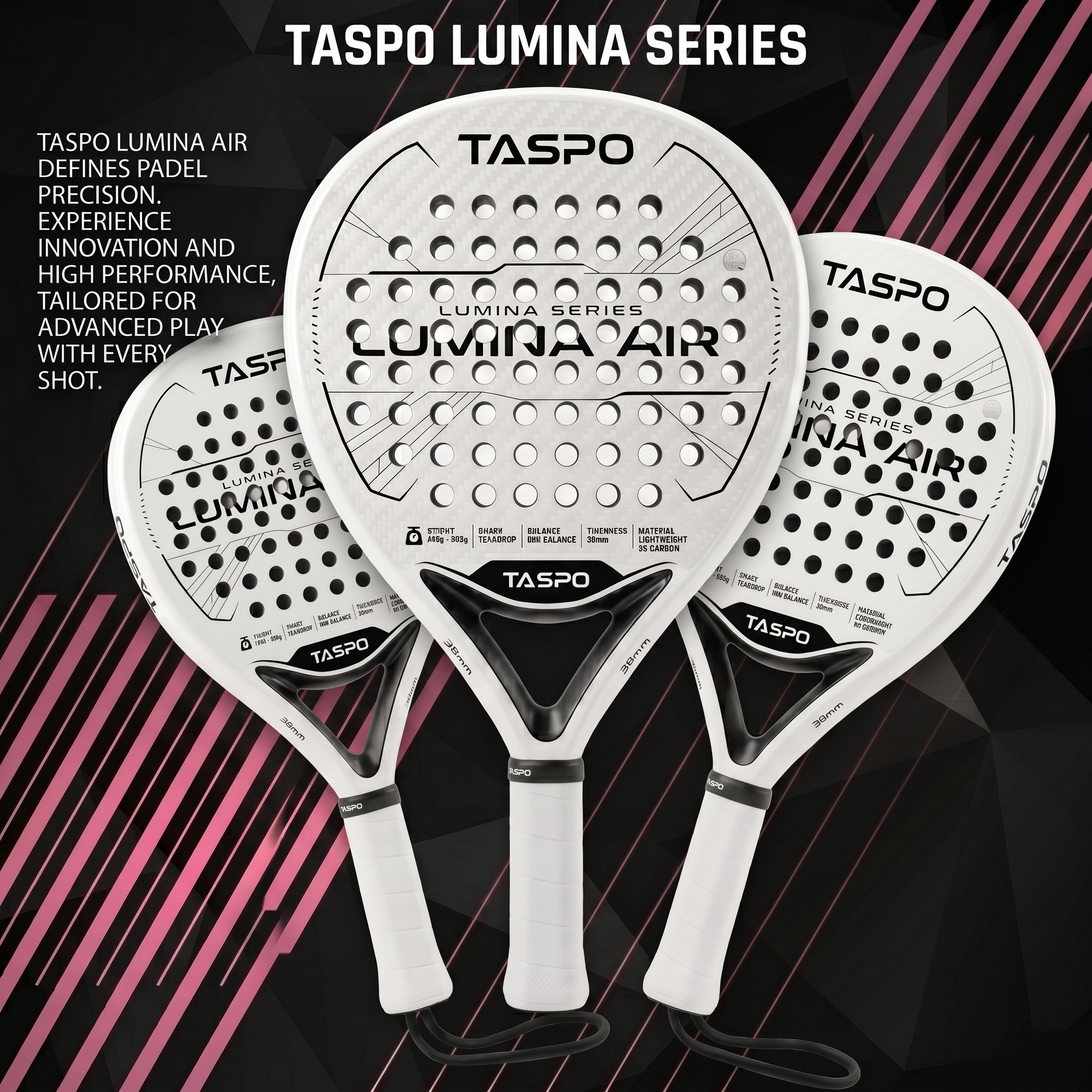
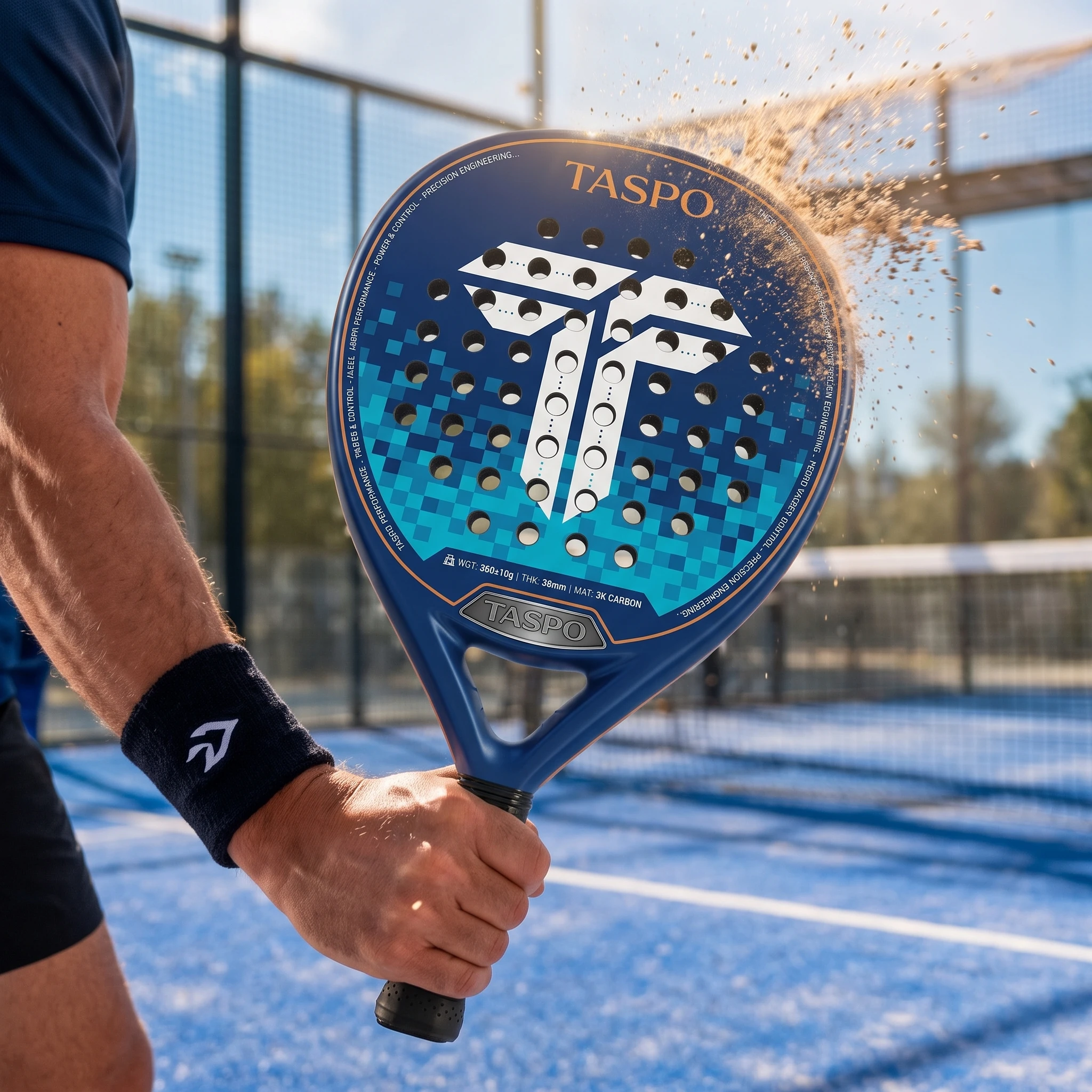
Sourcing or developing a truly reliable professional badminton racket requires partnering with a manufacturer that controls every single stage of the composite engineering process. Taspo stands out as a premier carbon fiber sports equipment manufacturer backed by over one hundred and thirty seasoned engineers and self-operated standardized production bases. Rather than offering generic catalog items, Taspo utilizes advanced prepreg layup, autoclave curing, resin transfer molding, and precision CNC machining to build high-performance racket solutions tailored to exact competitive specifications. Whether a regional sports brand needs a signature custom badminton racket line with specialized balance tolerances, or a tournament organizer requires bulk equipment paired with tournament-grade overgrips, sweatbands, and sports bags, Taspo delivers comprehensive one-stop OEM and ODM services. Every carbon fiber badminton racket and court accessory leaving the Taspo facility passes through seven rigorous quality monitoring stages, checking weight tolerance, balance stability, stringing tension thresholds, and surface finish. With custom prototypes ready in just seven to fifteen working days and a guaranteed twenty-four-hour response window, Taspo empowers global sports brands, club directors, and distributors to bring tournament-winning equipment directly to players worldwide.
 Hot News
2026-11-23
2026-11-23
2026-11-23
2026-11-23
2026-11-23
2026-11-23
 EN