 EN



Badminton Racket Wholesale Sourcing for Distributors
A badminton racket wholesale quote can look straightforward until the details behind it differ: one supplier prices an unstrung frame, another includes strings and a cover, and a third quotes a different delivery point. For a distributor, those differences affect the assortment, landed cost and promises made to retailers. Start with a common specification and compare the complete offer, not just the price per unit.
Use this checklist to define a range, assess a supplier, review samples and prepare a repeat order. It is a framework for discussion rather than a claim that any particular supplier offers every option.
Define the badminton racket range before requesting prices
Decide who will buy each model and how your retailers will explain the difference. A school or recreation channel may prioritize a manageable entry price and straightforward replacement, while a specialist retailer may ask for a clearer choice of balance, shaft feel and stringing options. Those are planning assumptions, not a substitute for feedback from your own buyers.
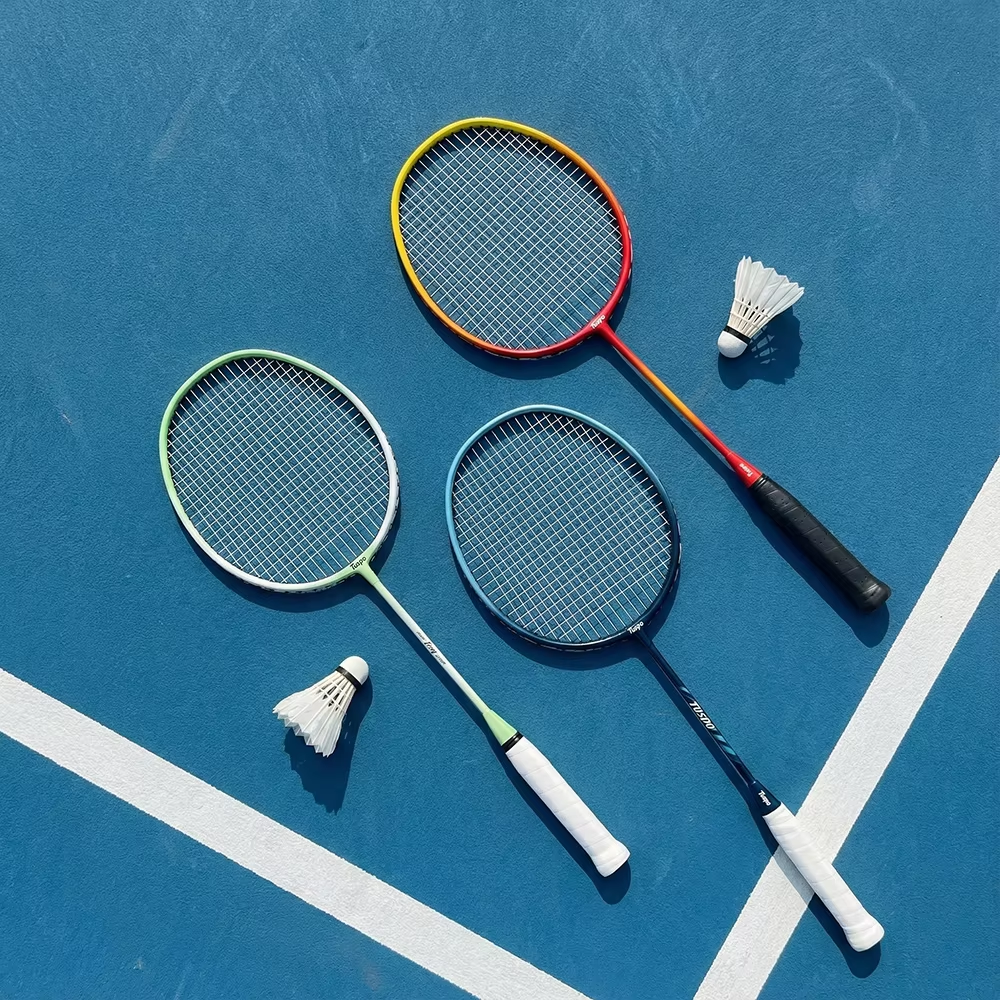
For each badminton racket, prepare a short line sheet with the intended user, sales channel, target retail price and expected order quantity. Add your preferred grip size, weight range, balance point, shaft stiffness, stringing status and finish. State how each measurement is taken: for example, whether weight includes strings and grip. Ask suppliers to identify tolerances and flag any item they cannot meet.
Keep must-have items separate from options. If a packaging upgrade threatens your target margin, you can compare it separately rather than accept a different frame specification by accident. For a competition-oriented range, check the current applicable rules: the Badminton World Federation's Law 4.1 sets an overall frame limit of 680 mm in length and 230 mm in width. Meeting those dimensions alone does not establish full rule compliance.
Check who makes the badminton racket and what is included
A factory, trading company and sourcing agent can each play a role, but the distinction matters when you need a specification change or a production issue resolved. Ask who controls the frame production, finishing, stringing and packing; whether work is subcontracted; and who will own the response when a batch differs from the approved sample. Request business details and supporting documents appropriate to your own qualification process.
For manufacturing carbon badminton racket models, ask for a written description of the material and construction proposed for the frame and shaft. A carbon designation on its own does not tell you the layup, finished weight or how a racket will feel. Request material information, production tolerances and any available test method or report; then decide what your sample assessment must confirm. Do not transfer claims about other racket sports to badminton products without evidence.
A search for a direct factory unbranded badminton racket may lead to stock designs or a proposed private-label project. Clarify what “unbranded” means: an undecorated frame, a frame without another party's mark, or packaging without a retail brand. Confirm who owns any artwork, whether a mold or design can be shared with other buyers, and what changes require approval. Availability and rights depend on the supplier's written terms.
Compare badminton racket quotes on the same basis
Send the same line sheet and quantity scenarios to each candidate. Ask for a quote that identifies the model, unit configuration, minimum order quantity, any per-model or per-color minimum, tooling or artwork charges, sample cost and payment schedule. Request lead times for sampling and production separately, with their start points stated. A quote should also say how long its terms remain valid.
Build a landed-cost worksheet for each badminton racket offer. Include the agreed goods price, packaging, inspection, freight, insurance if purchased, customs charges, duties and local delivery. Treat taxes according to advice relevant to your business and destination; do not assume a quote covers them. Divide the resulting expected total by the number of saleable units, and run a separate scenario for damage or shortages.
Record the named place and Incoterms 2020 rule in the quote. The rules allocate delivery tasks, costs and risk between seller and buyer; a destination on an invoice is not enough to tell you exactly who bears each obligation. Confirm details with your freight and customs advisers and put any extra services into the agreement.
Use samples to verify the badminton racket specification
Request samples that match the proposed production configuration, including grip, strings, finish and packaging where applicable. Mark each sample with the supplier, model and revision, then retain an approved reference. If a supplier offers alternatives, label them separately so that feedback does not become attached to the wrong design.
- Measure: check dimensions, weight and balance using agreed methods and tolerances; note whether the racket is strung.
- Inspect: look for visible finish defects, alignment issues, loose fittings and damage around grommets and grip.
- Try: have suitable players or retail staff assess handling and string feel in a consistent trial. Treat their observations as feedback, not a laboratory result.
- Pack: check the individual cover, labels, carton configuration and protection requested for transport.
- Document: list each discrepancy, its proposed correction, the responsible party and the next approval date.
Agree in writing on acceptance criteria and inspection timing before placing a larger order. If independent testing or pre-shipment inspection is important to your channel, specify the method, sample size, cost and response to a failed result. A good-looking badminton racket sample does not by itself establish consistency across a production lot.
Protect the next order, not only the first
Keep an order record that connects each badminton racket SKU to the approved specification revision, sample, artwork file and carton label. Agree how the supplier will communicate a material, component or subcontractor change before production. Ask how replacement parts, warranty claims and shortages will be handled, including evidence required and the time allowed to report an issue. These are negotiated terms, not automatic entitlements.
For replenishment, compare the next batch against the retained reference and review both delivery performance and retailer feedback. A lower unit quote can be less useful if the pack changes or the range cannot be reordered as specified. Conversely, a larger initial order may tie up stock before demand is understood. Choose quantities against your own forecast and the supplier's confirmed minimums.
Prepare a useful first inquiry
Send your target market, sales channel, intended users, expected quantities, required badminton racket specifications, branding and packaging needs, and destination. Ask the supplier to identify which requirements it can support, what evidence is available, and what still needs a sample or written quotation. Include a desired decision date without treating it as a confirmed production schedule.
Taspo Sports' site provides company contact information for an initial discussion. Ask directly whether the requested badminton racket configuration and distribution terms are available; neither the site profile nor this checklist confirms a specific badminton product or factory capability. Keep the final specification and commercial agreement as the reference for any order.

 Hot News



