 EN



Tournament Grade padel ball with Long Lasting Bounce
A fresh can may feel lively at the start of a match, but the real question is how a padel ball behaves after repeated rallies. For clubs, players and buyers planning an event, useful performance means a predictable rebound, a consistent feel across the can and a clear plan for replacing worn balls. A tournament-style label alone does not establish how long that feel will last.
From a materials and testing perspective, the sensible approach is to separate three questions: Does a new padel ball meet the relevant event rules? How does it play on your court? And how much bounce does it retain after the amount of play you expect? Each needs its own evidence.
What tournament-grade should mean in practice
For a sanctioned competition, check the organizer's current ball requirements and approval list before ordering. The International Padel Federation's rules describe a new ball that rebounds between 135 and 145 cm when dropped from 2.54 m onto a hard surface. The rules also specify other properties, including size and weight. A ball that feels quick in a warm-up is not automatically a compliant competition ball.
This drop test describes a new padel ball under a particular condition. It does not say that a ball will remain within that range after a set number of matches, nor does it certify an individual product. Request the applicable test documentation and confirm that the item and production batch match the paperwork. If an event specifies a named ball, follow that requirement rather than assuming a generic label is enough.
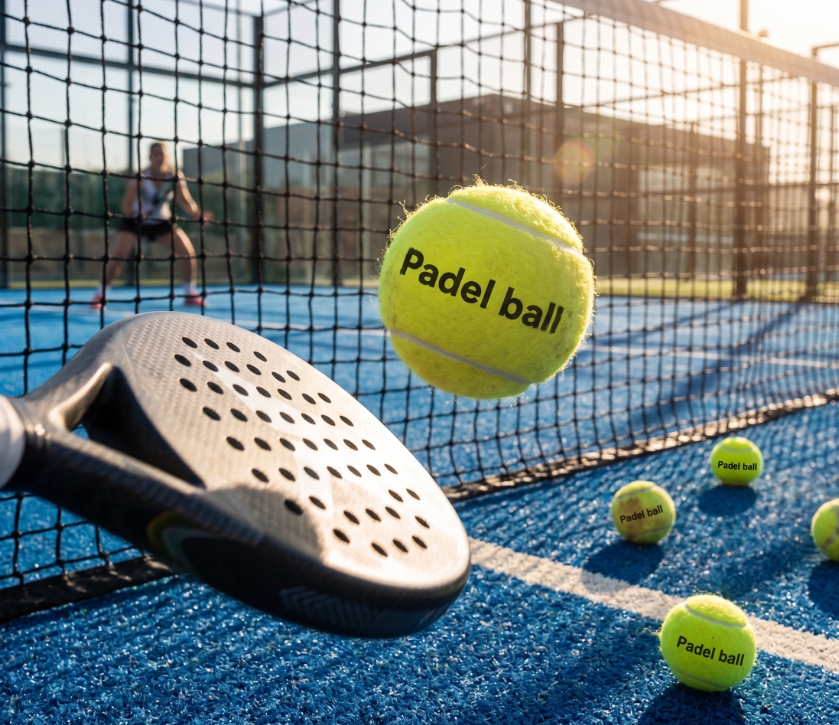
Why bounce changes during play
A pressurized padel ball relies on its core and the gas inside it to provide its response. After the can is opened, pressure can change over time; repeated impacts and wear also affect the way the ball feels. The felt influences the interaction with the racket, court and glass. Visible fuzz, dirt or a flattened surface can therefore be relevant alongside rebound height.
Conditions matter too. Temperature, humidity, court surface and playing style can change the impression of speed and bounce. A padel ball that suits one club's indoor court may feel different outside or at another venue. Compare samples in the conditions where they will actually be used, not just on a desk or in a supplier's video.
How to evaluate bounce retention
Start with identical, unopened cans from the samples you want to compare. Mark each padel ball so it can be tracked, note the sample and batch, and document when each can was opened. Record the court, temperature if available, session length and the type of play. Keep the comparison fair by using the same court and a similar sequence of drills.
- Establish a baseline. Measure new-ball rebound using the same hard surface, drop height and measuring method for every sample. For a formal conformity decision, rely on an appropriate test facility and the current rules, not a casual court-side check.
- Run a defined playing session. Use the balls for the same drills or match format, then measure again at agreed intervals. Record actual playing time instead of assuming every match creates the same wear.
- Compare the group, not one bounce. Repeat measurements, note variation within each can and record any visibly damaged ball separately. A single high rebound can hide inconsistent performance.
- Include player feedback. Ask the same players about control, wall response and feel before and after the session. Label this feedback as subjective; it is not a laboratory result.
For example, a club might compare two samples over its normal training block, recording rebound before play and after each session. That is an illustrative method, not a claim that either sample will last for a particular number of hours. Decide beforehand what change would justify opening a new can, and keep the records so future orders can be assessed on the same basis.
Ask for evidence, not just a durability claim
When sourcing a padel ball, ask which test method was used, how many balls were tested, what conditions applied and whether results cover the specific product and batch. For a claim about lasting bounce, request before-and-after measurements and a description of the use or aging cycle. Initial conformity data alone cannot prove retention after play.
Also ask how the padel ball is packed, how the supplier identifies batches and what storage conditions are recommended. If you represent a club or distributor, share the target use, expected court conditions, event rules and approximate order schedule. Confirm availability, specifications and any service arrangements directly; none should be assumed from the title of an article.
Storage and replacement between sessions
Keep unopened cans sealed until needed and follow the manufacturer's storage instructions. Protect opened balls from moisture, dirt and excessive heat. If you use a pressurized storage container, follow its instructions and treat it as a maintenance option rather than proof that a worn padel ball has returned to its original condition.
Separate balls with damaged seams, heavily worn felt or a noticeably uneven response. A clean-looking padel ball can still have changed internally, so use a repeatable check as well as visual inspection. Event organizers should also follow their competition's replacement schedule; informal practice decisions do not override tournament rules.
Questions to settle before ordering
- Which competition rules and current approval requirements apply to the event?
- Is the supplier's conformity evidence for the exact padel ball and batch under consideration?
- Are retention claims supported by a documented method, conditions and sample size?
- How did the sample perform on the intended court, both when new and after the planned use?
- How will cans be stored, tracked and replaced during the event or training program?
A padel ball with lasting bounce is an outcome to verify, not a specification to assume. Put rule compliance, controlled comparisons and practical handling together, then choose on the evidence relevant to your own play. Before committing to a larger order, agree on the sample, the applicable documents and the performance questions with the supplier.
 Hot News



