 EN



Why High Grade Padel Ball Core Materials Last Longer
A fresh padel ball feels lively, but its useful life depends on more than a label on the tube. The rubber core has to flex with each impact, return to shape and retain enough internal pressure for the ball to behave as intended. A carefully designed, consistently made core may hold those characteristics longer. Whether it actually does so is a question for comparable tests, not a claim that can be settled by the phrase “high grade.”
For a club, distributor or regular player, the useful question is not simply which padel ball feels firm on day one. It is how consistently the ball plays after storage and repeated use, and whether the felt is still in suitable condition. Separate those factors before asking for evidence.
What the core contributes to a padel ball
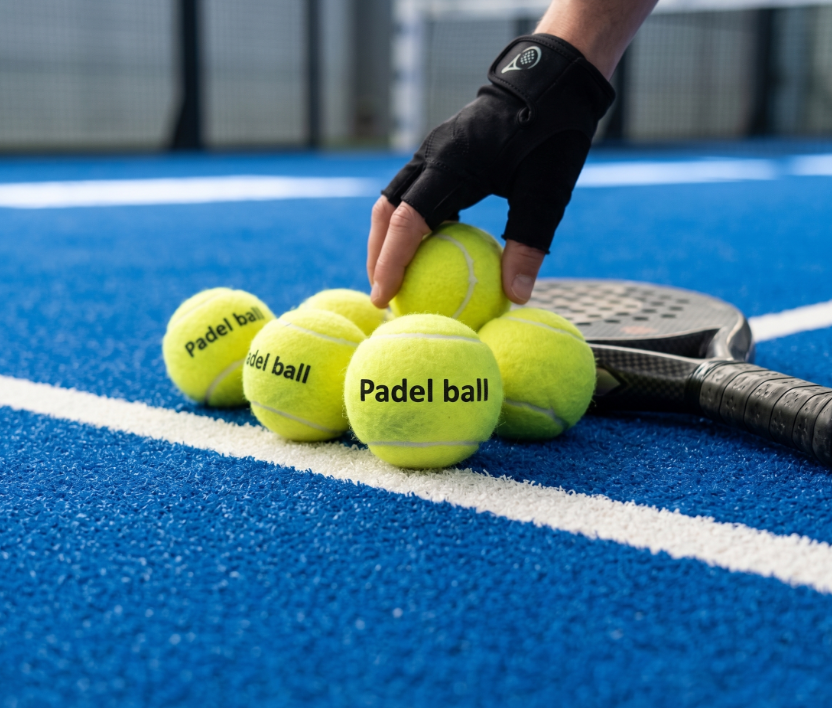
A pressurised padel ball has a hollow rubber core beneath its felt covering. At impact, the shell deforms and then recovers; the pressurised gas inside also contributes to the ball's response. Rubber formulation, wall thickness, the join between core halves and manufacturing consistency can all influence that response. None of these details alone tells you how long a particular ball will last.
The core is part of a larger system. A padel ball may become less lively as pressure changes, as the material ages, or as the felt wears and changes the way it interacts with the surface. A ball that looks tidy can feel flat; another can still rebound while its covering has become too worn for the intended session. Checking just one symptom can lead to the wrong conclusion.
Elastic recovery and repeated impacts
Each shot compresses the padel ball for an instant. An appropriately formulated rubber core must recover its shape repeatedly while resisting damage. The relevant question is not whether a compound has an impressive name, but how the finished ball behaves after a defined sequence of impacts. A harder feel at first touch is not proof of greater service life, and a softer feel is not proof of a weak core.
Manufacturing matters too. Variation in wall thickness or the core join may affect consistency between balls. Ask a supplier how those features are controlled and what tests are applied to finished lots. A specification without its measurement method is difficult to compare with another padel ball specification.
Pressure retention is only one part of durability
Gas can gradually move through a rubber shell. The rate depends on the material and construction, the pressure difference and storage conditions. Once a sealed pressurised pack is opened, the environment around the balls changes. A core and package designed to limit pressure loss can help maintain a padel ball's intended response, but the result must be measured on the actual product.
Do not confuse pressure retention with impact resistance. Two balls may begin with similar rebound heights yet change at different rates during storage or play. To compare them, start with balls from unopened packs, record an initial reading and repeat the same measurement after a specified time or use cycle. Keep the temperature, surface, drop height and measurement method consistent. A smaller change under those conditions is useful evidence; it is not a promise for every court or climate.
Felt is another independent variable. Even a padel ball with a sound core can collect moisture or show visible abrasion. Evaluate the covering separately instead of attributing every change in pace to rubber quality. If performance matters for an event, follow the organiser's ball and replacement requirements rather than relying on an informal test.
What a bounce test can and cannot prove
LTA Padel describes the International Padel Federation rule for a new padel ball as a rebound of 135–145 cm when dropped from 2.54 m onto a hard surface. It also lists a diameter of 6.35–6.77 cm and a weight of 56.0–59.4 g for competition balls. These figures describe characteristics of a new ball, not a predicted number of sessions.
For an informal comparison, use the same hard surface and drop height each time, and allow samples to reach similar room conditions before measuring. Record individual results instead of relying on a single bounce. This simple exercise can flag obvious changes in a padel ball, but it does not reproduce a laboratory compliance test or isolate pressure loss from other changes. For purchasing decisions, request the supplier's test protocol, sample count and results at each measurement point.
How packaging and storage affect the comparison
A professional padel balls tube can be a convenient way to transport a set, but the word “tube” does not establish whether the package is pressurised or resealable under pressure. Ask how the original seal works, when the pack was filled and what storage conditions the supplier recommends. After opening, replacing a normal lid should not be assumed to restore the original pressure.
Likewise, a professional padel balls canister is packaging, not a test result. If a reusable pressure container is being considered, check its instructions and pressure rating; do not improvise a pressurisation method. Keep a padel ball dry and protected from excessive heat, and follow the manufacturer's handling guidance. Storage can influence the comparison, so record it alongside the date each pack was opened.
A practical purchasing and sample-check plan
For a club ordering several cases, a controlled sample can be more useful than a broad material claim. Agree on the intended playing conditions first: frequency, court surface, storage environment and when balls are normally replaced. Then compare candidate lots using the same plan.
- Request clear identification. Record the padel ball model, lot, packaging type and date of opening. Ask for the core material description and any stated tolerances without assuming that a material name predicts performance.
- Measure a starting point. Check several balls for rebound and visible defects using one documented method. If competition compliance is required, request appropriate current documentation from the supplier.
- Repeat under matched conditions. Use the same surface, temperature and measurement intervals for each padel ball group. Log storage time separately from the amount of play.
- Inspect the felt. Note loose seams, uneven wear and moisture separately from changes in rebound. Remove damaged balls from use.
- Compare usable life, not a slogan. Set a practical replacement criterion before the trial, then compare how long each group remains acceptable for that intended use. Report the sample size and variation.
For example, a club could compare two unopened lots across the same training schedule and note when each padel ball no longer meets its own playability criterion. This is a proposed test, not a claim about a real customer or a universal lifespan. A larger sample and a documented method make the outcome more informative, while still leaving room for differences between players and courts.
Questions to ask before choosing
What rubber and core construction are used, and which properties are checked during production? How is pressure retention measured, and are results available for the finished padel ball rather than the compound alone? What are the sample size, storage conditions and test intervals? Can the supplier explain the packaging seal and provide the applicable ball specification?
High-grade core material can support a longer-lasting padel ball when formulation, construction and quality control work together. It cannot reverse felt wear or make a simple storage lid act like a sealed pressure pack. Compare measured changes, inspect the whole ball and choose a replacement threshold suited to your use. Those steps turn an attractive claim into a decision you can check.

 Hot News



