Purchasing pressurized spheres in bulk is one of the highest-volume recurring investments a padel brand, tournament series, or club chain makes every quarter. Yet because a pressurized sphere looks simple from the outside, many procurement managers fall into the trap of ordering through general sporting goods trading companies that promise rock-bottom prices. That decision almost always leads to a warehouse disaster. Unverified brokers routinely source from low-end workshops that simply repackage standard fourteen-pound-per-square-inch lawn tennis balls inside cans labeled for padel—resulting in spheres that rocket uncontrollably off tempered glass walls and get banned immediately by tournament referees. Worse still, workshops that lack automated canning sealers ship ocean containers where up to fourteen percent of the plastic tubes leak their internal pressure across forty-five days at sea, leaving pro shops with pallets of flat, unsellable dead stock. Knowing where to source certified padel ball manufacturers is the only way wholesale buyers can guarantee tour-legal rebound physics and airtight shelf stability.
Separating a genuine, certified padel ball manufacturer from a middleman broker or a backyard gluing shop starts with auditing three industrial departments: the raw rubber compounding hall, the hemispherical vulcanization press bay, and the climate-controlled metrology laboratory. Authentic manufacturers never buy pre-made rubber shells from outside vendors; they operate heavy-duty internal Banbury mixers that compound virgin natural latex rubber with high-impermeability butyl elastomers and sulfur curing agents in-house. Those raw rubber slugs are compression-molded under computer-regulated heat and pressure to form uniform hemispherical bladders pressurized strictly between ten and eleven pounds per square inch. To verify compliance with International Padel Federation competition rules, a certified factory maintains an on-site ISO-calibrated laboratory kept at twenty degrees Celsius and sixty percent relative humidity. Inside that lab, technicians test every production lot to verify a diameter between six point three five and six point seven seven centimeters, a weight between fifty-six point zero and fifty-nine point four grams, a forward Stevens compression deformation within federation limits, and a vertical rebound between one hundred and thirty-five and one hundred and forty-five centimeters from a two-hundred-and-fifty-four-centimeter drop.
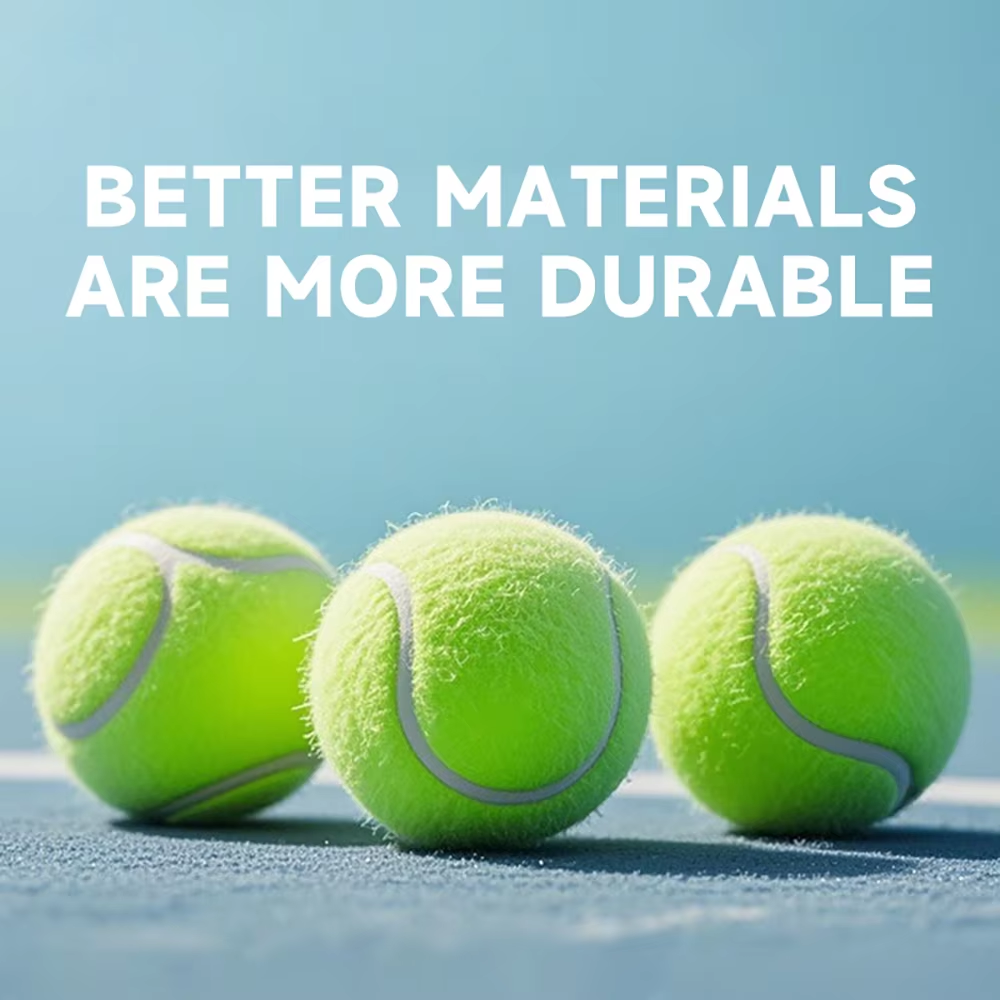
Once the vulcanized rubber core passes bounce calibration, its longevity on sandy or sandless monofilament turf depends on textile engineering and pressurized packaging machinery. During a factory inspection, wholesale padel ball buyers should examine how the dumbbell-shaped felt panels are cut and bonded. Low-tier factories use manual die cutters and cheap synthetic needle-punched polyester felt that fluffs up and shears bald within four games against galvanized steel mesh. In contrast, certified padel ball manufacturers utilize automated laser cutting tables to slice interlocking woven felt containing fifty-five to sixty percent authentic New Zealand merino wool reinforced with high-tenacity nylon and hydro-repellent fluorocarbon finishes. The two dumbbell panels are vulcanized around the core with elastic polyurethane seam glue that stays completely flush under corner-glass shear impacts. Immediately after curing and steaming, spheres enter rotary hyperbaric canning turrets. These automated turrets pressurize recyclable Polyethylene Terephthalate cans to fourteen pounds per square inch while double-seaming the aluminum pull-tab lid—locking in ninety-eight point five percent pressure retention across twelve months of retail storage.
Examining procurement transformations from high-growth distribution networks proves how partnering directly with a certified factory drives both margin expansion and market authority. Consider a major racket sports distributor operating across Turin, Italy, and Monterrey, Mexico, supplying over two hundred clubs and regional federation tours. Three years ago, the company sourced its private label cans through a European trading agent. Not only did middleman markups inflate their landed cost by twenty-six percent, but the agent delivered the exact same high-bounce sphere to both sea-level Italian coastal clubs and high-altitude Mexican mountain venues—causing players in Monterrey to complain that balls flew out of the court uncontrollably. By auditing and contracting directly with a certified custom padel ball manufacturer, the distributor launched a dual-spec tournament line: a standard eleven-pound-per-square-inch woven-wool model for coastal venues, and a federation-compliant high-altitude variant calibrated to a lower rebound window for courts above five hundred meters elevation. Factory-direct pricing saved twenty-six percent per case, ocean-freight leak claims dropped below zero point two percent, and annual sales surpassed one hundred and eighty thousand cans.
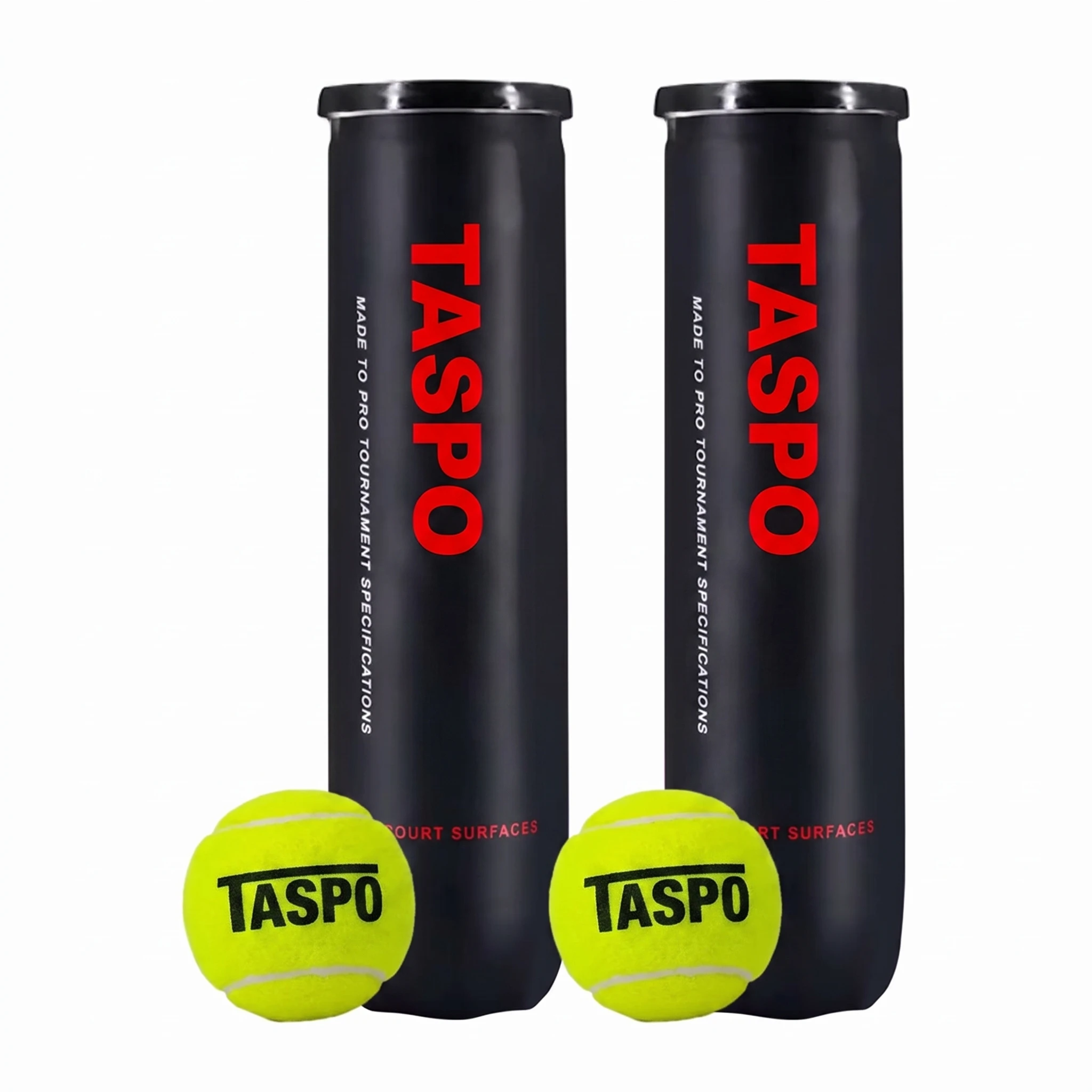
For sporting goods executives, national federations, and club chains searching for a dependable, audit-ready production home, Taspo stands out among certified padel ball manufacturers worldwide. Operating a sprawling, vertically integrated manufacturing complex under strict ISO 9001 quality management protocols, Taspo controls the entire ball-making lifecycle in-house—from virgin natural rubber compounding and automated core vulcanization to laser woven-wool felt assembly,twenty-four-hour barometric stabilization, and double-seamed hyperbaric PET canning. Every batch of custom padel balls produced at Taspo undergoes rigorous five-thousand-hit pneumatic cannon fatigue testing, Stevens compression verification, and water-immersion can-seal checks to guarantee zero dead tubes on the retail shelf. Whether a partner needs high-visibility optic yellow broadcast spheres, custom sponsor logos printed on three-ball cans, or twenty-four-can master club cartons, Taspo delivers scalable capacity and reliable lead times. Better yet, buyers can consolidate their wholesale padel ball containers alongside Taspo’s 100 percent full carbon padel rackets, tacky overgrips, combed cotton sweatbands, and thermal bags to build an unstoppable court brand.
 Hot News
2026-11-23
2026-11-23
2026-11-23
2026-11-23
2026-11-23
2026-11-23
 EN