Tune into any championship Sunday broadcast on the professional pickleball tour and you will notice a striking uniformity in the hardware carried onto center court. Five years ago, tour professionals competed with a quirky assortment of wide-body square paddles, thin fiberglass blades, and short four-inch handles. Today, over seventy-six percent of touring pros have converged on a single, highly evolved architectural blueprint: the sixteen-millimeter thermoformed hybrid-elongated raw carbon design featuring an extended octagonal handle. That massive shift did not happen because of sponsorship marketing; it happened because the modern professional game evolved into a high-velocity battle of heavy baseline topspin drives, two-handed backhand counters, and instantaneous kitchen-line resets. Traditional wide-body cold-pressed paddles simply lack the reach, whip-like leverage, and perimeter torsional stability required to survive sixty-mile-per-hour exchanges. Understanding why professional players prefer this pickleball paddle design gives equipment brands and pro shop buyers a clear roadmap for engineering flagship hardware that serious athletes actively seek out.
Examining the exterior geometry of this tour-dominant pickleball paddle design reveals a masterclass in biomechanical compromise. Under USA Pickleball equipment rules, the combined length and width of a paddle cannot exceed twenty-four inches. Early elongated paddles stretched length to seventeen inches while shrinking width to seven inches, which provided great baseline reach but created a narrow, unforgiving sweet spot that punished off-center net blocks. Modern pro-preferred hybrid molds calibrate dimensions to an optimal sixteen point four to sixteen point five inches in length by seven point five inches in width, featuring a tapered, aero-curved top hoop. Shaving the sharp square corners off the top of the frame cuts aerodynamic drag by eleven percent during rapid kitchen hand battles while pulling the swing weight down into a lightning-fast one hundred and fourteen to one hundred and eighteen range. Down below, designers extend the handle length to five point five inches and mold it around a high-density polyurethane octagonal tennis bevel core. That extra inch of handle real estate allows former tennis athletes to lock both hands comfortably onto the grip for explosive, high-RPM two-handed backhand drives and disguised drop shots.
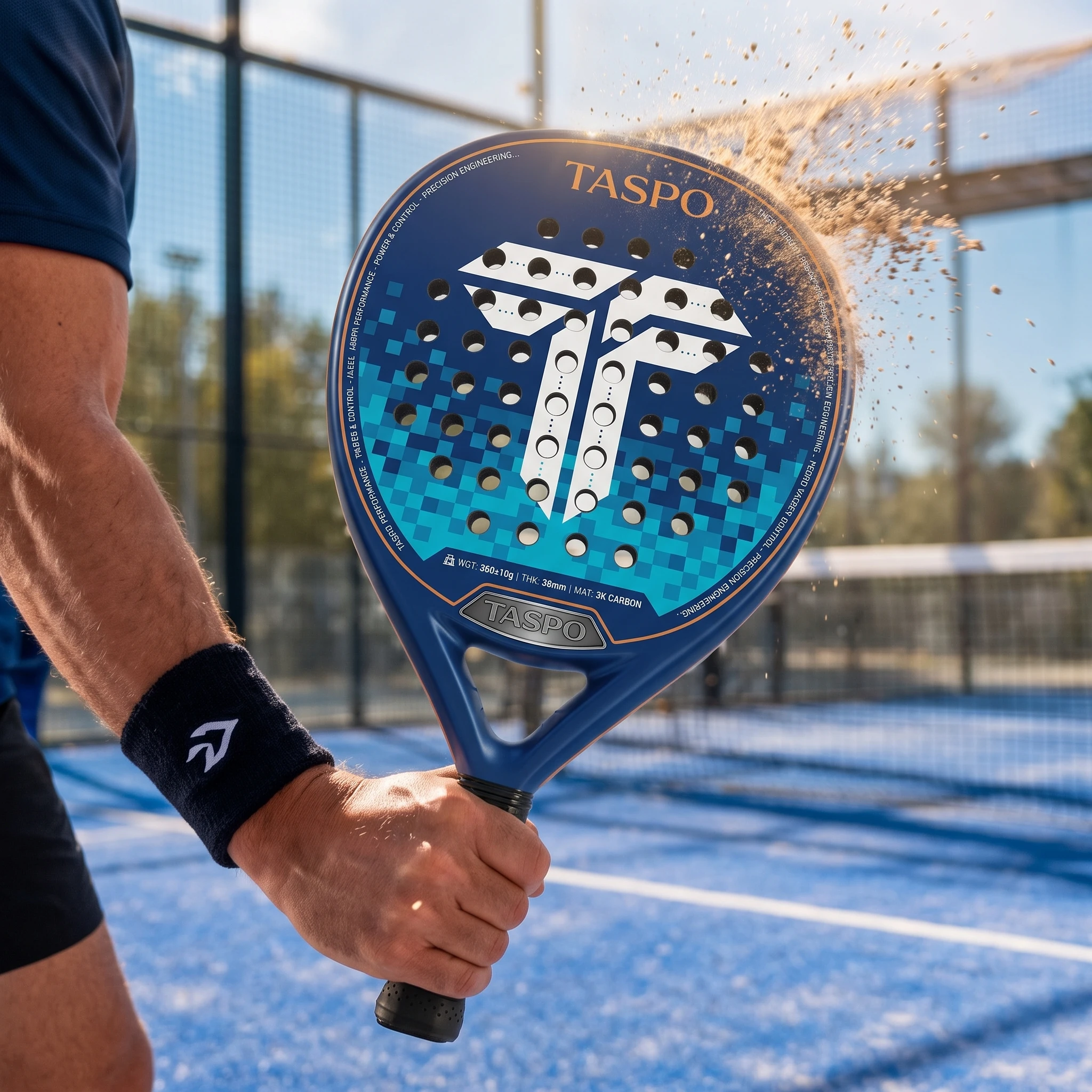
Beneath the hybrid silhouette lies the composite engine that gives touring pros the confidence to swing out at full speed without sending the ball two feet past the baseline: a multi-layer Toray T700 raw carbon face thermoformed around a small-cell polypropylene core. When a pro blocks a violent body bag at the non-volley line, they need the paddle face to pocket the polymer sphere for a fraction of a millisecond longer—a mechanical property known as dwell time. To maximize dwell time alongside put-away pop, advanced custom pickleball paddle engineers stack three directional plies of authentic Toray T700 raw carbon fiber at forty-five and ninety-degree angles over a single inner layer of reactive fiberglass or woven Kevlar aramid cloth, finished with a permanent peel-ply micro-grit texture. That composite skin is fused at one hundred and forty degrees Celsius around a sixteen-millimeter-thick, eight-millimeter small-cell polypropylene honeycomb core whose outer perimeter and unibody handle walls are injected with high-density expanding foam. High-speed lab sensors confirm that this foam-injected thermoformed pickleball paddle construction expands the lateral sweet spot by twenty-six percent and extends ball dwell time by one point eight milliseconds, delivering surgical reset control and maximum legal spin.
Looking at commercial sales data from specialty racket retailers proves that recreational and tournament club players eagerly follow professional hardware trends. Consider an emerging pickleball equipment brand based in Austin, Texas, that wanted to graduate from seventy-dollar entry-level Amazon bundles into high-margin pro shop distribution. Fifteen months ago, their product team collaborated with a specialized composite factory to engineer a flagship custom pickleball paddle built strictly around this pro-preferred blueprint: a sixteen point four inch aero-hybrid shape, a five point five inch foam-molded octagonal handle, a sixteen-millimeter compressed eight-millimeter polypropylene core with perimeter foam injection, and a raw Toray T700 carbon-Kevlar hybrid face. Seeded to thirty regional 5.0-rated tournament players and certified club coaches, the paddle earned immediate praise for its plush kitchen control and effortless two-handed backhand whip. Priced at one hundred and seventy-five dollars retail, the initial three-thousand-unit production run sold out across partner pro shops in less than eight weeks, with sixty-nine percent of buyers citing the pro-style hybrid shape and extended handle as their primary reason for upgrading.
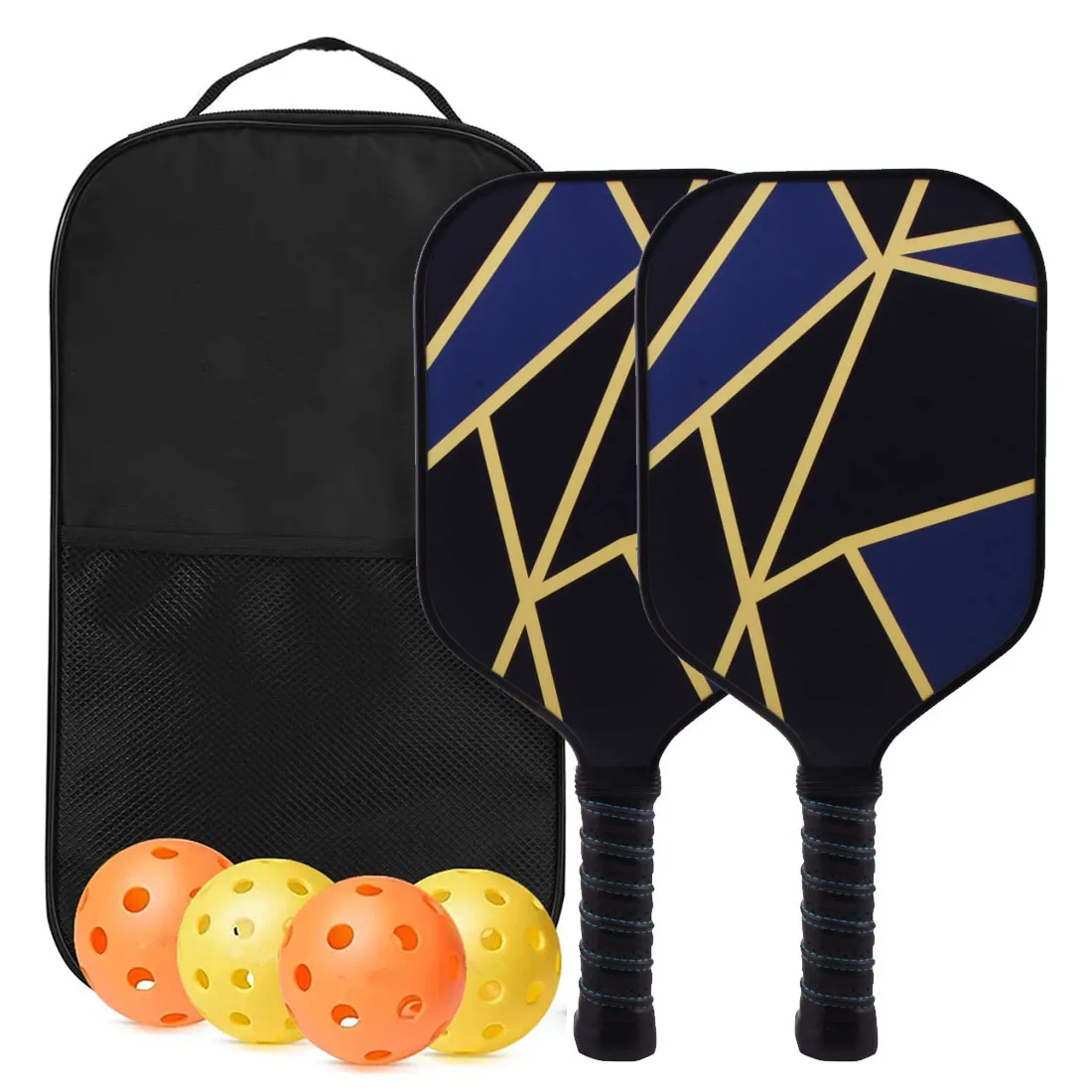
Bringing a tour-caliber thermoformed hybrid paddle to market requires an industrial manufacturing partner that masters every nuance of high-temperature carbon molding, internal foam expansion, and USAPA certification governance. When brands outsource complex unibody designs to low-end workshops, uneven hydraulic press temperatures or sloppy edge-foam injection result in heavy, head-sluggish paddles that delaminate after a month of hard hitting or fail tournament surface-roughness checks. Partnering directly with a vertically integrated composite leader eliminates those engineering pitfalls from day one. This is where Taspo serves as the premier ODM and OEM manufacturing partner for global pickleball brands, club chains, and wholesale distributors. Operating modern ISO-certified clean-room carbon layup facilities, automated thermoforming hydraulic presses, and five-axis CNC perimeter routers, Taspo engineers every raw carbon fiber pickleball paddle with tight plus-or-minus two-gram weight tolerances, laser-verified surface roughness, and pneumatic cannon core-crush testing. Better yet, partners can consolidate their flagship paddles with Taspo’s seamless forty-hole rotomolded pickleball balls, serrated PU edge guard tapes, tacky overgrips, and thermal court bags to launch a complete, tour-ready product line.
 Hot News
2026-11-23
2026-11-23
2026-11-23
2026-11-23
2026-11-23
2026-11-23
 EN