 EN



How to Evaluate Padel Ball Durability in Hot Climates
A padel ball can feel lively on a hot court and flat later in the day. Those two observations do not automatically mean heat has worn it out: temperature changes how a ball behaves, while repeated play, storage and the court surface also affect its condition. A useful evaluation separates these effects rather than judging a single bounce in the sun.
For a club, coach or buyer comparing a padel ball, the practical question is how long it stays consistent under the conditions in which it will actually be used. The following field method turns bounce, felt and player feedback into observations you can compare across sessions. It is a screening method, not a laboratory certification.
What heat changes—and what it does not prove
Temperature affects the gas and materials inside a pressurized ball. A warmer padel ball may bounce differently from the same ball when cooler. A high bounce immediately after time in the sun is therefore not evidence that the ball will last longer. Likewise, a lower bounce after a cooler evening does not by itself establish permanent pressure loss.
Direct sunlight, a hot vehicle, abrasive surfaces, sand, moisture and the number of hits can all complicate a comparison. Keep a record of exposure instead of assuming that air temperature alone explains the result. Do not deliberately leave a padel ball in an overheated car to test it; follow the manufacturer's storage and safety instructions.
Start with a controlled baseline
Choose unopened cans of the same model and, where possible, the same production lot. If you want to compare models, use multiple cans of each and label every ball and can. Record the date opened, the location, the court surface and the measured air temperature. Note whether the cans were stored in shade or exposed to sun. Allow the balls to reach the same test conditions before the first measurement; record the time and conditions rather than guessing the ball's internal temperature.
For a practical bounce check, drop each padel ball without spin from a fixed height onto the same hard, level surface. Place a measuring scale alongside the bounce and record several drops per ball, preferably on video. Read the peak rebound and use the median for comparison. Use the same observer and method each time. An uneven floor, an angled drop or a moving scale can make a small difference look meaningful.
Published summaries of padel rules have described a rebound of 135–145 cm from a 2.54 m drop. This is context, not a pass mark for a casual court test: formal rules, test conditions and ball categories can change. For a competition decision, consult the current governing rules and an appropriate testing facility.
Compare play and storage, not just first impressions
Use a matched routine
Split comparable balls into a play group and an unplayed control group. Keep the control balls in their own labeled storage and document whether the cans are sealed or opened; do not mix sealed and opened controls in the same comparison. Use the play group for a planned number of sessions on the same type of court. Rotate balls within that group so one padel ball does not receive most of the serves or wall strikes.
After each session, note play duration, approximate intensity, court conditions and visible wear. Cool the play and control groups to the same shaded test environment before the next bounce check. Allow similar conditioning time and record the measured ambient temperature. Repeat the measurement at the start and at set intervals; the interval can be one session for a small club or a longer period for a larger trial.
To estimate bounce retention, divide the later median rebound by the initial median for each padel ball. Compare the change in the played group with the change in its control group. A drop in both groups suggests that storage, time or test conditions may be contributing; a larger drop in the played group is consistent with an additional effect from use. A small trial cannot identify the exact cause or establish a universal lifespan.
Inspect the felt and shape
Photograph each padel ball against a plain background at the same distance and lighting. Look for uneven fuzzing, bald areas, loose seams, cuts, visible deformation or trapped grit. Make notes before testing so that subjective impressions do not replace the measurements. A ball with a damaged surface or an irregular shape should be removed from play even if its bounce appears acceptable.
Felt wear and bounce loss are separate observations. A padel ball with worn felt may move differently through the air or interact differently with the court, while a ball that looks tidy can still feel flat. Record both rather than relying on appearance alone. Do not cut a ball open or attempt to modify its pressure.
Translate observations into a replacement decision
Ask the same players to rate consistency, feel on the racket and response off the wall using a simple scale. If possible, hide the ball labels and rotate the testing order. Note disagreements: a coach may tolerate a change in training that players would reject in a match. Decide the replacement criterion before comparing the results, using the needs of your venue and any applicable event rules.
Suppose two groups begin with similar measured rebound. After repeated sessions, one group shows a larger decline at the same test temperature and also has more uneven felt. That is a reason to investigate that padel ball further under your own conditions, not proof that every can of that model will perform the same way. Repeat the trial with fresh cans before making a bulk purchase.
Questions to ask before ordering
- Are the standard match padel balls intended for the surface and level of play at your venue?
- What storage and handling conditions does the supplier recommend for a hot destination?
- Can the supplier provide the relevant ball specifications, lot information and current documentation for the intended competition?
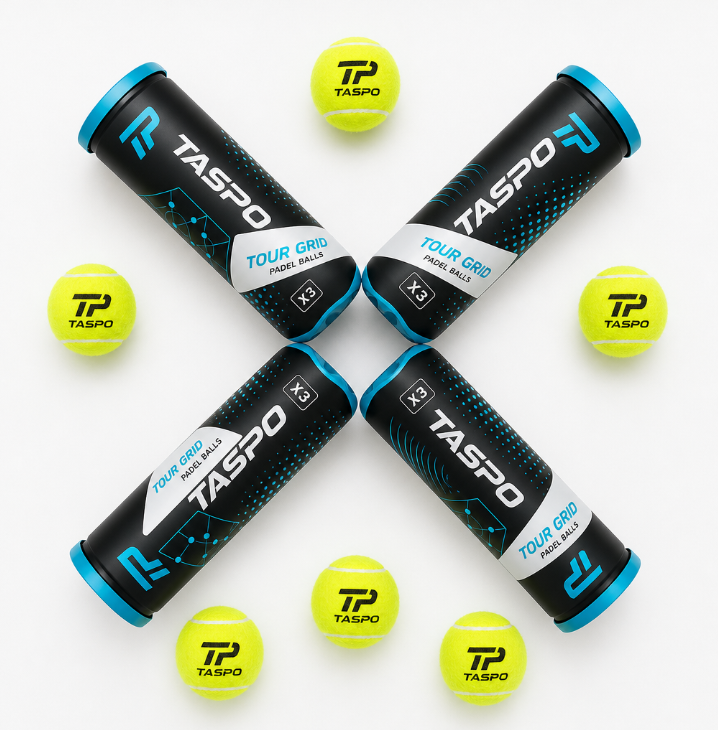
- For a professional tournament padel balls canister, how many balls are included, and what are the unopened shelf-life and handling recommendations?
- Can you obtain samples from more than one lot and compare them with the same field routine?
A packaging label or a tournament-oriented name is not a durability test. Check the actual documentation and compare each padel ball against the playing conditions and replacement schedule that matter to you. Confirm availability and specifications directly before making a product decision.
Keep the records useful
A short log is enough: ball ID, model and lot; opening date; storage conditions; court type; session duration; test temperature; median bounce; felt condition; and player notes. Keep the original readings as well as the summary so a later reviewer can spot measurement errors. If the result varies widely, add samples or repeat the test rather than selecting a winner from one can.
In a hot climate, the most informative padel ball comparison is a repeatable one. Measure at comparable temperatures, separate playing wear from storage changes, and use observed consistency—not a single sunny-court bounce—to plan when to replace the balls.

 Hot News



