 EN



Why Aerodynamic Shape Improves Padel Racket Swing Speed
A padel racket can feel quick through the air even before it meets the ball. Frame shape is one reason, but it is not the whole story. A design that produces less aerodynamic drag may require less effort to move at a given speed, leaving more of the player's effort available to accelerate the racket. Whether that translates into a faster swing depends on the player, the stroke and the rest of the design.
For players and buyers comparing a padel racket, the useful question is not simply whether a frame looks streamlined. It is how its shape, balance and weight work together during the movements the player actually makes. Keeping those influences separate makes comparisons more useful.
What air resistance does during a swing
As a padel racket moves, it pushes air aside. Air pushes back, producing drag that opposes its motion. In a simplified aerodynamic model, drag depends on air density, the square of speed, a reference area and a drag coefficient describing how the object behaves in the airflow. If the coefficient or effective area is lower under otherwise comparable conditions, drag can be lower too.
The speed-squared relationship matters: when airspeed doubles in that simplified model, drag rises fourfold if the other inputs stay the same. That is a physics illustration, not a claim that a padel racket will swing twice as fast or experience the same airflow over its entire surface. Different parts of a rotating racket travel at different speeds, and the racket face changes orientation during a stroke.
A small reduction in drag may help during a fast overhead or a quick exchange at the net. It does not establish a particular percentage improvement. A reliable padel racket swing-speed claim needs a controlled comparison, not just a description of the frame.
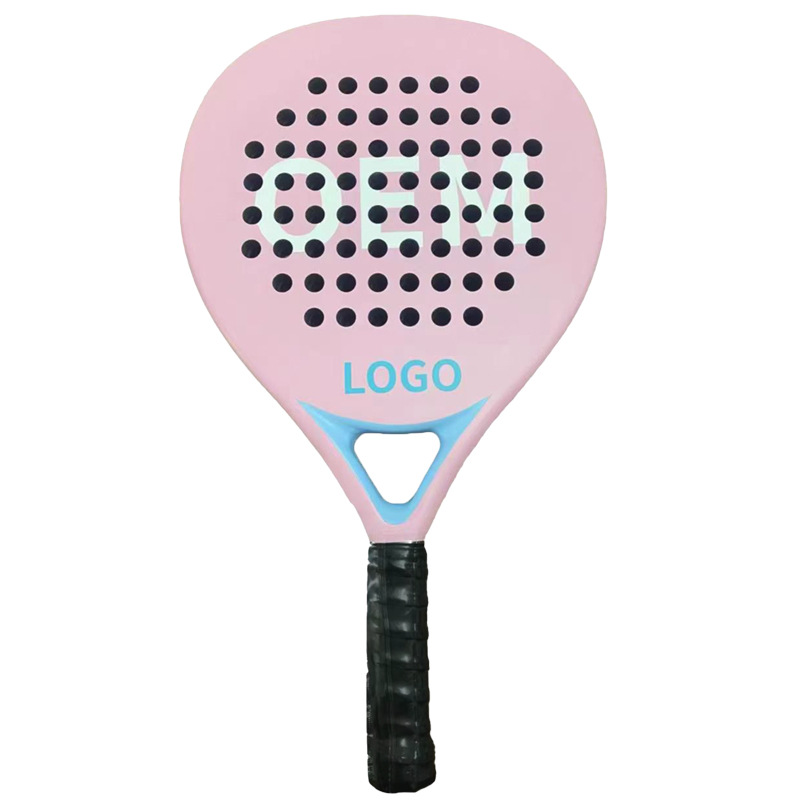
Which parts of a padel racket influence airflow?
Frame profile and leading edges
The outer rim is more than an outline. Its thickness, contour and edges affect how air flows around the frame. A smoother or narrower profile may change drag for a particular swing path and angle. But a thinner-looking frame is not automatically faster: the complete cross-section, surface details and direction of movement all matter.
Look at a padel racket from the side as well as the front. A front-facing silhouette alone says little about the air presented to the rim during a complex swing. Two designs with similar outlines can differ in frame depth or edge shape, so a label such as round or diamond is not an aerodynamic test result.
Face area and hole layout
The perforated face also interacts with air. Hole size, number and arrangement can alter airflow as well as affect construction and playing feel. Adding holes does not necessarily produce a quicker padel racket. Their effect depends on the whole design, and changes to the face can bring other trade-offs that need to be checked.
In a 2025 academic discussion of padel equipment, head size, speed and hole pattern are identified as factors associated with drag. Treat that as a reason to ask for testing, not a basis for ranking individual models from appearance. If a supplier quotes an airflow advantage, ask what was measured, at what speeds and with the face at which angles.
Drag is not the same as swing weight
Air resistance is only one load a player feels. A padel racket also has rotational inertia: the resistance to changes in its angular motion. Mass located farther from the rotation axis contributes more to that inertia than the same mass closer to the hand. This is why two rackets with similar total weight can still feel different when started, stopped or redirected.
Balance gives a useful clue about mass distribution, but it cannot describe it fully. Swing weight is a measure of rotational inertia about a specified axis; the measurement point and method matter when comparing figures. A 2022 study on padel rackets examined pendulum-based methods for identifying inertial properties. Ask for a consistent method before treating two published numbers as directly comparable.
A streamlined padel racket with high swing weight might still feel demanding in a fast defensive exchange. Conversely, a lower-inertia racket may feel easier to position even without a special aerodynamic claim. Neither drag nor inertia tells the full story of comfort, impact response or shot control.
Where a quicker-feeling swing can be useful
At the net, a compact preparation can leave little time to adjust to a fast ball. A padel racket that is easy to redirect may help a player bring the face into position. In an overhead, the racket travels through a larger arc and airflow may become more relevant as speed rises. In either situation, timing and a controlled contact point matter alongside speed.
For a player selecting a padel junior racket, fit deserves particular attention. Length, mass, grip size and the ability to control the racket should suit the individual player. An aerodynamic description alone cannot establish suitability for a child, and an adult frame that feels quick to one player may still be difficult for a younger player to handle.
Buyers should also separate product category from performance. A familiar model name does not show how a particular padel racket behaves in a given stroke. Compare the specifications for the exact version and test it rather than assuming a similarly named racket has the same geometry or handling.
How to compare two designs fairly
Start a comparison with a clear task. Are you trying to make a defensive volley easier to prepare, or seeking a comfortable overhead motion? Then compare the padel racket options under similar conditions instead of relying on a single marketing term.
- Check the basics. Record the exact model, overall mass, balance, dimensions and grip setup. Include any overgrip or protector fitted during the test.
- Ask about swing weight. Request the measurement axis and procedure. If a number is unavailable, note that absence rather than inferring it from balance alone.
- Inspect the design. Compare rim cross-sections, face size and hole layout, while recognizing that visual inspection cannot quantify drag.
- Use repeatable strokes. Alternate the rackets for the same drills, with similar balls and rest periods. Record ease of positioning, timing and contact consistency as observations.
- Ask for evidence. If speed or drag figures are provided, request the test conditions, sample size and variation. A laboratory result may not predict the same difference on court.
A simple on-court padel racket trial will not isolate aerodynamics from inertia or technique. It can, however, show whether the combined design is comfortable and manageable for its intended user. For a product range, collecting comparable specifications and sample feedback is more useful than making a universal speed promise.
Questions to take to a supplier
When discussing a padel racket design, ask which shape and frame dimensions are available, whether swing-weight measurements can be supplied, and what changes can be evaluated in a sample. For any claim about airflow or speed, request the underlying method and its limits. If no comparative test exists, describe the shape as a design choice rather than a measured performance improvement.
Taspo Sports works across racket-sport equipment categories. Visit Taspo Sports to start a conversation about the intended player, desired handling and specifications to confirm. A well-matched padel racket is the result of several choices working together, not an outline viewed in isolation.


 Hot News



