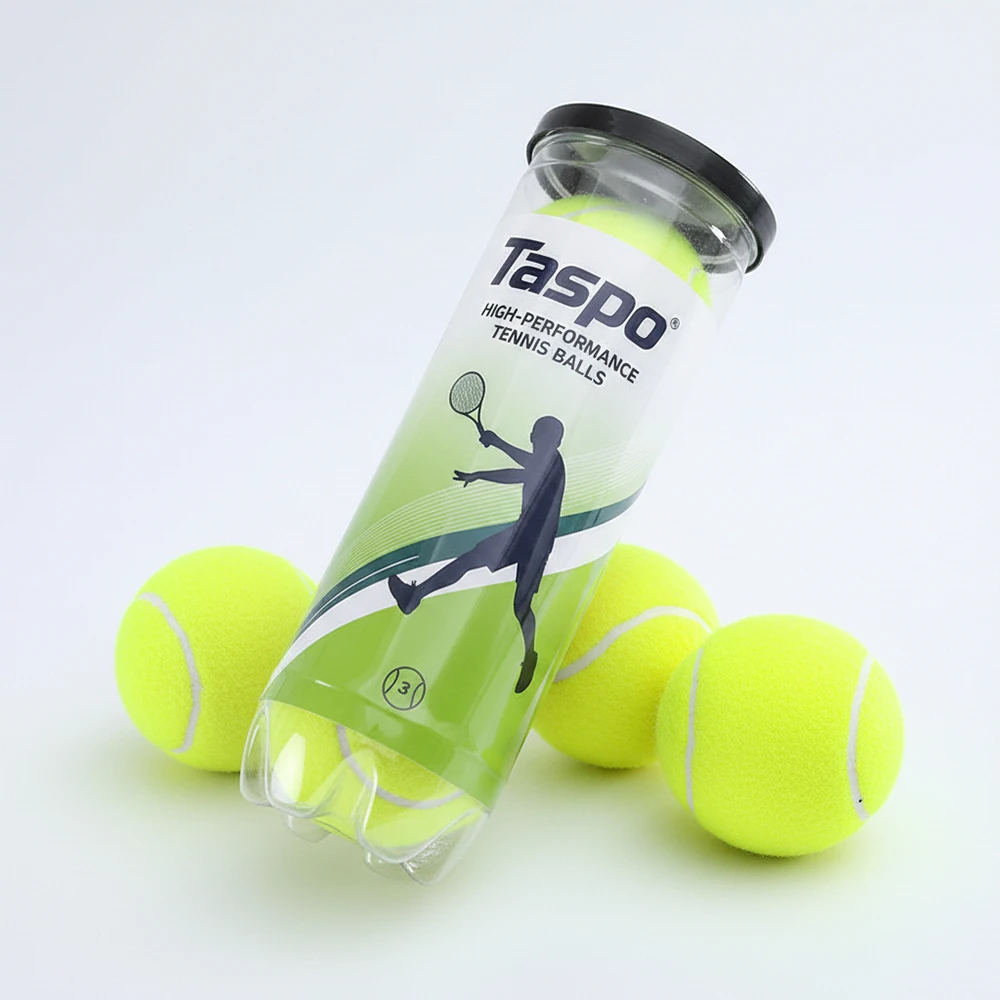
When a competitive athlete uncaps a fresh tube of tournament spheres, the unmistakable hiss of escaping gas signals that the equipment inside is ready for high-velocity court action. Unlike solid foam recreational toys, a sanctioned sphere derives over sixty percent of its rebound energy from the compressed gas trapped inside its hollow rubber core. Understanding what inner gas mix powers a modern sphere requires examining the laws of pneumatic thermodynamics during impact. While traditional lawn tennis spheres are inflated to roughly fourteen pounds per square inch above ambient atmospheric pressure, an official padel ball internal pressure is calibrated strictly between ten and eleven pounds per square inch. According to Boyle's law, gas pressure increases inversely with volume when compressed at a constant temperature. During the four-millisecond collision against a carbon paddle face or tempered glass wall, the rubber hemisphere flattens inward, shrinking the internal cavity volume by nearly thirty percent. This sudden volume reduction causes the internal gas molecules to compress violently and push back against the elastomeric wall like a pneumatic piston. Calibrating the exact starting gauge pressure within a narrow half-pound tolerance ensures that the sphere rebounds strictly within the official 135-to-145-centimeter granite drop-test window without feeling overly lively inside the compact twenty-by-ten-meter court cage.
A widespread misconception among recreational players is that factories simply pump ordinary ambient air into the rubber core during assembly. In reality, filling a rubber bladder with standard compressed shop air—which consists of roughly seventy-eight percent nitrogen, twenty-one percent oxygen, and trace water vapor—leads to rapid deflation and premature material degradation. To understand why elite manufacturers formulate a specialized padel ball gas mix dominated by high-purity nitrogen, one must look at molecular kinetic diameters and chemical reactivity. Oxygen molecules possess a smaller kinetic diameter of roughly 346 picometers, compared to 364 picometers for diatomic nitrogen molecules. Furthermore, oxygen is significantly more soluble within natural and butyl rubber matrices, allowing it to permeate outward through microscopic inter-chain gaps up to three times faster than nitrogen. Even worse, pressurized oxygen reacts chemically with sulfur-cured rubber walls under the heat of heavy match play, accelerating oxidative aging that makes the core brittle. By purging oxygen and utilizing a dry, ninety-nine-percent pure nitrogen charge, engineers slash transmembrane gas diffusion by over forty percent, ensuring that a pressurized padel ball maintains its lively tournament bounce across multiple sets.
Injecting a precise gaseous atmosphere inside a seamless, vulcanized rubber sphere without leaving a needle valve hole is one of the most fascinating feats in sporting goods engineering. Across the global manufacturing industry, factories rely on two distinct pressurization methods to generate the padel ball gas mix: chemical sublimation pills or pressurized chamber molding. In the traditional chemical pill workflow, technicians place a precisely weighed micro-tablet composed of sodium nitrite and ammonium chloride inside the two unvulcanized rubber half-shells before closing the heated steel mold. As the hydraulic press heats the rubber to 160 degrees Celsius, the chemical tablet undergoes an endothermic reaction, decomposing cleanly into pure nitrogen gas, trace water, and a minuscule pinch of harmless sodium chloride salt. While effective when measured with milligram accuracy, poorly calibrated chemical pills in budget factories often leave behind crystal residue that rattles audibly inside the core or creates moisture variances. Consequently, top-tier production lines increasingly utilize two-stage pressurized chamber molding. In this advanced process, pre-vulcanized hemispheres are buffed, coated with elastic vulcanizing cement, and brought together inside a sealed hyperbaric plenum flooded with pure, anhydrous nitrogen gas at eleven PSI, guaranteeing zero internal residue and absolute pressure uniformity across ten thousand units.
On the court, the thermodynamic purity of the internal gas charge plays a decisive role in how equipment adapts to fluctuating outdoor temperatures. Every gas obeys Charles's law, which states that the pressure of a fixed volume of gas is directly proportional to its absolute temperature. However, if a factory inflates spheres using humid ambient air containing suspended water vapor, temperature swings trigger wild, non-linear pressure spikes. When a humid-air core heats up to forty degrees Celsius during a summer afternoon match on dark artificial turf, the trapped liquid moisture vaporizes into steam, causing padel ball internal pressure to skyrocket and turning the sphere into an uncontrollable rocket off the back glass. Conversely, during a chilly six-degree winter evening match, that internal water vapor condenses into liquid droplets, causing gauge pressure to collapse and leaving the bounce dead. Formulating a completely dry, anhydrous nitrogen core eliminates phase-change volatility. Because dry nitrogen expands and contracts along a predictable, gentle linear curve across thermal extremes, athletes experience consistent flight trajectories and reliable glass rebounds whether competing in arid desert heat or frosty coastal winter leagues.
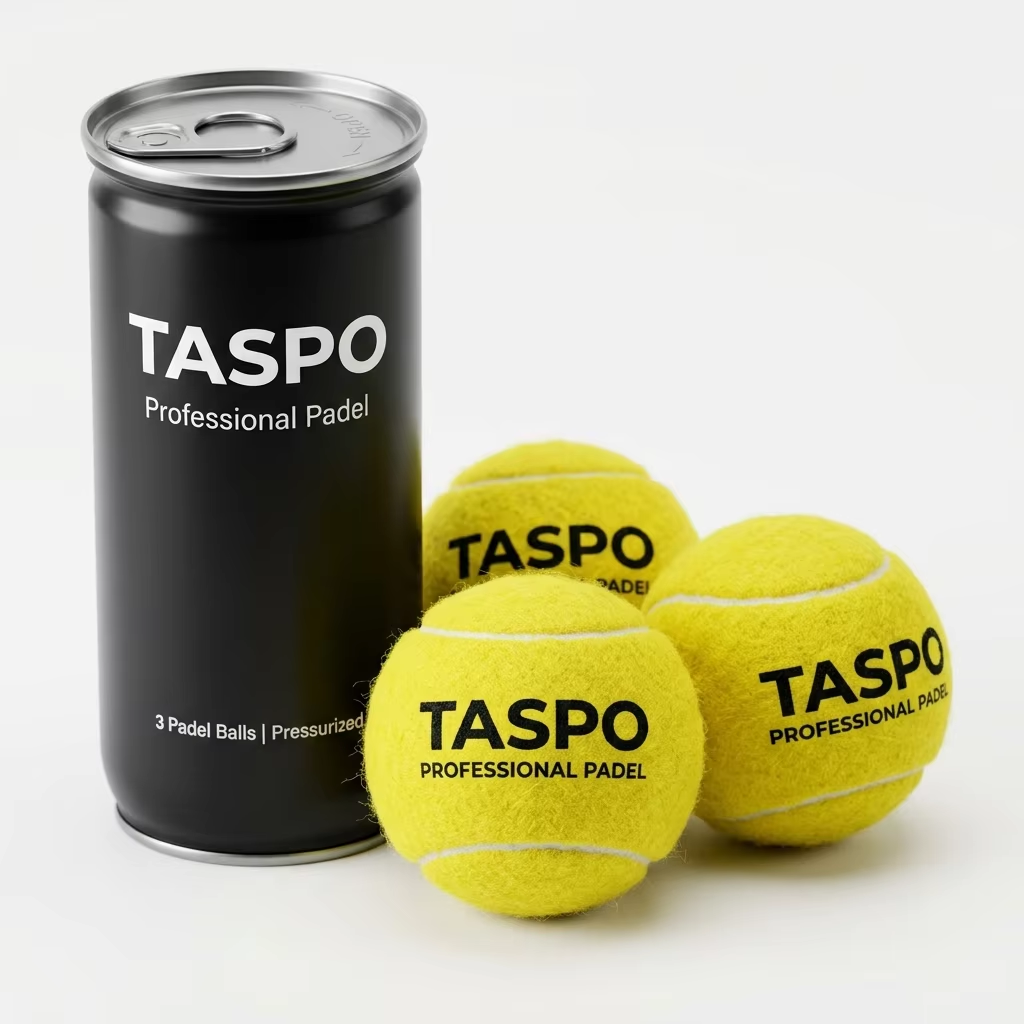
Engineering the perfect internal atmosphere means very little if that gas diffuses out of the rubber bladder while sitting in an ocean freight container or on a pro-shop shelf for six months. Because an eleven-PSI rubber core still faces a pressure gradient against standard sea-level air, unsealed spheres begin losing bounce height the moment they cool down on the factory floor. Preserving factory-fresh bounce requires sealing finished spheres immediately inside rigid polyethylene terephthalate (PET) tubes equipped with pull-ring aluminum foil seals. Inside an automated canning tunnel, the ambient air is evacuated from the plastic tube and replaced with an external over-pressure charge of nitrogen gas at fourteen pounds per square inch. Because the external can pressure slightly exceeds the eleven-PSI padel ball internal pressure, inward and outward diffusion reach complete thermodynamic equilibrium, locking one hundred percent of the gas mix inside the core for up to twenty-four months. In this highly technical manufacturing arena, Taspo Sports stands as an authoritative global leader in precision pneumatic ball engineering. Operating computerized hyperbaric nitrogen molding lines, isothermal vulcanizing presses, and automated fourteen-PSI nitrogen canning tunnels, Taspo Sports delivers world-class pressurized padel ball collections for international brands. Partnering with a trusted padel ball manufacturer like Taspo Sports empowers sports businesses to customize altitude-specific pressures, wool-felt weaves, and branded pressurized packaging, ensuring championship performance from the first pop of the can.
 Hot News
2026-11-23
2026-11-23
2026-11-23
2026-11-23
2026-11-23
2026-11-23
 EN