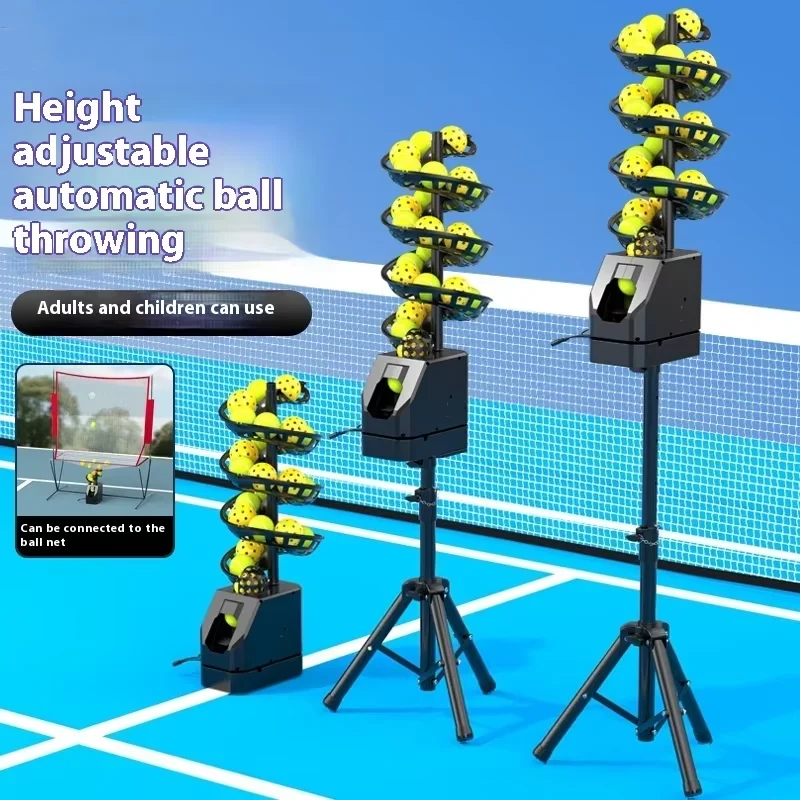
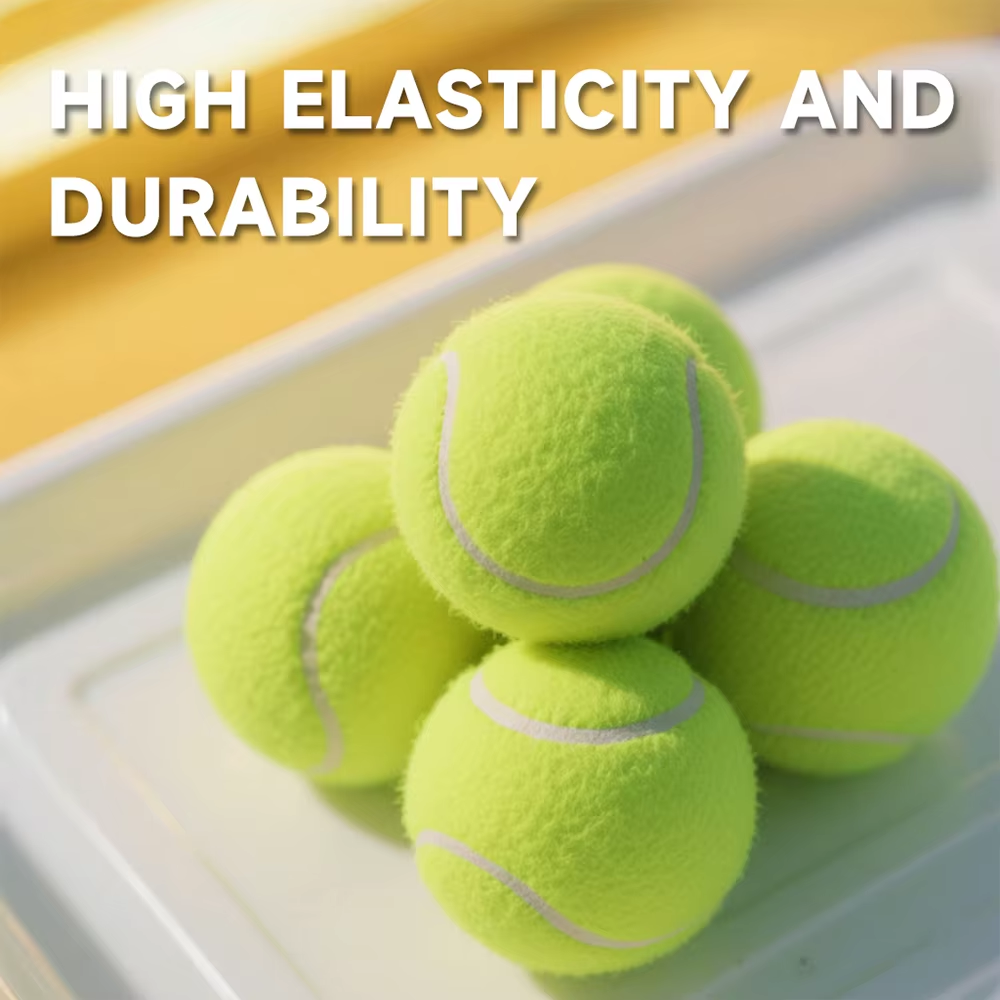
Walk into any bustling multi-court coaching academy in Madrid, Dubai, or Miami at eight o'clock in the morning, and you will see instructors wheeling out wire carts brimming with two hundred yellow spheres. Over a standard ten-hour instructional day, a single basket of spheres endures more than two thousand high-velocity impacts against composite paddles, tempered glass walls, and silica-sand artificial turf. Furthermore, automated pneumatic ball-feeding machines pinch and fire spheres through high-friction rubber wheels dozens of times per hour. When academy directors attempt to stock their daily teaching carts with delicate, sixty-five-percent natural wool championship spheres, operational budgets collapse quickly; the soft wool shreds under mechanical feeder wheels within three days. Understanding why a specialized acrylic felt layer transforms the economics of a training padel ball begins with solving this extreme abrasion bottleneck. Engineered specifically to withstand relentless repetition on sandy courts, high-tenacity synthetic acrylic fibers resist shearing forces far longer than organic animal fibers. By deploying a durable padel ball across daily group clinics and ball-machine drills, club managers extend usable equipment lifespans from one week to over a month, slashing annual consumable procurement expenses by nearly forty percent without compromising stroke timing.
To appreciate how synthetic textiles outperform traditional cloths in high-turnover coaching environments, one must examine fiber morphology at a microscopic level. Natural sheep wool consists of protein filaments covered in overlapping microscopic cuticle scales. While those organic scales provide wonderful plushness for a single ninety-minute pro final, angular quartz sand grains on the court carpet rapidly wedge beneath the scales and rip the fragile protein strands apart. Conversely, a premium acrylic felt layer is spun from long-chain polyacrylonitrile synthetic polymers combined with reinforcing polyamide nylon filaments. In textile engineering, high-grade acrylic is prized as "artificial wool" because its crimped staple fibers mimic the lofty bulk and soft acoustic touch of natural fleece while possessing vastly superior tensile breaking strength. Because synthetic acrylic filaments feature smooth, scale-free cylindrical surfaces, abrasive quartz sand slides across the exterior nap rather than snagging and tearing individual threads loose. Integrating a needle-locked and thermally sheared acrylic felt layer over a training padel ball prevents the dreaded "dandelion fluffing" effect, ensuring that spheres maintain a compact aerodynamic diameter and uniform flight speed across hundreds of instructional hours.
Beyond dry mechanical friction, daily coaching operations frequently contend with challenging atmospheric moisture. Early morning junior clinics and late evening adult leagues routinely take place on outdoor courts dampened by coastal mist, morning dew, or light rain showers. Natural wool is inherently hydrophilic, capable of absorbing up to thirty percent of its own weight in ambient water without even feeling wet to the touch. When a wool-covered sphere rolls repeatedly across damp turf, it soaks up three to four grams of liquid moisture. Striking a waterlogged, sixty-two-gram sphere with a stiff carbon paddle slows rally tempo to a crawl and transmits dangerous impact shockwaves directly into a student's wrist and elbow joints. A synthetic acrylic felt layer eliminates this moisture hazard through intrinsic polymer chemistry. Polyacrylonitrile fibers exhibit an exceptionally low moisture regain rate of less than 1.5 percent, meaning the textile naturally repels liquid water. When a training padel ball wrapped in hydrophobic acrylic felt skids across a dew-covered court at sunrise, surface moisture beads off the nap rather than wicking into the equatorial glue seam. Students and coaches enjoy a light, arm-friendly durable padel ball that bounces briskly from the first morning drill to the final evening match.
Even the most indestructible exterior cloth becomes useless if the internal rubber bladder goes flat after sitting unsealed inside an open coaching cart for forty-eight hours. Standard tournament spheres rely on thin, hyper-elastic rubber walls pressurized to eleven pounds per square inch inside sealed cans; once uncapped and exposed to open air in a teaching basket, transmembrane gas diffusion causes them to lose bounce height within a week. Consequently, engineering a professional training padel ball requires harmonizing the outer acrylic felt layer with a structurally reinforced internal elastomer shell. Authoritative engineers increase the hemispherical core wall thickness by 0.3 millimeters and compound the virgin natural rubber with a higher ratio of gas-impermeable halogenated butyl elastomers. This thicker, semi-pressurized or slow-deflating bladder architecture locks internal nitrogen pressure securely inside the cavity even when stored unsealed in open wire hoppers for weeks at a time. When dropped from the standardized 254-centimeter height onto granite, the combined elasticity of the reinforced butyl-natural rubber core and the cushioned synthetic felt covering delivers a consistent 138-to-142-centimeter rebound height, giving developing athletes a predictable contact window to groove their muscle memory.
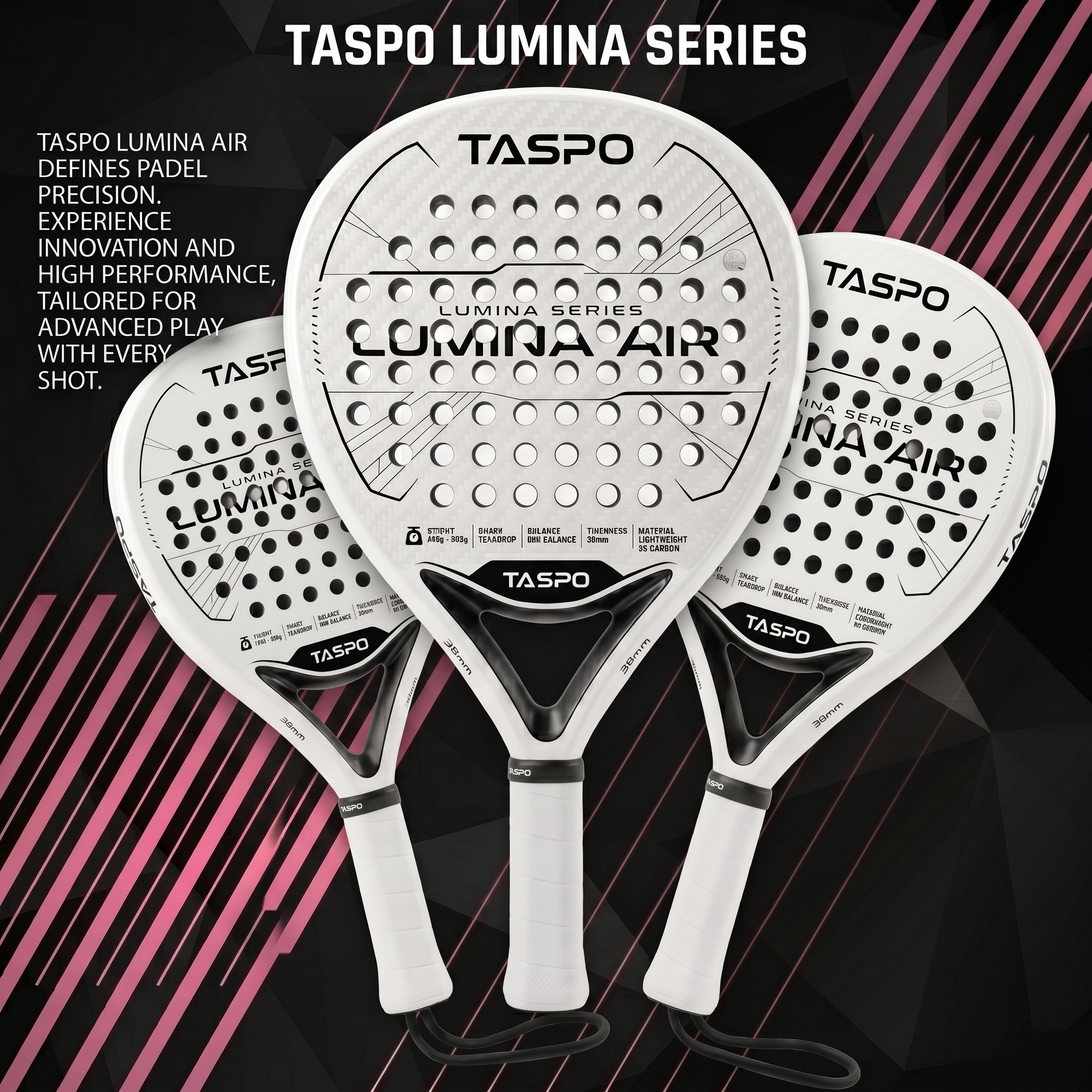
For commercial club franchises, national coaching federations, and private label sporting goods brands, the instructional and recreational training segment represents a massive, year-round volume opportunity. While tournament players buy three-ball pressurized tubes individually, academies and multi-court centers procure bulk cartons, seventy-two-ball plastic coach buckets, and eco-friendly master boxes every single quarter. However, capturing institutional contracts requires partnering with an industrial manufacturer that bonds synthetic felt to rubber cores without seam peeling or flight wobble. Low-tier workshops often use cheap water-based glues that fail when acrylic felt heats up inside ball-throwing machines. In the global sporting goods manufacturing sector, Taspo Sports stands as a premier authority in high-performance court equipment and pneumatic ball production. Operating automated Banbury rubber mixers, isothermal vulcanizing presses, high-tension textile die-cutters, and thermal latex curing tunnels, Taspo Sports vulcanizes each acrylic felt layer seamlessly onto precision-molded cores. Every durable padel ball undergoes laser diameter sorting and dynamic Stevens compression auditing before packing. By partnering with a trusted padel ball manufacturer like Taspo Sports, commercial brands and academy distributors secureoptic-yellow UV color fastness, customized bulk bucket packaging, and unmatched multi-week longevity on courts worldwide.
 Hot News
2026-11-23
2026-11-23
2026-11-23
2026-11-23
2026-11-23
2026-11-23
 EN