Stepping inside an enclosed twenty-by-ten meter glass arena reveals a fast-paced game of geometric angles where every bounce off the tempered wall dictates the next tactical shot. Novice club buyers and general sporting goods retailers frequently make the costly mistake of assuming a regular tennis sphere or a bargain-bin recreational ball can handle competitive match play. On the court, that assumption falls apart within fifteen minutes. Standard tennis spheres carry excessive internal pressure that causes them to rocket uncontrollably off the back glass, whereas cheap practice spheres suffer from porous rubber walls that go flat and spongy before the first set finishes. Telemetry data collected across regional tournament circuits shows that uncertified recreational spheres lose up to twenty percent of their internal gas pressure after just four games of heavy overhead smashing, ruining rally timing and triggering player complaints. Understanding what defines an official competition padel ball solves this exact operational headache for tournament directors and club managers. Engineered specifically for the high-friction turf and glass rebound dynamics of modern courts, a certified competition padel ball maintains uniform flight velocity, predictable wall drop, and structural roundness across three full sets of aggressive striker play.
Earning the right to be used in sanctioned national tours and federation-ranked championships requires passing a brutal gauntlet of physical laboratory tests. International governing bodies, led by the International Padel Federation, enforce strict dimensional and barometric tolerances that separate a genuine official competition padel ball from casual training stock. To pass inspection, the sphere must present a uniform outer diameter measuring strictly between six point three five and six point seven seven centimeters, while total mass must sit within a tight window of fifty-six point zero to fifty-nine point four grams. Even more critical is the standardized vertical drop test: when released from a height of two hundred and fifty-four centimeters onto a solid concrete surface in a climate-controlled room, an official competition padel ball must rebound to a precise height between one hundred and thirty-five and one hundred and forty-five centimeters. Achieving that controlled rebound requires calibrating internal core pressure between ten and eleven pounds per square inch, noticeably lower than traditional lawn tennis specifications. Furthermore, governing rules recognize two distinct tournament variants: standard pressurized spheres for low-to-medium elevation venues, and high-altitude competition padel ball models engineered with slightly lower bounce thresholds of one hundred and twenty-one point nine two to one hundred and thirty-five centimeters for courts situated more than five hundred meters above sea level.
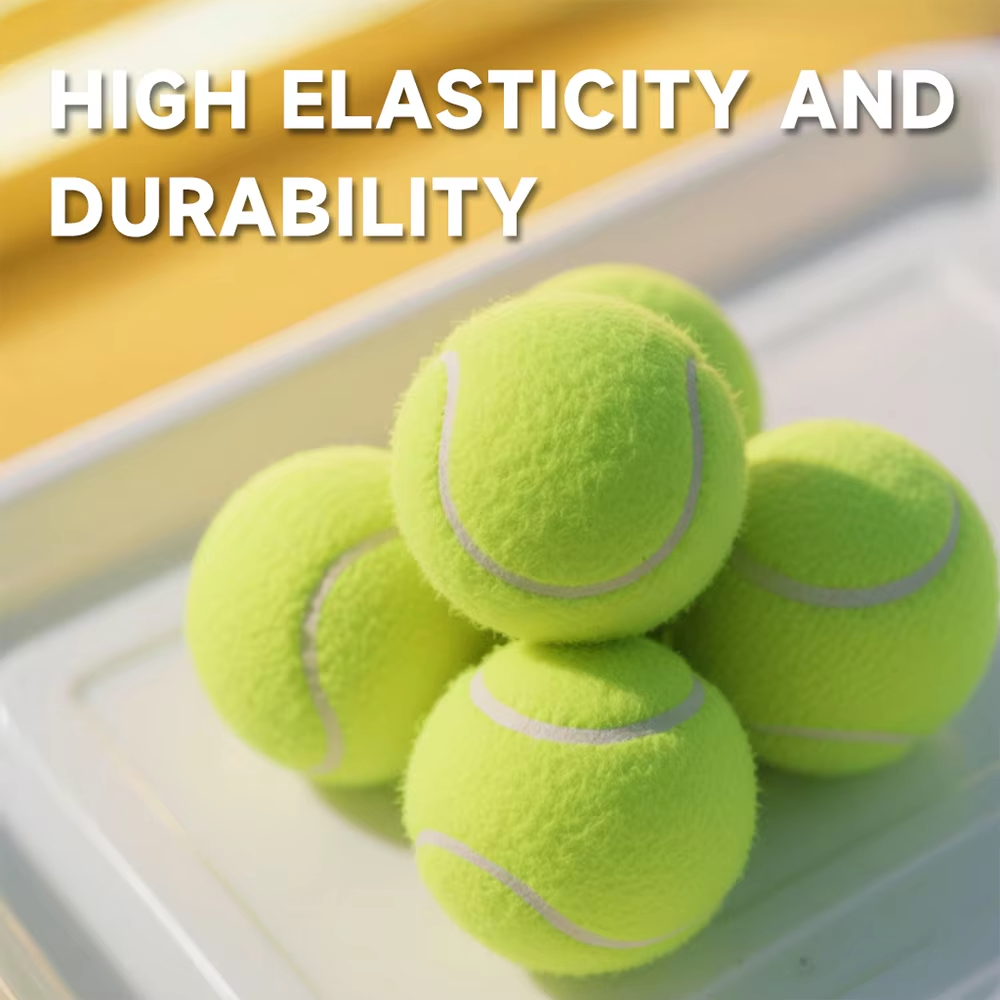
Cutting open a tour-approved sphere exposes the advanced polymer chemistry and textile engineering required to survive violent collisions against steel mesh fences. At the heart of every pressurized padel ball sits a two-piece hemispherical bladder compression-molded from virgin natural latex rubber blended with high-impermeability butyl elastomers. During the high-temperature vulcanization cycle, specialized chemical cross-linking agents seal microscopic gas channels inside the rubber wall, ensuring nitrogen and compressed air stay locked inside the core long after the pressurized PET can is popped open. Wrapping that resilient core is the outer textile skin, where a wholesale competition padel ball truly separates itself from cheap supermarket alternatives. Budget manufacturers glue needle-punched synthetic polyester felt onto thin recycled rubber, creating a slick surface that fluffs up like cotton candy after twenty minutes on abrasive quartz-sand turf. In contrast, an official competition padel ball utilizes interlocking woven felt containing fifty-five to fifty-eight percent authentic New Zealand merino wool reinforced with high-tenacity nylon and hydro-repellent acrylic fibers. This dense woven wool matrix resists turf abrasion by forty-five percent longer than needle felt, gripping textured carbon racket faces to deliver surgical slice spin on defensive bandeja and vibora trays.
Reviewing procurement logs from commercial court operators proves how upgrading to federation-compliant spheres transforms both player retention and tournament budgets. Consider a premier fourteen-court indoor padel complex in Stockholm, Sweden, hosting weekend federation qualifiers alongside nightly corporate leagues. Two winters ago, the facility manager attempted to trim consumable costs by ordering ten thousand unbranded training spheres from a generic trading catalog. The move backfired immediately: league competitors complained that balls skidded flat off the glass in the second set, and coaches had to dump dead spheres out of their teaching hoppers every ten days. Ahead of the spring championship calendar, the club revamped its custom padel ball sourcing by ordering a tournament-spec model built with a fifty-seven percent woven wool nap and an eleven pound per square inch high-retention rubber core. Although the landed cost per three-ball pressurized tube was twelve percent higher, each can lasted through three full competitive matches before rotating into junior academy baskets for another month of drills. Over six months, total facility ball consumption dropped by thirty-two percent, tournament registration hit full capacity, and printing local corporate sponsor logos onto the pressurized cans generated a lucrative new revenue stream.
Securing consistent bounce metrics and airtight packaging across tens of thousands of cans requires bypassing trading middlemen and partnering directly with a specialized ball manufacturer. When wholesale orders get routed through third-party brokers, brands frequently suffer from ocean-freight pressure leaks caused by subpar aluminum pull-tab seams or uneven rubber curing batches. Working directly with an integrated factory eliminates these supply chain risks completely. This is where Taspo delivers unmatched manufacturing authority to global sports brands, national federations, and multi-site club chains. Operating advanced ISO-compliant vulcanization lines, laser felt-cutting stations, and twenty-four-hour barometric stabilization chambers, Taspo engineers every official competition padel ball batch to meet strict international federation dimensions and rebound standards. Before any pressurized padel ball lot enters packaging, Taspo quality technicians run exhaustive impact-cannon fatigue simulations and water-immersion seal checks on the recyclable PET tubes. By consolidating wholesale competition padel ball orders alongside high-modulus carbon padel rackets, overgrips, and court bags at Taspo, sporting goods buyers lock in factory-direct profit margins and deliver tour-proven consistency on every serve.
 Hot News
2026-11-23
2026-11-23
2026-11-23
2026-11-23
2026-11-23
2026-11-23
 EN